The mosquito map now belongs in the summer health routine
Fresh ECDC and EFSA vector maps show why mosquito season is now a public-health planning story, not just a garden nuisance.
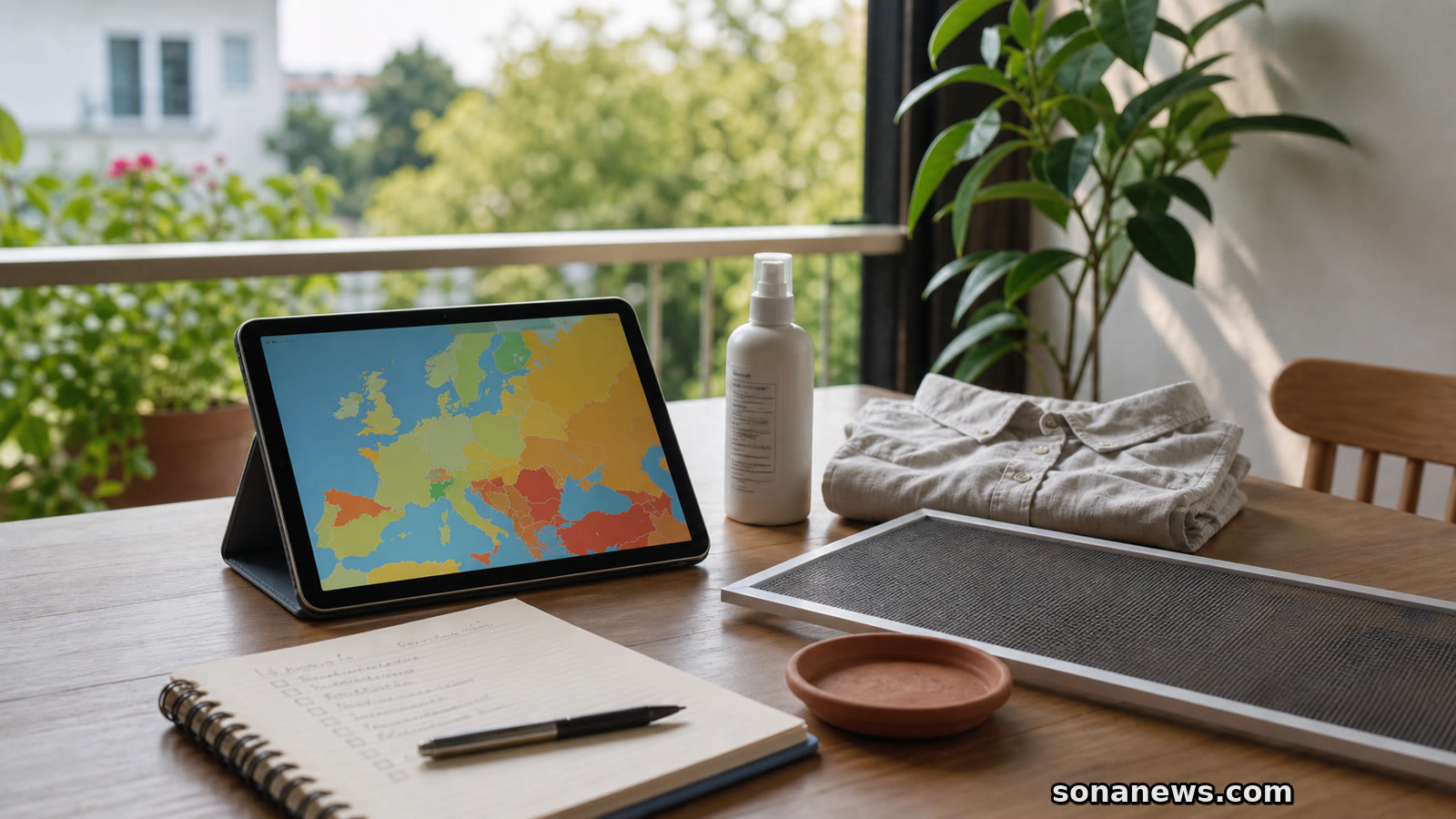

A mosquito bite is still a small irritation for most people, most of the time. That is exactly why it can be easy to miss the larger change in the background. Public-health agencies are no longer talking about mosquito season only as a tropical holiday problem or a nuisance beside the barbecue. They are publishing maps, weekly surveillance and risk guidance that make the insect part of a wider summer health routine.
The latest reminder came on 3 June, when the European Centre for Disease Prevention and Control and the European Food Safety Authority published updated VectorNet maps showing current knowledge on mosquitoes, ticks, sandflies and biting midges across Europe. The maps are built from validated surveillance data on disease vectors that can affect human and animal health. They are not a household forecast, and they are not a reason to assume that every bite carries disease. Their value is quieter: they show where the conditions for public-health attention are changing.
One detail in the update is deliberately precise. ECDC and EFSA highlighted the first reported introduction of Aedes aegypti mosquitoes in Luxembourg, along with updated information on Culex tritaeniorhynchus in Greece. The same notice cautioned that some Greek changes may reflect stronger surveillance and added data, not only biological expansion. That caveat matters. Better maps can reveal more mosquitoes without proving that the risk has suddenly jumped.
The names sound technical, but they explain why the map now has a place in ordinary health coverage. Aedes albopictus, often called the Asian tiger mosquito, is linked by ECDC to dengue and chikungunya transmission. Aedes aegypti is a major dengue vector in many parts of the world. Culex mosquitoes are important in West Nile virus surveillance. Different mosquitoes carry different public-health questions, which is why a simple phrase such as mosquito season can hide a lot of local detail.
The early 2026 West Nile numbers in Europe are small. ECDC's weekly report says that, since the start of the year and as of 10 June, one country in Europe had reported one human case: North Macedonia. The agency also warns that weekly figures are preliminary and may be revised. That is not a dramatic outbreak line. It is a useful example of how surveillance works at the start of a season, when a single reported case can be enough to activate reporting, blood-safety attention and local awareness.
Dengue gives the story its global scale. WHO describes dengue as a viral infection transmitted through the bite of infected mosquitoes and says about half of the world's population is now at risk, with an estimated 100 million to 400 million infections each year. WHO Europe adds that dengue is not spread directly from person to person, but infected travellers can introduce the virus into places where capable mosquitoes are present. In other words, travel, climate, cities and local mosquito populations can connect a faraway disease map to a familiar street.
That is where the article has to stay calm. The point is not to turn every warm evening into a medical alert. Most mosquito bites are not a disease event. The point is that official prevention advice is ordinary, physical and local. CDC frames mosquito-bite prevention around EPA-registered repellents, loose long sleeves and trousers, screens on windows and doors, air conditioning where available, and the weekly emptying or covering of water-holding items such as buckets, toys, birdbaths, flowerpot saucers and bins. WHO Europe gives similar public-health advice for dengue areas, including covered clothing, approved repellents, screens and mosquito nets for infants.
Those measures are not glamorous. They are closer to checking the smoke alarm than following a breaking-news alert. A plant saucer, a torn screen or a bottle of repellent at the back of a cupboard can feel trivial until the local mosquito season is underway. Public-health maps make the small routine easier to understand because they show that risk is not evenly spread. It depends on species, place, weather, travel and surveillance.
There is also a misinformation lesson. A symptom list on a social feed is a poor substitute for official health guidance, especially when fever illnesses can look similar at the start. WHO says early detection and access to proper medical care reduce deaths from severe dengue, but that statement belongs in context, not in a panic post. The responsible household response is to use current public-health pages and local health services when illness or travel exposure raises concern, rather than trying to turn a bite into certainty.
The mosquito map, then, is not an omen. It is a planning object. It helps explain why public-health teams watch particular species, why travellers appear in local disease stories, why a single weekly case update can matter, and why the unshowy habits around screens, standing water and repellents keep returning. Summer health is often sold through sunscreen and hydration. The mosquito map is a reminder that the season also has tiny wings, and that preparedness can be much quieter than fear.
Editorial note. This article is for general information only and is not medical advice. Mosquito-borne disease risk varies by place, season, health history, travel and local surveillance. For symptoms, recent travel, pregnancy, infant health, immune concerns or local outbreak questions, use current public-health authority or clinician guidance rather than this article alone.
Sources
- Source: "ECDC and EFSA publish maps showing distribution of disease vectors across Europe", European Centre for Disease Prevention and Control, Extracted 2026-06-17. Verified: 3 June 2026 update date, VectorNet basis, vector groups covered, first reported introduction of Aedes aegypti in Luxembourg, updated Culex tritaeniorhynchus information in Greece, caution about surveillance effects, and public-health preparedness purpose
- Source: "Surveillance of West Nile Virus infections in humans in Europe, weekly report", European Centre for Disease Prevention and Control, Extracted 2026-06-17. Verified: 2026 weekly surveillance purpose, one reported human case in North Macedonia as of 10 June 2026, preliminary nature of the weekly figures, and blood-safety relevance
- Source: "Dengue", World Health Organization, Extracted 2026-06-17. Verified: dengue transmission by infected mosquitoes, global risk estimate, annual infection estimate, urban and semi-urban pattern, and WHO framing around prevention, early detection and medical care
- Source: "Public health advice on dengue fever", WHO Europe, Extracted 2026-06-17. Verified: dengue is not spread directly from person to person, Aedes biting timing, travel-introduction framing, covered clothing, approved repellents, screens and mosquito-net advice
- Source: "Preventing Mosquito Bites", Centers for Disease Control and Prevention, Extracted 2026-06-17. Verified: EPA-registered repellent guidance, protective clothing, screens, air conditioning where available, and weekly removal or covering of standing-water containers
- Source: "Aedes albopictus factsheet for experts", European Centre for Disease Prevention and Control, Extracted 2026-06-17. Verified: public-health relevance of Aedes albopictus, links to chikungunya and dengue, urban container habitats, human-assisted spread and vector-control context
Help us improve
Was this article useful?
One anonymous tap helps Sona improve future reporting, headlines and source context.
Up next

Primary school sessions begin this week, with secondary pupils following later in autumn. For most families, the practical deadline comes from the local school immunisation team.
Continue readingMore in Health