The safe-water story starts long before the tap
WHO’s updated drinking-water guidelines are a reminder that water safety is a chain of targets, planning, inspections and surveillance, not a last-minute tap test.
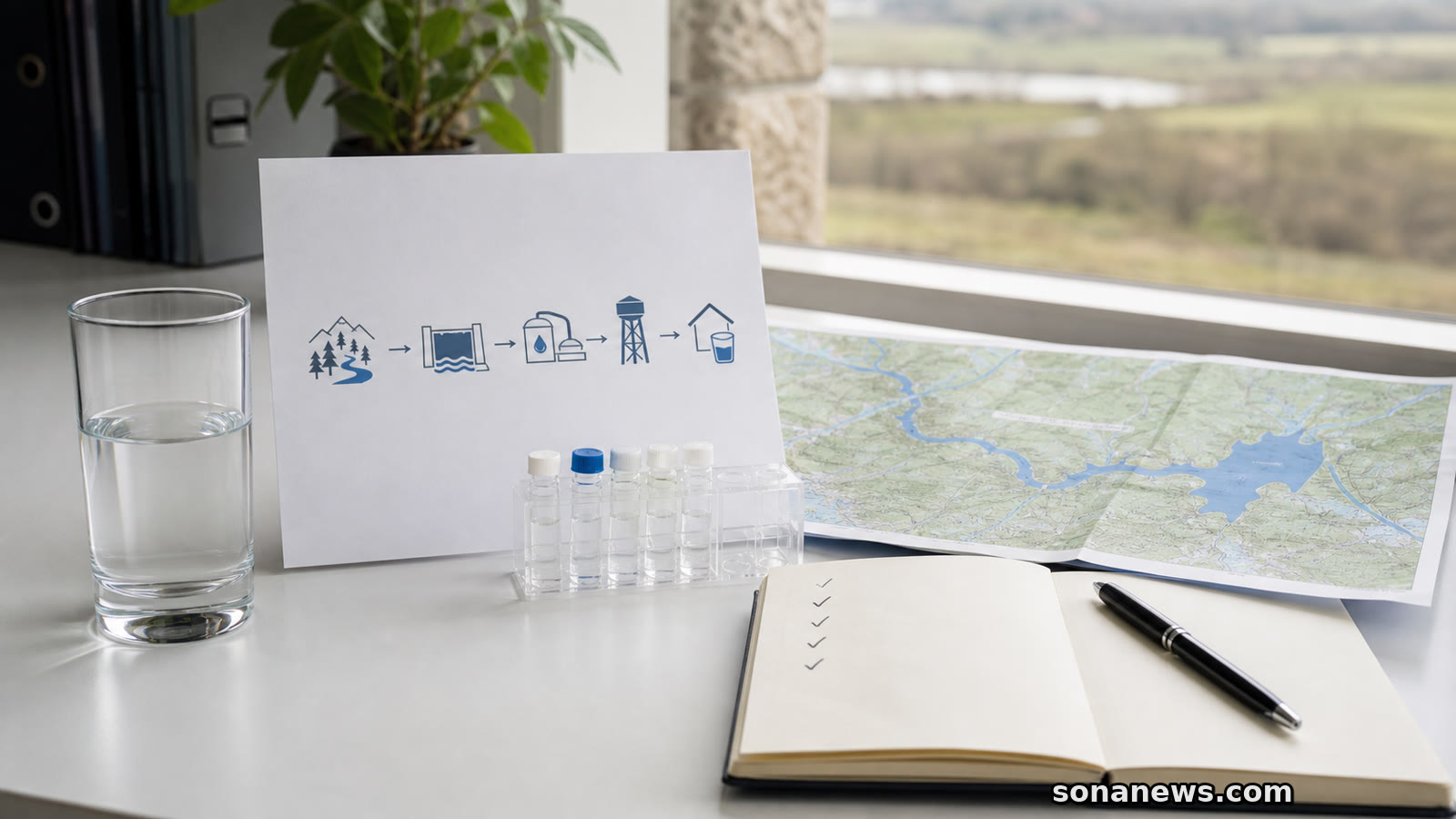

A glass of water is usually judged at the last moment. It looks clear, it smells normal, it comes from a tap, bottle, well or public source that feels familiar. WHO’s newly updated Guidelines for drinking-water quality point in the opposite direction. The public-health question begins much earlier, at the source, and runs through regulation, risk planning, routine checks, maintenance and independent surveillance before anyone fills a glass.
The update, announced by the World Health Organization on 18 June, folds a third addendum into the fourth edition of its global drinking-water guidance. It is not a household hack or a new consumer gadget. It is a technical rulebook for governments, regulators, water suppliers and health authorities. That may sound distant from daily life, but the basic message is plain enough: safe water is not proved by a single glance at the tap. It is made more reliable by a system that looks for risk before contamination becomes a health threat.
WHO says the updated guidelines support drinking-water quality regulations and standards, surveillance programmes, risk management practices and preventive water safety approaches. The framework has three core elements: health-based targets, proactive risk management through water safety planning, and independent surveillance. In ordinary language, that means deciding which risks matter most, managing the water supply from source to consumer, and checking that the plan is working.
The scale explains why this is a health story rather than a plumbing footnote. WHO’s update says 2.1 billion people still lack safely managed drinking-water, including 106 million people who drink directly from rivers, lakes or other surface water sources. A WHO and UNICEF Joint Monitoring Programme update published during World Water Week 2025 used the same figure and described the gap as one in four people globally. The numbers are large, but the practical lesson is smaller and sharper. Water safety is uneven, and the weakest points are not always visible at the cup.
The updated guidance also gives small water supplies more attention. That matters because a national standard can look tidy on paper while small systems, rural supplies and local operators face different limits in money, staffing, monitoring and maintenance. WHO’s water safety and quality page highlights recent resources for small supplies, sanitary inspection packages and water safety plan training. The quiet word in this field is capacity. A source, pipe or storage tank can only be managed if someone has the tools, authority and time to notice the risk.
Microbial contamination remains the central public-health worry in the update. WHO’s drinking-water fact sheet says microbiologically contaminated water can transmit diseases including diarrhoea, cholera, dysentery, typhoid and polio. It also says microbial contamination linked to faeces poses the greatest risk to drinking-water safety. The new guidelines strengthen evidence and management guidance for covered pathogens and clarify issues around waterborne transmission. None of that means every cloudy glass is an emergency. It means invisible risks need systems that do not rely on sight alone.
Chemical hazards sit in the same chain. The WHO update notes selected chemical hazards and pesticides used for vector control in drinking-water. It also says future work toward a fifth edition will review areas of significant concern, including PFAS and disinfection by-products. That sentence is worth reading carefully. Drinking-water guidance is not static because water systems, industrial chemicals, agriculture, climate pressure and scientific evidence are not static. A safety framework has to be stable enough to guide regulation and flexible enough to absorb new evidence.
For readers in countries with regulated public water systems, the lesson is still relevant. CDC’s water quality guidance says tap-water quality depends on the source and how the water has been managed, and that utilities in the United States monitor water quality and meet standards for public tap water. CDC also distinguishes public systems from private wells, where owners carry more responsibility for testing and maintenance. The point is not to turn this article into personal water advice. It is to show the same chain at a different scale: source, standards, monitoring, notices and local accountability.
That chain is the real story in WHO’s update. Safe drinking-water is often discussed as a yes-or-no condition, but public health usually works in layers. A catchment can be protected. A supply can be inspected. A contaminant can be prioritised. A small system can be supported. A regulator can check whether a supplier’s plan is more than paperwork. A household can receive a warning if a regulated system has an immediate problem. None of those layers is glamorous. Together, they are the difference between trust based on habit and trust based on evidence.
The update also resists a common mistake in health coverage: making the consumer the whole story. Individual awareness matters, especially where people depend on private wells, small supplies or changing local conditions. But WHO’s drinking-water guidelines are mainly about public infrastructure and public authority. They say that safer water is built through prevention, not panic, and through systems that begin long before the glass is filled.
Editorial note. This article is for general public-health information only and is not medical advice. It does not assess any individual water supply, exposure, symptom, illness, household plumbing issue or safety decision. For personal health concerns, suspected contamination or local drinking-water questions, use current public-health authority, water utility and qualified clinician guidance.
Sources
- Source: "WHO unveils third addendum to Guidelines for drinking-water quality", World Health Organization, Extracted 2026-06-22. Verified: 18 June 2026 update, third addendum, 2.1 billion and 106 million figures, three-part framework, small water supplies, microbial risks, selected chemical hazards, PFAS and disinfection by-products planned for future review
- Source: "Guidelines for drinking-water quality: fourth edition incorporating the first, second and third addenda", World Health Organization, Extracted 2026-06-22. Verified: publication title, ISBN, source-to-consumer framework, support for health-based targets, risk-based management and independent surveillance, and practical updates around small supplies and sanitary inspections
- Source: "1 in 4 people globally still lack access to safe drinking water", World Health Organization and UNICEF, Extracted 2026-06-22. Verified: WHO/UNICEF JMP context, one-in-four framing, 2.1 billion people lacking safely managed drinking-water and 106 million using untreated surface sources
- Source: "Drinking-water", World Health Organization fact sheet, Extracted 2026-06-22. Verified: microbial contamination as the greatest drinking-water safety risk, examples of waterborne diseases, safely managed drinking-water definition and public-health context
- Source: "Water Quality and Your Health", Centers for Disease Control and Prevention, Extracted 2026-06-22. Verified: public tap water source and management context, utility monitoring, public system standards, private well distinction and local water quality reporting
Help us improve
Was this article useful?
One anonymous tap helps Sona improve future reporting, headlines and source context.
Up next

Primary school sessions begin this week, with secondary pupils following later in autumn. For most families, the practical deadline comes from the local school immunisation team.
Continue readingMore in Health