The dresser anchor check starts before the bedroom refresh
A new CPSC dresser recall is a reminder that furniture safety is not just a bracket in the bag, but a household check that follows the product into the room.
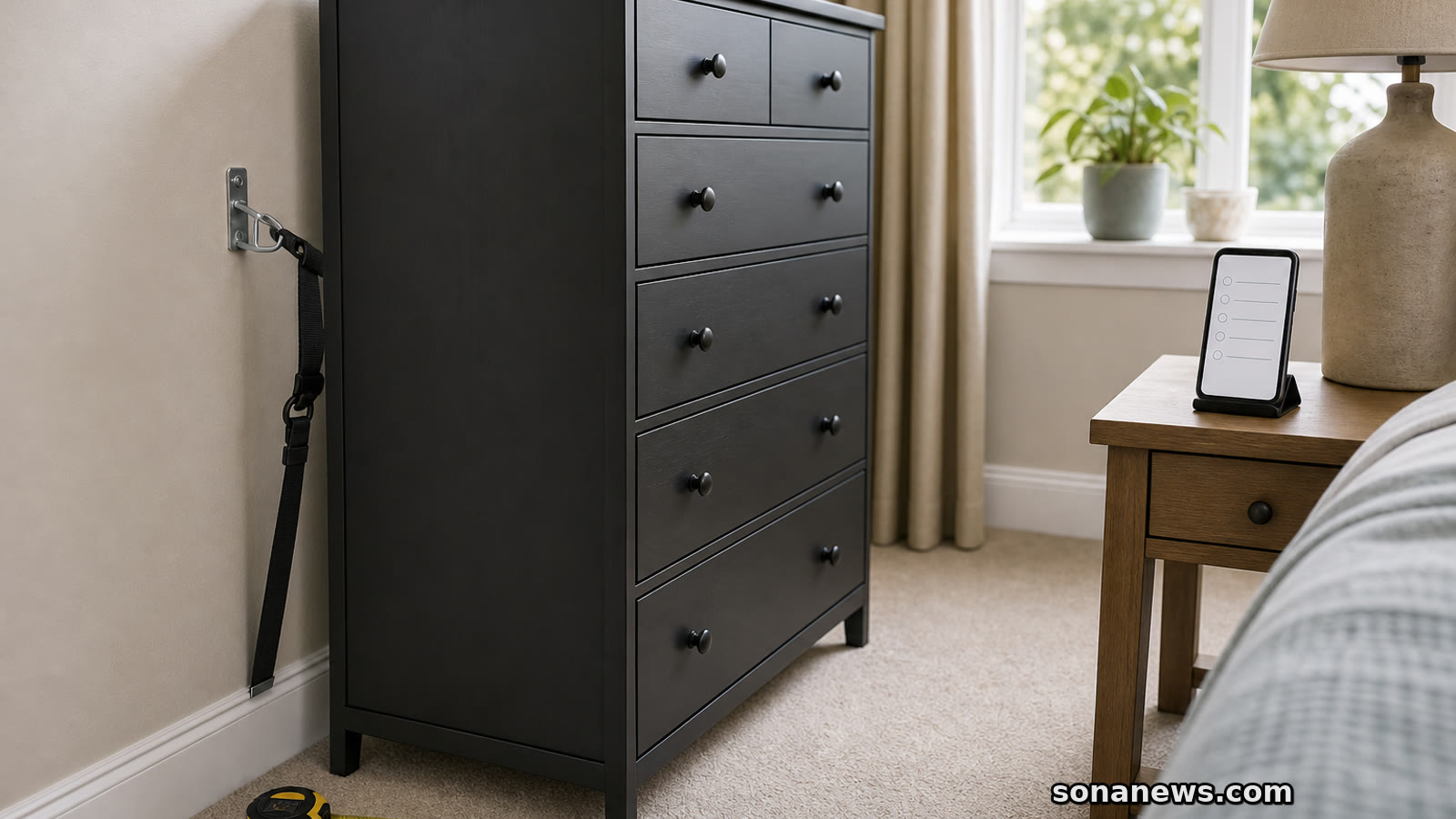

A bedroom refresh often begins with measurements, colour, delivery slots and the mildly optimistic belief that flat-pack parts will behave. The heavier question can arrive later, after the drawers slide in and the packaging has gone out: is the furniture actually secured to the wall, and does the model have a safety notice attached to it?
That question became more concrete this month after the U.S. Consumer Product Safety Commission announced a recall of Hasuit 7-Drawer Dressers sold on Amazon.com by Hasuit Direct. CPSC's June 11 notice says about 3,000 units are affected. The agency says the recalled dressers are unstable if they are not anchored to the wall, creating tip-over and entrapment hazards that can result in serious injury or death to children. CPSC also says the dressers violate the mandatory safety standard for clothing storage units required under the STURDY Act.
The recall is specific, which is exactly why it is useful. It concerns black, wood, seven-drawer Hasuit dressers, about 27.6 inches wide, 44.5 inches tall and 15.8 inches long, weighing about 102 pounds. The SKU printed on the packaging is AJ-DJ502571_1. CPSC says they were sold on Amazon from September 2023 through May 2026 for about $160. The agency says no incidents or injuries have been reported in connection with this recall.
Those details may sound dry, but furniture safety lives in details. A household does not need a vague fear of every dresser. It needs a way to connect the object in the bedroom with the official recall notice, especially when the original box is gone and the order may sit in someone else's Amazon history. In shared homes, rentals and family hand-me-downs, the person using the drawers is not always the person who bought them.
CPSC's remedy instructions are more severe than a quick bracket check. The notice says consumers with an unanchored recalled dresser are to stop using it immediately, move it to an area children cannot access, remove all seven drawers for destruction, write "RECALLED" on the cabinet, photograph the marked cabinet and removed drawers, email the photo to Hasuit Direct and dispose of the product for a refund. The point is not drama. It is to prevent a recalled unit from staying in circulation as ordinary bedroom furniture.
The wider story is that dressers have moved from optional common sense into regulated performance. CPSC's clothing-storage-unit guidance says the STURDY law directs the agency's rulemaking for these products. The mandatory rule is codified at 16 CFR part 1261 and applies to covered units manufactured after September 1, 2023. In plain household terms, it covers many free-standing bedroom storage pieces with drawers or hinged doors that are tall, heavy and large enough to store clothing.
The rule is not only about whether a screw bag is included. CPSC guidance points to requirements around stability testing, interlocks, anti-tip devices and warning labels. The agency's 2023 final-standard announcement said the standard includes tests for furniture on carpet, loaded drawers, multiple drawers open and a simulated child weight of up to 60 pounds interacting with the unit. That is a different mental model from the old idea that a dresser is safe because it looks sturdy in the catalogue.
The numbers behind the rule are grim enough without exaggeration. In adopting the standard, CPSC cited 234 fatalities from clothing-storage-unit tip-overs from January 2000 through April 2022, including 199 child fatalities. It also cited an estimated 84,100 emergency-department-treated injuries involving clothing-storage-unit tip-overs from 2006 through 2021. Those figures are U.S. data, and they do not make every bedroom a danger scene. They do explain why a wall anchor is not a decorative extra.
CPSC's Anchor It campaign keeps the advice broader than one recalled product. It frames unsecured TVs, furniture and appliances as hidden hazards, particularly where children may climb. Its practical points include securing top-heavy furniture, anchoring TVs that are not wall-mounted, following manufacturer instructions and keeping tempting objects such as toys and remote controls off furniture tops. The message is unglamorous because the task is unglamorous.
For households, the useful habit is to give furniture the same modest record trail now common for appliances. Keep an order record, keep a model or SKU photo where possible, check official recall pages rather than marketplace comments, and do not let a recalled item move quietly into resale or a spare room. For a current recall, the official notice and manufacturer route matter more than social-media shorthand.
A dresser anchor check will not make a bedroom prettier. It may not even be visible when the room is finished. That is partly the point. The safest piece of home admin is often the one no guest notices: the bracket installed, the model identified, the recall checked and the heavy furniture treated as something that can move if the wall connection is missing.
Editorial note. This article is general household and product-safety information, not medical, legal, building, electrical, repair or childproofing advice. For a specific recalled product, use the official recall notice and manufacturer contact route. For furniture installation, wall type, rented housing, injuries or immediate hazards, use qualified local professional, medical or emergency guidance.
Sources
- Source: "7-Drawer Dressers Recalled Due to Risk of Serious Injury or Death from Tip-Over and Entrapment Hazards; Violate Mandatory Standard for Clothing Storage Units; Sold on Amazon.com by Hasuit Direct", Extracted 2026-06-15. Verified: recall date June 11, 2026; recall number 26-552; about 3,000 affected dressers; hazard language; STURDY Act violation; dimensions, weight, SKU, sales period, price, no incidents reported and refund route
- Source: "Clothing Storage Units", Extracted 2026-06-15. Verified: STURDY law authority, 16 CFR part 1261, September 1, 2023 manufacturing applicability, definition of clothing storage unit and requirements for stability testing, interlocks, anti-tip devices and warning labels
- Source: "CPSC Adopts Final Consumer Product Safety Standard to Prevent Tip-overs of Dressers and Other Clothing Storage Units", Extracted 2026-06-15. Verified: final mandatory standard under STURDY, September 1, 2023 effective date, test concepts and CPSC-cited fatality and injury estimates
- Source: "AnchorIt.gov", Extracted 2026-06-15. Verified: CPSC's Anchor It campaign, hidden-hazard framing and practical safety points on anchoring TVs, furniture and appliances, following instructions and removing tempting objects from furniture tops
- Source: "Anchor It! Resources", Extracted 2026-06-15. Verified: CPSC public resource framing, STURDY rule resource note, anchor kits, tip cards and continuing public education around furniture and TV tip-overs
Help us improve
Was this article useful?
One anonymous tap helps Sona improve future reporting, headlines and source context.
Up next
A gold-coloured lamp has been recalled because its plug can overheat. With no model or serial identifier published, the order record matters more than a visual match.
Continue readingMore in Home & Living