The fridge freezer plan starts before the power cut
A quieter Atlantic hurricane outlook does not remove the household job. Official food-safety guidance turns the fridge and freezer into the first part of a practical storm plan.

A power cut turns the fridge into a clock. Not immediately. Not dramatically. But quietly enough that the first bad decision is often opening the door to see what is happening.
That is the small domestic lesson inside the latest official storm-season advice. NOAA's 2026 Atlantic hurricane outlook, issued on May 21, says a below-normal season is the most likely outcome, with a 55% chance of below-normal activity, a 35% chance of near-normal activity and a 10% chance of above-normal activity. The agency's 70% likely range is 8-14 named storms, 3-6 hurricanes and 1-3 major hurricanes for the North Atlantic, Caribbean and Gulf region.
Those numbers are not a reason to ignore the kitchen. NOAA says the outlook is not a landfall forecast and does not predict activity for any particular location. It also says disaster can happen in a quiet season because one hurricane or tropical storm is enough. For a household, that means the useful question is less, "How busy will the season be?" and more, "What happens at home if the power is off long enough?"
The official food-safety answer is plain. FDA guidance says a refrigerator keeps food cold for about 4 hours if it stays unopened. A full freezer keeps its temperature for roughly 48 hours, while a half-full freezer lasts about 24 hours, again with the door kept shut. CDC guidance gives the same time frame and adds the rule people least want to hear after a long outage: unsafe food can look and smell normal.
This is where a fridge thermometer stops being a fussy kitchen extra. FDA and CDC both point households toward appliance thermometers so the refrigerator can be checked against 40°F or below and the freezer against 0°F or below before trouble starts. After an outage, that number is more useful than a guess, a sniff test or a debate over whether the milk still looks fine.
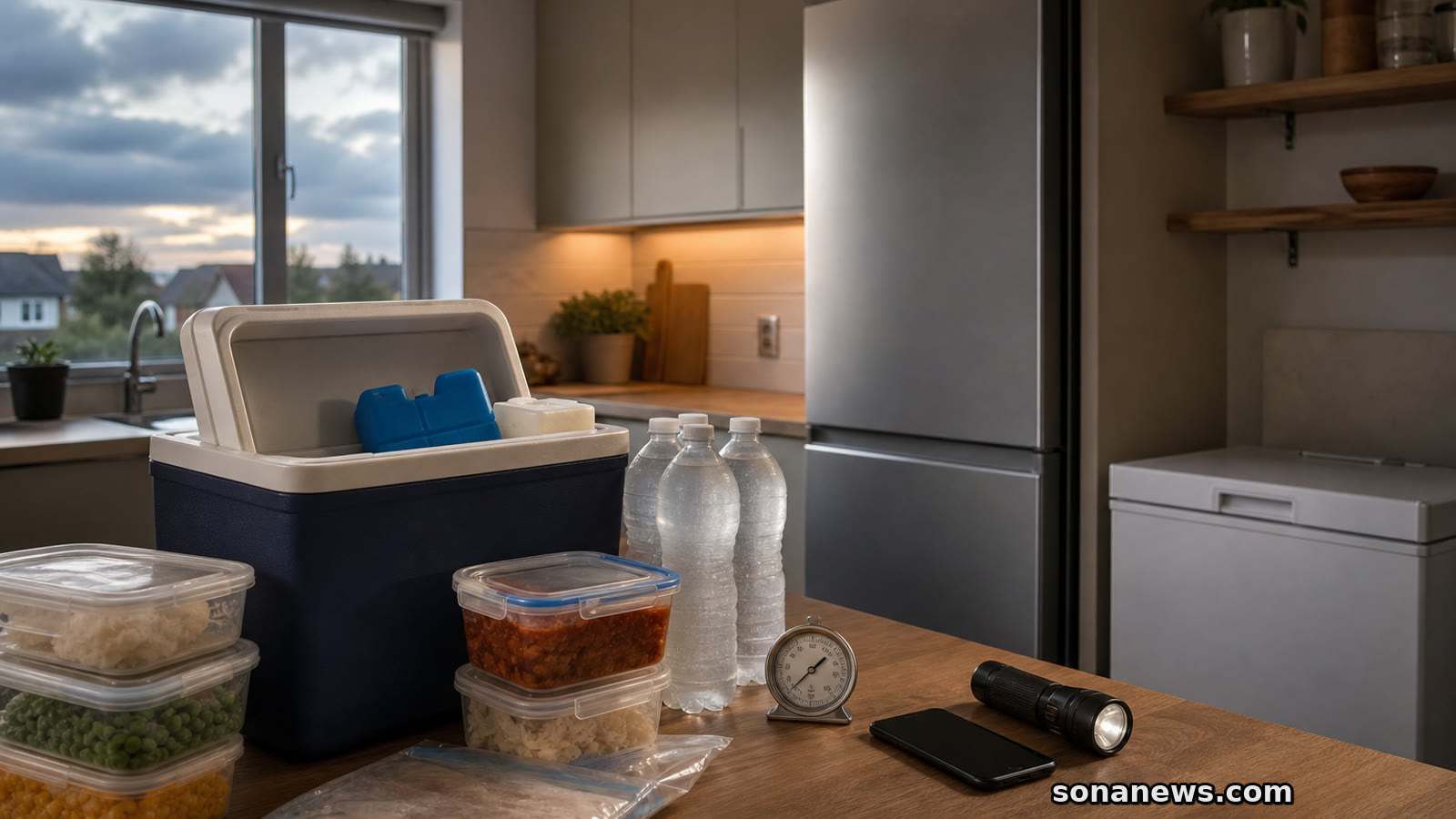
The preparation is unglamorous. Freeze water containers and gel packs. Keep a cooler available if refrigerated food may need a cold source. Group freezer items so they hold temperature longer. Know which food is worth moving first if the power has been out for hours and ice is available. None of this makes a home storm-proof. It just buys clarity at the moment when everyone is hungry, hot and trying not to waste a week's shopping.
There is an emotional trap in the freezer too. A tightly packed freezer can feel like money stored in cold air. Official guidance is deliberately unsentimental about that. FDA says not to rely on appearance or odour. Frozen food may be refrozen or cooked if it still has ice crystals or is at 40°F or below. CDC says refrigerated perishables such as meat, fish, cut fruit and vegetables, eggs, milk and leftovers belong in the bin after 4 hours without power or another cold source. That is not elegant advice, but it is cheaper than making a risky meal out of denial.
Ready.gov widens the frame beyond food. It lists food spoilage and water contamination among the effects of extended outages, but it also brings in the part of home preparedness that people sometimes improvise dangerously. Generators belong outdoors, away from windows, doors and attached garages. Gas stoves and ovens are not heating systems. Carbon monoxide is colourless and odourless, and official guidance treats it as part of the same power-cut conversation, not a separate footnote.
The practical point is sequencing. Before a storm warning, the household job is boring inventory: thermometer, cooler, ice packs, food that can be eaten without opening the fridge repeatedly, bottled or safely stored water where flooding is possible, phone power banks, and a clear idea of what will be discarded if temperatures rise. During the outage, the job is restraint. Keep the doors closed. Use the clock and the thermometer. Avoid turning a short outage into a longer food-safety problem by checking every shelf every ten minutes.
This advice also has limits. People with refrigerated medicine, powered medical devices or vulnerable household members need a plan that goes beyond the kitchen, and Ready.gov points them toward medical providers, pharmacists, backup power options and community locations with power. Local emergency instructions still outrank a tidy home checklist. If flooding reaches food or food-contact surfaces, the question changes again, because floodwater can contaminate packaging, counters and equipment.
Still, the fridge freezer plan is a useful place to start because it is concrete. It does not require predicting a storm track weeks ahead. It does not require believing that every season will be severe. It asks for a thermometer, some cold sources, fewer opened doors and a decision made before the power is already out.
The quiet season can still produce a messy day. The fridge is not the whole emergency plan. It is the part of the plan that sits in the kitchen, waiting for someone to remember that cold air is also a limited supply.
Editorial note. This article is general home and food-safety information. It is not medical, electrical, fire or emergency advice. During storms, power cuts or flooding, follow local emergency instructions, official guidance and professional advice for your own household conditions.
Sources
- NOAA Climate Prediction Center - "2026 Atlantic Hurricane Season Outlook" - - extracted 2026-06-10. Verified: issued May 21, 2026; season dates June 1-November 30; below-normal season most likely at 55%; 70% likely activity ranges of 8-14 named storms, 3-6 hurricanes and 1-3 major hurricanes; outlook is not a landfall forecast; one storm can cause a disaster
- U.S. Food and Drug Administration - "Food and Water Safety During Power Outages and Floods" - - extracted 2026-06-10. Verified: refrigerator and freezer temperature targets, appliance thermometer guidance, keeping doors closed, 4-hour refrigerator guidance, 48-hour full-freezer and 24-hour half-full freezer estimates, ice and cooler planning, and not relying on appearance or odour
- CDC - "Keep Food Safe After a Disaster or Emergency" - - extracted 2026-06-10. Verified: 4-hour refrigerator, 48-hour full-freezer and 24-hour half-freezer guidance; 40°F threshold; unsafe food can look and smell normal; discard guidance for refrigerated perishables after 4 hours without power or a cold source; floodwater contamination cautions
- Ready.gov - "Power Outages" - - extracted 2026-06-10. Verified: page updated June 4, 2026; extended outages can disrupt communications, water, shops, fuel, ATMs and other services; food spoilage and water contamination risks; generator use outdoors and away from windows; gas stoves and ovens should not be used for home heating; power-dependent medical-device planning
Help us improve
Was this article useful?
One anonymous tap helps Sona improve future reporting, headlines and source context.
Up next
A gold-coloured lamp has been recalled because its plug can overheat. With no model or serial identifier published, the order record matters more than a visual match.
Continue readingMore in Home & Living