The tumble dryer recall turns laundry day into a model-number check
A UK safety programme for Haier-made heat pump tumble dryers is a reminder that appliance safety often starts with the rating plate, not the laundry pile.
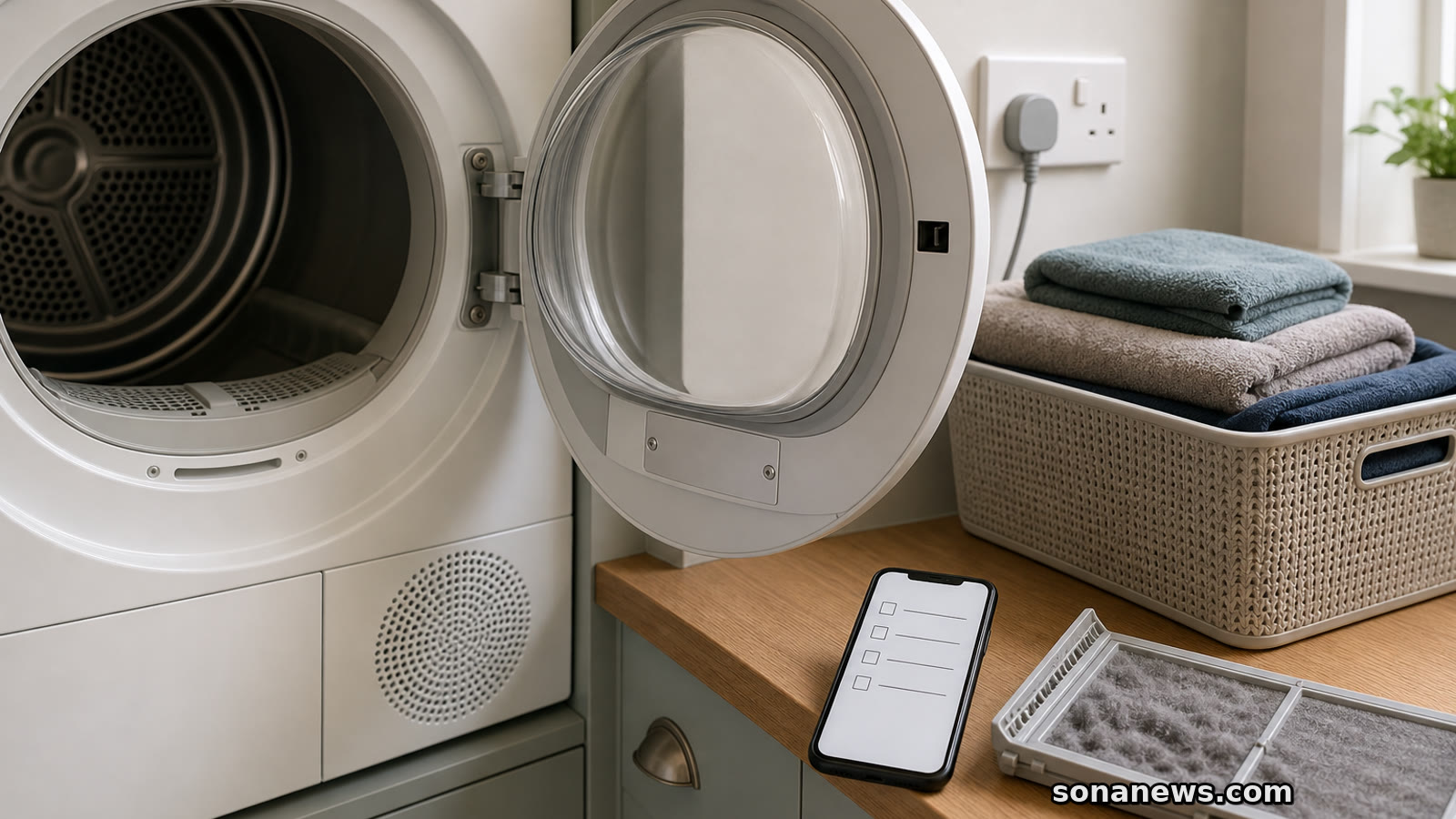

A tumble dryer is one of those appliances that can disappear into the background of a home. It sits in a cupboard, under a counter or behind a utility-room door, doing a job that only becomes visible when the towels are still damp. The current UK safety programme for some heat pump tumble dryers is a reminder that the quietest home-admin task can be the one that matters: finding the rating plate and checking the model number.
The Office for Product Safety and Standards has a corrective action programme for Haier-made heat pump tumble dryers presenting a serious risk of fire. The GOV.UK programme page, published on 14 April 2026, covers affected products sold under several brands: Baumatic, Candy, Caple, Haier, Hoover, Iberna, Lamona and Montpellier. GOV.UK says the products can suffer an internal short circuit during normal use, which can cause the dryer to ignite, and that the products do not meet the Electrical Equipment (Safety) Regulations 2016.
That sounds broad, but it is not a warning about every tumble dryer from those brands. The practical point is narrower and more useful. Official pages point owners towards model and serial-number checks, then towards the manufacturer if a machine is in scope. Haier's product safety site asks for a 16-digit serial number and says affected appliances should not be used or plugged in until a free in-home modification has been completed.
The 85,000 figure matters because it shows how long a safety issue can live inside ordinary homes. A GOV.UK news story says the manufacturer had begun a corrective action programme for 103,000 affected machines, but OPSS told Haier to halt the initial repair programme because of concerns that the modification was still unsafe. After an updated modification, the programme resumed. GOV.UK said repairs were being arranged for the remaining 85,000 owners whose appliances still presented a fire risk.
This is where home safety becomes less dramatic and more bureaucratic. A recall notice does not help much if the appliance has changed hands, the receipt has vanished, the model label is ignored or the registration card was never filled in. GOV.UK's product recalls and alerts guidance, updated in May 2026, points consumers to the OPSS list of product safety alerts, reports and recalls, where products can be searched and email updates can be requested. Register My Appliance, a UK service supported by OPSS and other safety bodies, says new and older appliances can be registered so households can be told about safety repairs or recalls.
Electrical Safety First makes the same point in blunter consumer language. It says there have been over 800 electrical product recalls since 2007 and that registering a product makes it easier for the manufacturer to contact a buyer if an item turns out to be faulty or dangerous. Its warning is not that every home is unsafe. It is that recall systems depend on contact details, not only on a notice being published somewhere online.
The tumble dryer also has a second, separate safety layer: ordinary maintenance. The U.S. Fire Administration says dryer fire risk rises when lint filters and dryer vents are not cleaned. Its advice is simple: do not use a dryer without a lint filter, clean the filter before and after each cycle, check that the venting system is not crushed or restricted, and make sure the outdoor vent opens when the dryer is operating. The U.S. Consumer Product Safety Commission adds that clothes staying damp after a normal cycle, or drying taking longer than usual, can point to a blocked lint screen or exhaust duct.
Those general dryer-fire tips are useful, but they should not blur the recall message. Cleaning lint is maintenance. A listed appliance with a known electrical safety issue is a different problem. The source trail should stay clean: check whether the machine is affected through official and manufacturer pages, follow the notice if it is, and treat lint and ventilation as the regular care that still belongs on the list.
There is also a renter and second-hand appliance angle, although it should not be overstated. Many people do not choose the dryer in their home. They inherit one in a rented flat, buy a used machine, move into a house with built-in appliances or discover that a landlord, previous owner or relative once handled the paperwork. That makes the rating plate more important, not less. The label inside the door or door frame can be more reliable than memory.
The small home routine that follows is not glamorous. Keep a note of major appliance brands, model numbers and serial numbers. Register machines where the manufacturer or local safety scheme allows it. Search official recall lists when buying second-hand or moving into a home with existing appliances. Keep repair and modification records with the manual, or at least in a shared household folder. None of this turns a home into a safety lab. It just means the next safety notice has somewhere to land.
The Haier tumble dryer programme is specific and UK-based. The broader lesson travels well: a laundry appliance is not only a machine, it is a record. When that record is missing, the household is left doing detective work at exactly the moment official guidance wants a quick answer.
Editorial note. This article is general home and appliance-safety information, not electrical, legal, landlord-tenant, fire-safety or repair advice. For a specific appliance, follow the relevant official recall notice, manufacturer instructions and qualified professional guidance. If an appliance is listed as affected by an official safety programme, use the official checker or contact route rather than trying to inspect or repair the fault yourself.
Sources
- Source: "Haier Heat Pump Tumble Dryer Corrective Action Programme", Extracted 2026-06-12. Verified: OPSS published the corrective action programme on 14 April 2026; affected Haier-made heat pump tumble dryers present a serious fire risk; the programme covers Baumatic, Candy, Caple, Haier, Hoover, Iberna, Lamona and Montpellier product safety reports; manufacturers have initiated a modification programme
- Source: "Product Safety Report: Haier Heat Pump Tumble Dryer (2505-0135)", Extracted 2026-06-12. Verified: the Haier report names affected models, explains the internal short-circuit fire risk, says affected products do not meet the Electrical Equipment (Safety) Regulations 2016, and warns that appliances modified before 1 August 2025 may still need action
- Source: "Urgent safety check for 85,000 tumble dryers", Extracted 2026-06-12. Verified: GOV.UK says 85,000 remaining owners were being contacted after an updated modification; affected brands include Baumatic, Candy, Caple, Haier, Hoover, Lamona, Iberna and Montpellier; affected appliances should not be used until the repair has been completed
- Source: "Home | Product Safety | Haier Europe", Extracted 2026-06-12. Verified: Haier's safety notice asks owners to check a 16-digit serial number, says affected appliances should be stopped and unplugged, and describes a free in-home modification
- Source: "Product Recalls and Alerts", Extracted 2026-06-12. Verified: GOV.UK guidance was last updated on 19 May 2026; OPSS product safety alerts, reports and recalls can be searched and subscribed to; the page distinguishes recalls, safety reports and safety alerts
- Source: "Product Registration", Extracted 2026-06-12. Verified: Electrical Safety First says more than 800 electrical product recalls have occurred since 2007 and that product registration helps manufacturers contact consumers about faulty or dangerous items
- Source: "Clothes Dryer Fire Safety", Extracted 2026-06-12. Verified: U.S. Fire Administration guidance says dryer-fire risk rises when lint filters and dryer vents are not cleaned; users should clean lint filters, check venting and ensure the outdoor vent opens during operation
- Source: "Overheated Clothes Dryers Can Cause Fires", Extracted 2026-06-12. Verified: CPSC guidance says lint build-up can block airflow and cause excessive heat; damp clothing after a typical drying cycle can indicate a blocked lint screen or exhaust duct; dryer vents and ducts should be cleaned periodically
Help us improve
Was this article useful?
One anonymous tap helps Sona improve future reporting, headlines and source context.
Up next
A gold-coloured lamp has been recalled because its plug can overheat. With no model or serial identifier published, the order record matters more than a visual match.
Continue readingMore in Home & Living