The clean-air room belongs on the summer home checklist
Wildfire smoke can reach indoor air even when the fire is far away. EPA, AirNow and CDC guidance turns the advice into a household setup, not a panic shop.

A smoke plan can sound like something for houses on the edge of a forest. Then a distant fire changes the colour of the sky, the air smells wrong, and an ordinary living room becomes part of the weather story.
That is the domestic lesson in the latest official guidance on wildfire smoke. The U.S. Environmental Protection Agency updated its Emergencies and Indoor Air Quality hub on June 1, 2026, with Smoke Ready Week, June 1-5, at the top of its wildfire advice. The language is not flashy. Keep air clean. Stay safe. Prepare before smoke events occur. It is the sort of advice that looks obvious until shelves are empty and a room is already hazy.
The point is not that every household needs to turn into a disaster-control centre. It is that smoke reaches homes through boring routes: open windows and doors, bathroom and kitchen fans, fresh-air intakes, leaks, gaps and cracks. EPA says wildfire smoke can make outdoor and indoor air unhealthy, and that the biggest health threat comes from fine particles. Those particles are small enough to get into eyes and the respiratory system. They can aggravate chronic heart and lung disease, and even short-term exposure is worth reducing when possible.
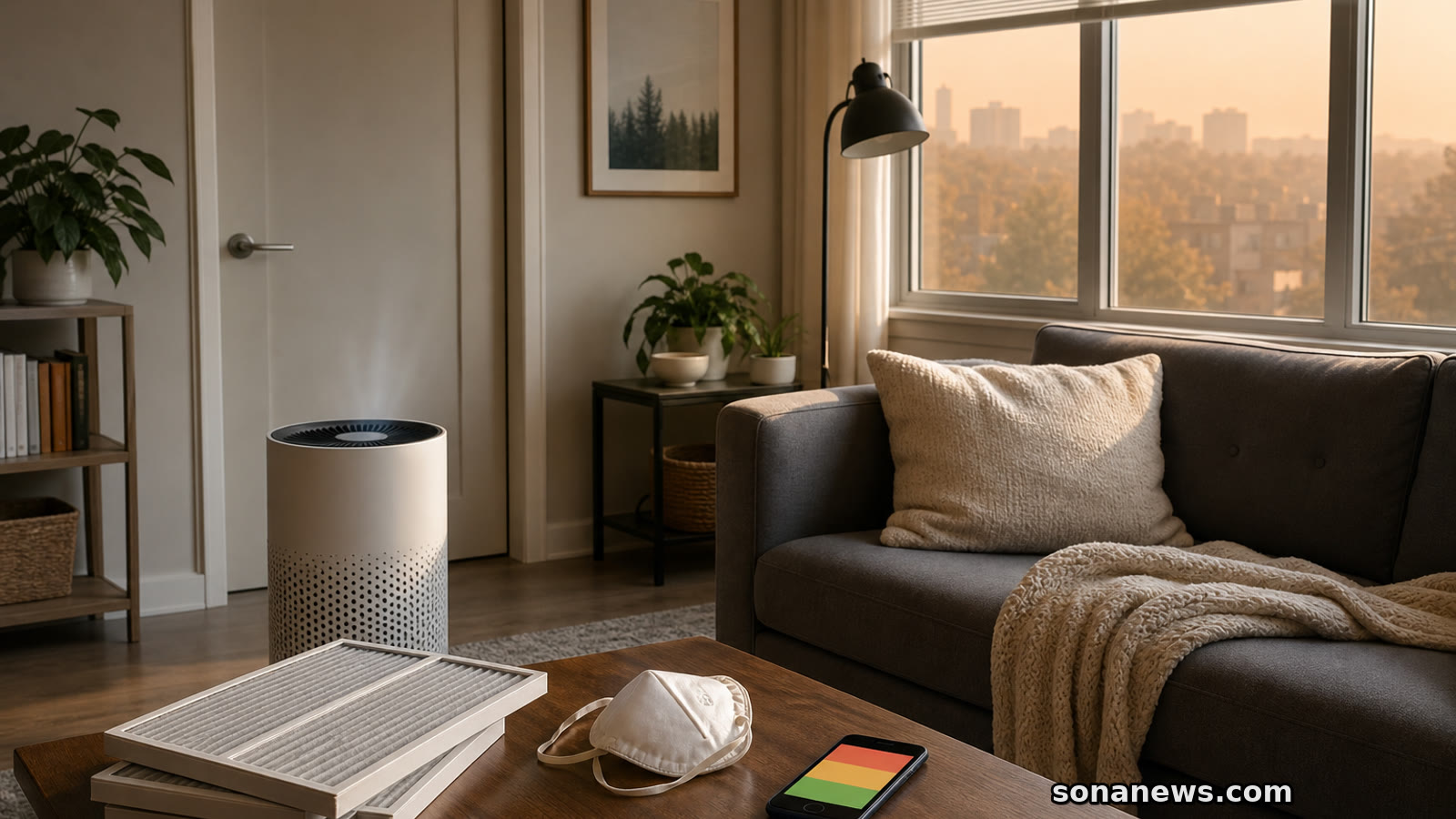
The home response begins with a small decision: choose one room. EPA defines a clean room as a room set up to keep smoke and other particles as low as possible during a wildfire smoke event. That means closed windows and doors, no cooking, no smoking, no vaping, no candles, and as little particle-making activity as possible. A bedroom with an attached bathroom is often easier to keep closed for longer periods, but the practical test is simpler. Can everyone who needs it spend time there, and can the room stay cool without dragging smoky air inside?
Cooling matters because a sealed room can become unpleasant or unsafe if it overheats. EPA says that if a home cannot stay cool, the electricity goes out, or too much smoke still gets inside, it may be better to seek shelter elsewhere. That caveat matters. A clean-air room is a temporary protective setup, not a promise that staying put is always sensible. Local emergency instructions still outrank any household plan.
Filtration is the next layer. AirNow says portable air cleaners are meant to filter a single room or area, so sizing the device to the room is part of the job. It also warns against ozone-generating air cleaners. For homes with central HVAC, AirNow and CDC point to high-efficiency filters, preferably MERV 13 or higher if the system can safely use them, and recirculation settings that avoid pulling in outdoor air during heavy smoke. This is where the home checklist starts to look less like a gadget list and more like maintenance: know the filter size, have replacements ready, and know which setting closes or reduces outdoor intake.
There is a consumer trap here. The cheapest answer may arrive too late, and the most expensive answer may be the wrong size. AirNow puts it plainly: prepare before smoke is in the air, because supplies may be out of stock or may not arrive in time. The useful purchase is the one that fits the room and can be used correctly. A huge purifier in the wrong place is not a plan. Neither is a filter that does not fit the HVAC slot.
DIY box-fan air cleaners sit in the same category: useful in some situations, not a casual hack. EPA says DIY air cleaners made with a box fan and MERV 13 filter can reduce simulated wildfire smoke particles in lab tests, but it recommends them only when products of known performance are not available or affordable. AirNow adds the safety detail people tend to skip: use a newer box fan model, 2012 or later, and do not leave an older fan unattended, including while sleeping. CDC is blunter still: if using a DIY box-fan filtration unit, never leave it unattended.
The less photogenic advice may be the most important. Do not add pollution indoors while trying to keep smoke out. CDC lists candles, gas or propane use, incense, wood burning, smoking, stove cooking and vacuuming among activities that can worsen indoor air. That does not make ordinary cooking dangerous in ordinary conditions. It means the smoky day changes the household math. The clean room is meant to be boring on purpose.
There is also a social side. Some homes do not have central air. Some households share rooms. Some people cannot buy a purifier before smoke season. That is why the official guidance keeps returning to alternatives: local alerts, AirNow, state air quality sites, public cleaner-air shelters, and staying with friends or family outside the smoke-affected area when home conditions are not workable.
A good home smoke plan is modest. Pick the room before the alert. Check the filter size before the store is busy. Learn the HVAC setting before the air turns bad. Keep the setup cool enough to use. Know when the answer is not another device, but leaving for cleaner air or following local emergency instructions.
The clean-air room is not glamorous. That is probably its strength. It turns a frightening outdoor event into a few household decisions made early, while there is still time to make them calmly.
Editorial note. This article is general home and safety information. It is not medical, electrical, fire or emergency advice. During wildfire smoke, follow local emergency instructions, public-health guidance and professional advice for your own household conditions.
Sources
- U.S. Environmental Protection Agency - "Emergencies and Indoor Air Quality" - - extracted 2026-06-09. Verified: page updated June 1, 2026; Smoke Ready Week, June 1-5; EPA emphasis on preparing for emergencies that affect indoor environments and keeping indoor air clean during wildfire smoke events
- U.S. Environmental Protection Agency - "Wildfires and Indoor Air Quality (IAQ)" - - extracted 2026-06-09. Verified: wildfire smoke can make indoor air unhealthy, fine particles are the main health threat, smoke enters via windows, doors, ventilation and infiltration, and evacuation readiness remains necessary near active fires
- U.S. Environmental Protection Agency - "Create a Clean Room to Protect Indoor Air Quality During a Wildfire" - - extracted 2026-06-09. Verified: clean-room definition, closed doors and windows, avoiding particle-producing activities, evacuation caveats, and shelter-elsewhere guidance if the home cannot stay cool or smoke still gets in
- AirNow.gov - "Be Smoke Ready" - - extracted 2026-06-09. Verified: clean-air-room preparation, higher-risk groups, portable air cleaner sizing, ozone caution, MERV 13-or-higher filter guidance, preparing before smoke arrives, and DIY box-fan age/supervision notes
- CDC - "Safety Guidelines: Wildfires and Wildfire Smoke" - - extracted 2026-06-09. Verified: AQI monitoring, keeping smoke outside, portable air cleaner or filter use, recirculation guidance, indoor activities that worsen air quality, and DIY box-fan supervision warning
- U.S. Environmental Protection Agency - "Research on DIY Air Cleaners to Reduce Wildfire Smoke Indoors" - - extracted 2026-06-09. Verified: DIY air cleaners with a box fan and MERV 13 filter can reduce simulated wildfire smoke particles in laboratory testing, EPA preference for products of known performance when available, and safety recommendations for newer certified box fans
Help us improve
Was this article useful?
One anonymous tap helps Sona improve future reporting, headlines and source context.
Up next
A gold-coloured lamp has been recalled because its plug can overheat. With no model or serial identifier published, the order record matters more than a visual match.
Continue readingMore in Home & Living