The no-alcohol option has become part of the night out
Gallup, Bank of America, Drinkaware and IWSR data point to a quieter shift: moderation is showing up in household spending, bar culture and the drinks list, not only in January.
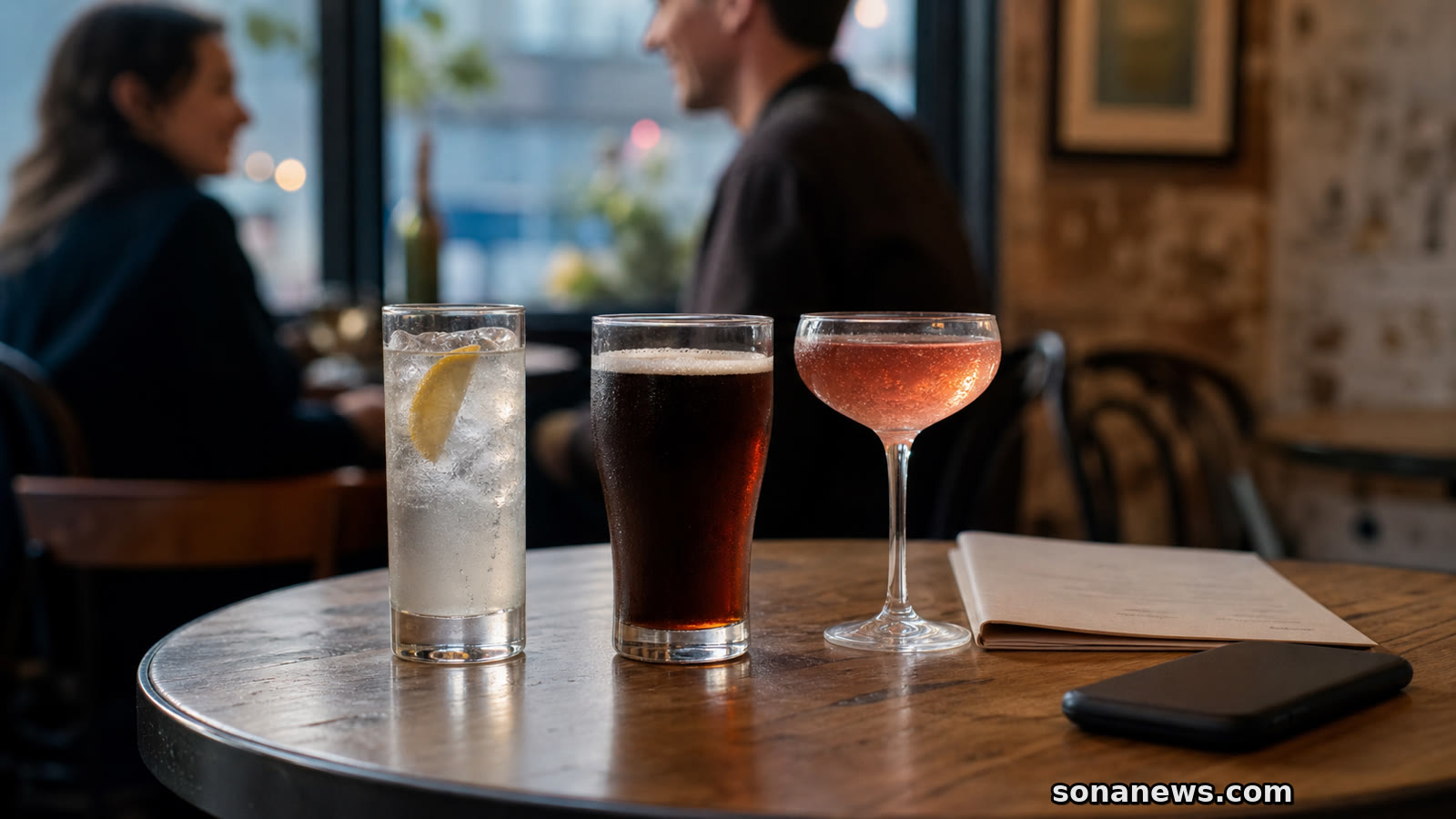
The interesting thing about the no-alcohol drink is how ordinary it is trying to become. For a while, it arrived wrapped in seasonal language: Dry January, sober curiosity, a challenge, a reset, a badge. That made it easy to treat moderation as a mood or a marketing label. The newer evidence points to something less theatrical and more durable. The night out is not losing the drink. It is gaining another default.
Gallup's latest long-running U.S. polling gives the cultural shift a clear frame. In July 2025, 54% of U.S. adults said they drink alcohol, the lowest reading in Gallup's nearly 90-year trend. Gallup also found that 53% of Americans now say moderate drinking, defined in its question as one or two drinks a day, is bad for health. In the early 2000s, that view sat around a quarter of adults. The number does not mean everyone is becoming abstinent. It does mean the old assumption, that ordinary social drinking is culturally neutral, has weakened.
That distinction matters. A lifestyle story about alcohol can become smug very quickly, as if one group has discovered discipline and another group has not. The data is messier. Bank of America Institute's February 2026 analysis says alcohol spending as a share of household budgets is hovering near 40-year lows, but it also sees a split between places and occasions: spending at liquor, wine and beer stores is sliding, while bar spending is still rising strongly. Its reading is not that Dry January has conquered the calendar. It is that long-run behaviour looks more like moderation than one month of abstinence.
In other words, the night out is not simply moving from pub to sofa or from cocktails to tap water. Some of the money and attention is shifting toward gyms, fitness classes and active hobbies, especially among younger consumers, but social venues still matter. The question for a bar, restaurant, wedding, festival or house party is becoming less binary than "drinking or not drinking". It is whether the non-drinking option feels like a real part of the occasion, or like an apology in a warm bottle at the back of the fridge.
The UK evidence makes that practical. Drinkaware's 2025 report on alcohol-free and low-alcohol drinks says 44% of UK drinkers now use those products to moderate their alcohol intake, up from 31% in 2018. Use of alcohol-free drinks rose from 18% to 31% over the same period, and low-alcohol drinks from 25% to 33%. Among 18- to 34-year-olds, uptake rose from 28% to 49%. The report is careful about the public-health claim: the benefit depends on whether these drinks substitute for regular-strength alcohol rather than simply adding more occasions.
That caveat is useful because it stops the category becoming a miracle story. A no-alcohol beer is still a consumer product, not a personality upgrade. It can make some social settings easier for people who are driving, working early, pregnant, training, taking medication, watching spending, avoiding a hangover or simply not in the mood. It can also be expensive, unevenly available and wrapped in the same premium branding as everything else on the drinks list. Choice is real, but so are price, access and pressure.
IWSR's market data suggests the shift has moved beyond a niche shelf. In the top 10 global no and low markets, it reported 13% volume growth in 2024, with 61 million people recruited into no-alcohol and 38 million into low-alcohol between 2022 and 2024. It also forecast no-alcohol beverages to grow faster than total beverage alcohol through 2028. The most revealing part is not only the growth rate. IWSR says taste, availability, brand familiarity and category awareness are becoming more important drivers, especially among younger legal-drinking-age consumers. That is what happens when a product stops being only a statement and starts being judged as a drink.
The cultural signal is small but visible. A good non-alcoholic option changes the script of an evening. It lets one person stay in the round without pretending. It lets someone else slow down without making a speech. It gives the host a less loaded way to ask what people want. It gives venues a reason to treat moderation as hospitality, not as a problem to be managed.
None of that removes the need for caution around alcohol itself. The evidence on health risk is one reason attitudes are changing, and people with concerns about alcohol use need qualified support rather than lifestyle slogans. But the consumer story is already here. The no-alcohol option has become part of the night out because it answers a very ordinary social question: how to join in without making the same choice every time.
Editorial note. This article discusses drinking culture, no-alcohol products and public survey or market findings in general terms. It is not medical, mental-health, addiction, pregnancy, driving, legal or personal safety advice. Anyone concerned about alcohol use, medication interactions, pregnancy, dependency or personal risk should seek qualified professional or local public-health guidance.
Sources
- Source: "U.S. Drinking Rate at New Low as Alcohol Concerns Surge", Gallup, Extracted 2026-06-17. Verified: July 2025 survey timing, 54% U.S. adult drinking rate, Gallup's nearly 90-year trend language, 53% saying moderate drinking is bad for health, and historical comparison with earlier concern levels
- Source: "Younger generations move from barstools to barbells", Bank of America Institute, Extracted 2026-06-17. Verified: February 2026 analysis, alcohol spending as a share of household budgets near 40-year lows, split between declining liquor, wine and beer store spending and stronger bar spending, and interpretation that the longer-run trend is moderation rather than only Dry January abstinence
- Source: "Alcohol-free and low-alcohol drinks in the UK: Trends, barriers, and opportunities", Drinkaware, Extracted 2026-06-17. Verified: 44% of UK drinkers using alcohol-free or low-alcohol drinks to moderate, comparison with 31% in 2018, growth in alcohol-free and low-alcohol use, 18-34 uptake, and the substitution caveat
- Source: "More than moderation: the long-term rise of no and low", IWSR, Extracted 2026-06-17. Verified: top 10 market list, 13% no and low volume growth in 2024, recruitment into no-alcohol and low-alcohol between 2022 and 2024, forecast no-alcohol growth, and drivers such as taste, availability, brand and category awareness
Help us improve
Was this article useful?
One anonymous tap helps Sona improve future reporting, headlines and source context.
Up next

Across 11 experiments, people were more willing to give when invited to continue a run of donors. The effect offers a useful lesson about social signals, and a warning about how easily momentum can be staged.
Continue readingMore in Lifestyle