WhatsApp’s third-party chats make interoperability a setting, not a slogan
Europe’s Digital Markets Act is turning a platform-policy word into an opt-in chat feature, with real limits attached.
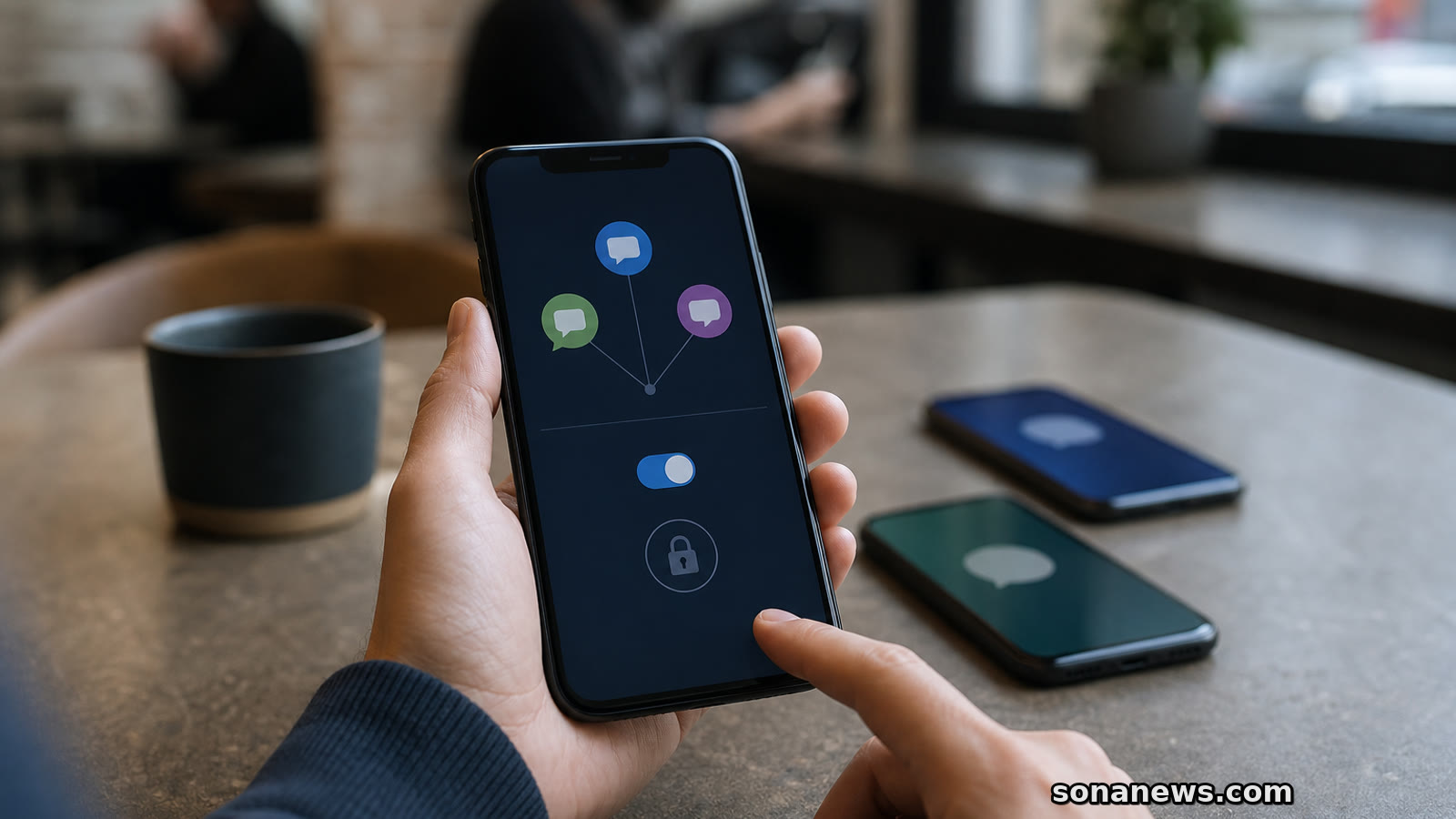

The most interesting platform change is sometimes the least theatrical one. It does not arrive as a new social network, a rebrand or a keynote demo. It appears as a setting.
That is the useful way to read WhatsApp’s third-party chats plan in Europe. Meta announced that people using WhatsApp in the European Region will have the option to message eligible third-party services from inside WhatsApp. The first named services are BirdyChat and Haiket. The feature is being built under the EU Digital Markets Act, the competition law better known as the DMA.
For ordinary users, the phrase “messaging interoperability” sounds like a policy seminar. The practical version is simpler: a chat app can no longer rely only on the fact that everyone else is already there. If another provider does the technical work and qualifies for access, a WhatsApp user in Europe should be able to send basic messages across that boundary without treating the other app as a dead end.
Meta’s own description keeps the limits in view. Third-party chats are optional. WhatsApp users who are eligible will be able to turn the experience on or off, and Meta says the app will explain the main differences between standard WhatsApp chats and third-party chats during onboarding. At launch, the supported material is one-to-one communication: messages, images, voice messages, videos and files. Group chats are planned later, once third-party partners are ready.
That is not the universal inbox that technology optimists have imagined for years. It is narrower, more regulated and more conditional. It applies in Europe. It depends on third-party messaging services choosing to interoperate and meeting the technical and security conditions. It also leaves plenty of normal product questions unresolved for users: how contact discovery works, how blocking and reporting feel, what happens when a feature is available in one app but not another, and whether people understand the privacy boundary they are crossing.
The reason this matters is not that BirdyChat or Haiket are household names. It matters because the default power of a dominant messenger comes from the network itself. People stay where their friends, families, customers or community groups already are. Once that circle is closed, a smaller rival has to persuade users to move both the tool and the social graph. Interoperability does not remove that barrier, but it can put a small door in it.
The legal machinery behind that door is unusually specific. A European Commission decision on Meta’s Messenger interoperability timing summarised Article 7 of the DMA: designated gatekeeper messaging services must make basic functions interoperable with other number-independent interpersonal communication services, upon request and free of charge. For the first phase, that includes end-to-end text messaging between two individual users, with sharing of images, voice messages, videos and other attached files. The same decision also points to the DMA’s security requirement, including end-to-end encryption where applicable.
That security clause is not decoration. A cross-app chat is only useful if users do not feel that interoperability has made their conversations more fragile. Meta says third-party messaging apps must use the same level of end-to-end encryption as WhatsApp, and frames the design as a “privacy first” approach. The careful wording matters. Once more than one service is involved, the user experience includes not only the encryption protocol but also the practices of the other provider, its abuse handling, its metadata choices and its support systems.
This is why the best consumer test is not “does it sound open?” It is “what exactly changes in the app?” A good implementation should make the setting easy to find, explain who can be reached, show which features work, and avoid nudging users into a privacy choice they do not understand. An interoperable messenger that hides its trade-offs would simply replace one kind of lock-in with another kind of confusion.
The Commission is also trying to show that the DMA is moving from theory to visible product changes. Its 2025 implementation report says practical benefits for business users and end users started to materialise that year, while its DMA portal describes the law as a way to make digital markets fairer and more contestable. The smartphone factsheet published in May 2026 uses similar language around portability and interoperability, including changes intended to make mobile ecosystems less closed.
The sceptical reading is still necessary. Regulation can require an interface, but it cannot make people use it. It cannot force every smaller messenger to build and maintain a complex integration. It cannot make cross-app chats feel as polished as a native conversation on day one. And it cannot settle every argument about encryption, spam, moderation and responsibility by itself.
Even so, the setting is the story. Interoperability becomes real when it stops being a promise in a policy document and becomes a small, revocable choice inside an app people already use. If WhatsApp’s third-party chats work well, many users may barely notice the law behind them. That would be the point. The most durable platform changes often look boring once they finally reach the screen.
Sources
- Source: "Messaging Interoperability: WhatsApp enables third-party chats for users in Europe", Extracted 2026-06-13. Verified: Meta’s announcement, European availability, opt-in design, BirdyChat and Haiket as first partners, supported one-to-one media types, planned group chats and stated end-to-end encryption approach
- Source: "Digital Markets Act", Extracted 2026-06-13. Verified: DMA purpose, gatekeeper framework, core platform services including messenger services, Commission enforcement role and 2026 implementation-report context
- Source: Regulation (EU) 2022/1925, Extracted 2026-06-13. Verified: official legal source for the Digital Markets Act, title, status and official publication details
- Source: European Commission decision DMA.100097, Extracted 2026-06-13. Verified: Article 7 interoperability explanation, Meta gatekeeper designation for WhatsApp and Messenger, basic function scope, free-of-charge request basis, three-month response rule and security requirement including end-to-end encryption where applicable
- Source: "Commission publishes 2025 report on the Digital Markets Act implementation", Extracted 2026-06-13. Verified: Commission’s 2026 update that DMA implementation in 2025 involved open proceedings, fines, interoperability conditions and practical market effects
Help us improve
Was this article useful?
One anonymous tap helps Sona improve future reporting, headlines and source context.
Up next

The coming Android 16 feature lets Gemini save where you say you left keys or a passport. That can be useful, but it only knows the location you entered.
Continue readingMore in Tech