The infant formula recall makes the lot code part of feeding safety
A June 2026 CDC and FDA investigation into recalled powdered infant formula shows why the small code on a can can become a public-health signal.
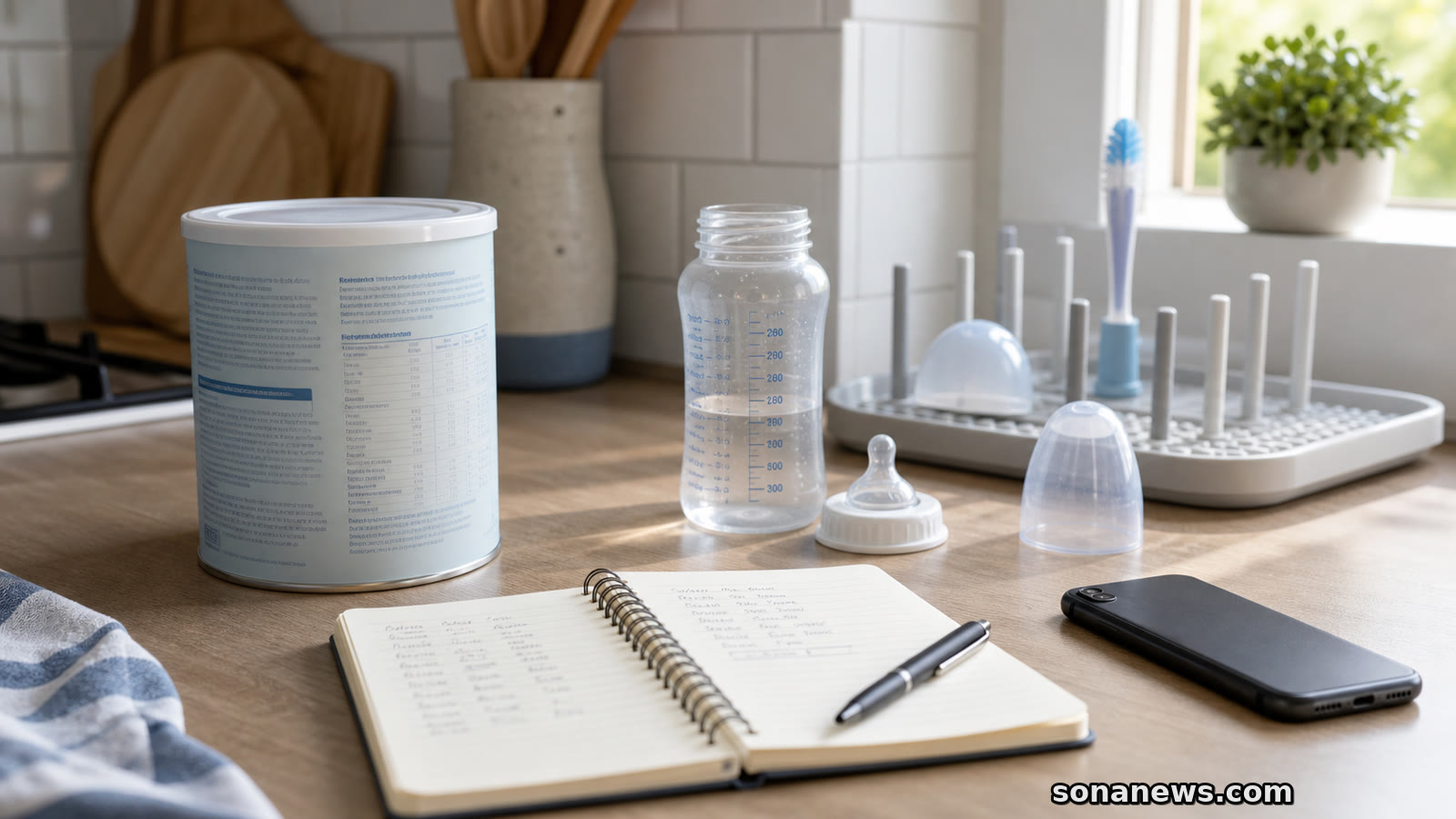

The most important detail on an infant formula can is not always the label on the front. Sometimes it is the quieter information printed near the base or lid: the lot number, the use-by date, the product name in full, and where the container came from. A June 2026 infant botulism investigation has made that small paper trail part of the health story.
CDC, FDA, the Infant Botulism Treatment and Prevention Program and state public-health officials are investigating a multistate outbreak of infant botulism linked to recalled Nara Organics Whole Milk Organic Powdered Infant Formula. CDC lists the investigation as open, with a recall issued. FDA says Nara Organics agreed on 13 June 2026 to recall all of its Whole Milk Organic Powdered Infant Formula while testing and the wider investigation continue.
The numbers are small, and they need to stay small in the telling. CDC reports three cases, three hospitalisations and no deaths across three states. FDA identifies the states as California, Pennsylvania and Washington, with illness onset between April and May 2026 and three confirmed or suspected toxin type A infections reported through California's Infant Botulism Treatment and Prevention Program. Officials say all three infants consumed Nara Organics powdered infant formula, while leftover product testing is still underway.
That distinction matters. Public-health language is careful for a reason. A recalled product can be linked to illnesses while the precise route, source and root cause remain under investigation. FDA says the company’s formula was manufactured in Europe, distributed online and nationwide through Target retail stores, Target.com and Nara.com from July 2025 to June 2026, and not distributed outside the United States. The agency also says the product accounts for less than 1% of all infant formula sold in the United States, and that the recall is not expected to create shortage concerns.
The useful reader lesson is not panic. It is identification. A recall only works when the product in a cupboard can be matched to the product in the official notice. In ordinary life, packaging details can feel like background noise. During an outbreak investigation, those details become the link between a kitchen shelf, a retailer, a manufacturer, a laboratory and a public-health department.
CDC and FDA both tell caregivers not to feed infants recalled Nara Organics formula. The agencies say unopened cans can be thrown away or returned. For opened cans, official guidance is more specific because testing may be useful if symptoms develop. CDC advises taking a picture and recording the lot number and use-by date, considering keeping the container for possible testing, marking it clearly as not for use, storing it away from feeding items, and keeping it for at least one month before disposal if no symptoms appear. FDA gives similar instructions and says items and surfaces that may have touched the formula can be washed with hot soapy water or in a dishwasher.
This is where the story moves from one brand to the wider formula routine. Powdered formula is a highly practical product, but it is also a product used for infants who may depend on it for most or all nutrition. FDA's parent and caregiver information explains that formula sold in the United States is strictly regulated, and that safe preparation and handling are part of preventing contamination and illness. Its broader consumer guidance says formula should be prepared according to the label, with attention to the use-by date, clean feeding supplies and safe water.
Infant botulism is rare, but CDC describes botulism as a serious illness caused by a toxin that attacks the body's nerves. In infants, botulism happens when spores enter the intestines, grow and produce toxin. CDC's outbreak notice says it often starts with constipation, but is usually first noticed through feeding difficulty, a weak or altered cry and loss of muscle tone. FDA notes that symptoms can take as long as several weeks to develop after formula ingestion.
Those symptom lists can sound frightening when read in isolation. The responsible use of them is narrower: they explain why the official notices urge medical care if concerning signs appear after exposure to the recalled product. They are not a home checklist for deciding what is wrong with a baby, and they are not a reason to improvise feeding decisions without a clinician. The public-health system is trying to shorten the distance between a recalled product, a possible exposure and professional assessment.
There is also a supply-chain lesson. FDA's post-outbreak response page on earlier powdered infant formula botulism illnesses says the agency and CDC investigated 48 infant illnesses across 17 states from late 2025 through early 2026, and that later inspections identified Clostridium botulinum in a powdered milk ingredient. FDA says its root-cause work has focused on ingredients and supply chains, with surveillance sampling and risk assessment work continuing. That context does not prove the cause of the June 2026 investigation, but it does show why ingredient trails matter.
For parents and caregivers, the calm version is that the official recall page is the source, not a social post, a screenshot or a half-remembered brand name. A product name may sound similar to another. A retailer may have sold it months earlier. A use-by date and lot code may be the only reliable way to connect a container to a notice. In a health story involving infants, uncertainty is not solved by louder language. It is handled by better matching, better records and faster reporting by the agencies responsible for the investigation.
The formula can, in other words, is not just packaging. In a recall, it becomes evidence, a consumer alert and a practical bridge to the public-health system. The front label may be what shoppers remember. The lot code may be what makes the recall work.
Editorial note. This article is for general information only and is not medical advice. Infant feeding, possible illness, product exposure and recall decisions can depend on a child’s age, health history and local public-health guidance. For concerns about symptoms, feeding or a recalled product, use the current CDC, FDA, local health authority or clinician guidance rather than this article alone.
Sources
- Source: "Infant Botulism Outbreak Linked to Powdered Infant Formula, June 2026", Centers for Disease Control and Prevention, Extracted 2026-06-16. Verified: investigation open status, recall issued, agencies involved, three cases, three hospitalisations, no deaths, Nara Organics product name, less than 1% market-share note, no expected shortage concern, symptoms and CDC instructions for unopened and opened cans
- Source: "Outbreak Investigation of Infant Botulism: Powdered Infant Formula (June 2026)", U.S. Food and Drug Administration, Extracted 2026-06-16. Verified: 13 June 2026 recall agreement, ongoing investigation, distribution through Target retail stores, Target.com and Nara.com, July 2025 to June 2026 distribution period, CA/PA/WA case states, illness onset period, no distribution outside the USA and testing underway
- Source: "About Botulism", Centers for Disease Control and Prevention, Extracted 2026-06-16. Verified: botulism is rare but serious, toxin mechanism, infant botulism mechanism, and CDC emergency-care framing
- Source: "Infant Formula Information for Parents & Caregivers", U.S. Food and Drug Administration, Extracted 2026-06-16. Verified: formula forms, formula as a key nutrition source, FDA role, safe preparation and handling, use-by-date importance, and healthcare-provider caveat for formula choice
- Source: "Infant Formula: Safety Do's and Don'ts", U.S. Food and Drug Administration, Extracted 2026-06-16. Verified: FDA warning against homemade formula, safe water and label-based preparation, clean feeding supplies, storage timing, use-by date and no microwave heating
- Source: "Post-Outbreak Response Activities: Clostridium botulinum Illnesses Associated with Consumption of Powdered Infant Formula", U.S. Food and Drug Administration, Extracted 2026-06-16. Verified: 48 illnesses across 17 states in the earlier 2025-2026 outbreak, CDC over declaration date, ingredient-focused root-cause work, powdered milk ingredient finding and ongoing prevention activities
Help us improve
Was this article useful?
One anonymous tap helps Sona improve future reporting, headlines and source context.
Up next

Primary school sessions begin this week, with secondary pupils following later in autumn. For most families, the practical deadline comes from the local school immunisation team.
Continue readingMore in Health