Newborn screening is becoming a health-system test, not just a heel prick
WHO’s new call to expand newborn screening is really about the path after the first result: diagnosis, referral, care and long-term support that poorer health systems often lack.
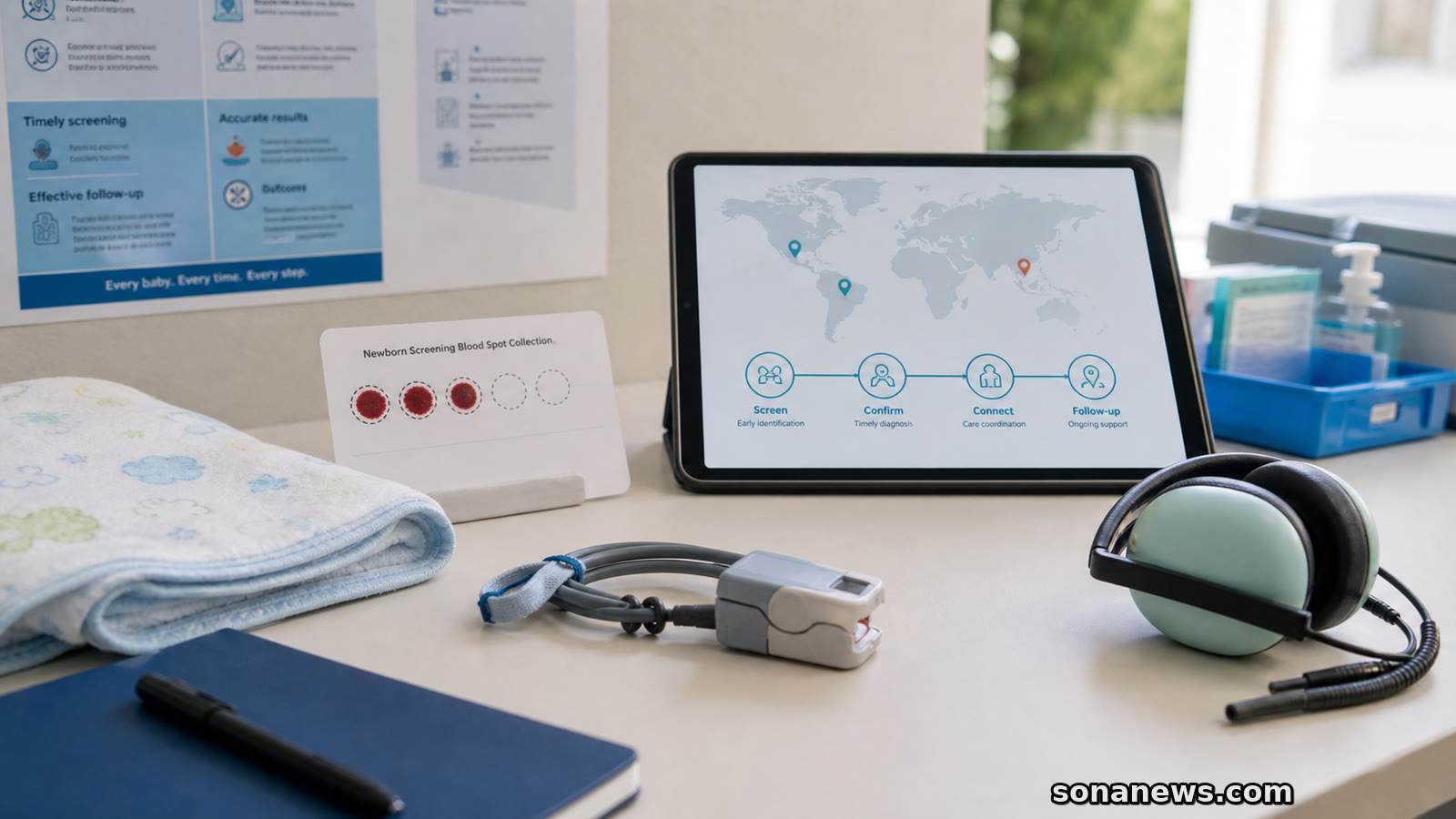

The smallest health story in a maternity ward can be easy to misread. A heel-prick card, a hearing check or a pulse oximeter on a newborn’s foot looks like a brief test before a family goes home. WHO’s latest newborn screening call asks governments to see something bigger: a health-system promise that starts in the first days of life and only matters if the next steps are ready.
On 23 June, the World Health Organization urged countries to expand newborn screening for birth defects. Its headline was about early detection, but the report behind it is more practical than sentimental. Screening is useful when it is tied to diagnosis, referral, clinical management, rehabilitation and long-term support. Without that chain, a result can become a warning with nowhere to go.
The numbers explain why WHO is pressing the point now. It estimates that 8 million babies are born with a birth defect each year worldwide, and that birth defects account for almost 8 percent of all deaths among children under five. It also says about 90 percent of children born with serious birth defects live in low- and middle-income countries. As deaths from infections and other preventable causes fall in some places, congenital conditions become a larger share of the child-survival picture.
The gap between countries is stark. WHO says some countries screen all newborns for more than 50 conditions, while others are unable to screen for any. The lesson is not that every country can or must copy the longest screening panel overnight. WHO’s report instead argues for starting with one or a few priority conditions, chosen for local burden and realistic follow-up capacity, then building the programme inside routine health services.
That may sound bureaucratic, but bureaucracy is the point. A screening programme needs trained staff, consent processes, sample transport, laboratories, result reporting, referral routes, financing and data systems. It also needs parents or carers to receive clear information in a language and format they can use. The public image is the tiny blood spot. The public-health work is the pathway around it.
The UK blood spot programme shows how specific that pathway can be. NHS information says the newborn blood spot test is usually done when a baby is five days old and checks for 10 rare but serious conditions. GOV.UK pathway requirements for England describe the heel-prick sample, regional laboratories, early contact after a screen-positive result and an end-to-end route that runs from the period before screening to diagnosis and intervention. The details vary by country, but the principle travels well: screening is not a one-off event.
Newborn screening is also broader than a single card. CDC’s material on critical congenital heart defects describes pulse oximetry, a bedside oxygen-level check that can help identify some serious heart defects before a baby leaves hospital. CDC’s hearing screening guidance sets out the familiar 1-3-6 benchmarks: screen by 1 month, complete diagnostic evaluation by 3 months if the screen is not passed, and start early intervention by 6 months if hearing loss is confirmed. These are not guarantees. They are deadlines that try to keep a child from disappearing between a first signal and useful support.
That is the quiet policy shift in WHO’s report. The debate is less about whether early tests are clever and more about whether systems can act on what they find. Congenital hypothyroidism, sickle-cell disease, hearing impairment and some metabolic disorders are among the conditions WHO highlights as often manageable when found early. But an early signal without access to confirmation, medicines, specialist care or family support can deepen inequality rather than solve it.
There is a caution here for richer countries too. Expanding a screening panel can sound like automatic progress, but more screening also means more follow-up work, clearer communication, reliable laboratories and careful handling of false alarms or uncertain results. Public trust depends on explaining what screening can and cannot say. A screening result is not the same as a diagnosis, and a passed screen does not prove that every possible condition has been ruled out.
For families reading about the issue, the useful takeaway is not to memorise every condition on a national list. Lists differ because health systems, disease patterns and policy choices differ. The better question for public debate is whether a newborn screening programme has a complete route: an informed offer, a timely test where one is used, reliable results, a referral path and affordable care after that point.
WHO’s newborn screening call is therefore not a narrow maternity story. It is a test of whether child health systems can move from a tiny early signal to sustained support. The heel prick still matters. So does the hearing check, the oxygen check and the laboratory report. But the real measure is what happens after the first result lands.
Editorial note. This article is for general public-health information only and is not medical advice. It does not assess any individual pregnancy, newborn, symptom, screening result or clinical risk. Parents and carers with questions about a baby’s screening, health or results should use current local health-service information and qualified clinician guidance.
Sources
- Source: "WHO urges scale up of newborn screening to improve early detection and care of birth defects", World Health Organization, Extracted 2026-06-26. Verified: WHO’s 23 June 2026 call to expand newborn screening, the estimates of 8 million babies born with a birth defect each year, almost 8 percent of under-five deaths linked to birth defects, 90 percent of serious birth defects occurring in low- and middle-income countries, examples of conditions and the gap between countries that screen for more than 50 conditions and countries unable to screen for any
- Source: "Strengthening capacity for newborn screening, diagnosis and management of birth defects", World Health Organization, Extracted 2026-06-26. Verified: the report’s emphasis on integrating newborn screening, diagnosis, management, long-term care, rehabilitation, data systems and financing into national health systems, especially in low- and middle-income countries
- Source: "Newborn blood spot test", NHS, Extracted 2026-06-26. Verified: UK public information that the newborn blood spot test is usually done when a baby is five days old, checks for 10 rare but serious conditions and is intended to support earlier monitoring and care
- Source: "Newborn blood spot screening pathway requirements", GOV.UK, Extracted 2026-06-26. Verified: England pathway details, including heel-prick sample handling, regional laboratories, screen-positive contact and the end-to-end stages before screening, screening, diagnosis and intervention
- Source: "Screening for Critical Congenital Heart Defects", Centers for Disease Control and Prevention, Extracted 2026-06-26. Verified: CDC’s description of pulse oximetry, critical congenital heart defect screening, the need to screen before discharge where used and the warning that screening does not detect every heart defect
- Source: "Screening for Hearing Loss", Centers for Disease Control and Prevention, Extracted 2026-06-26. Verified: CDC’s newborn hearing screening information and 1-3-6 benchmarks for screening, diagnostic evaluation and early intervention
Help us improve
Was this article useful?
One anonymous tap helps Sona improve future reporting, headlines and source context.
Up next

Primary school sessions begin this week, with secondary pupils following later in autumn. For most families, the practical deadline comes from the local school immunisation team.
Continue readingMore in Health