The new cancer model library is a research map, not a treatment forecast
A newly published collection links 665 lab-grown models to tumour and clinical data, but even a faithful model remains a preclinical tool rather than a personal prediction.
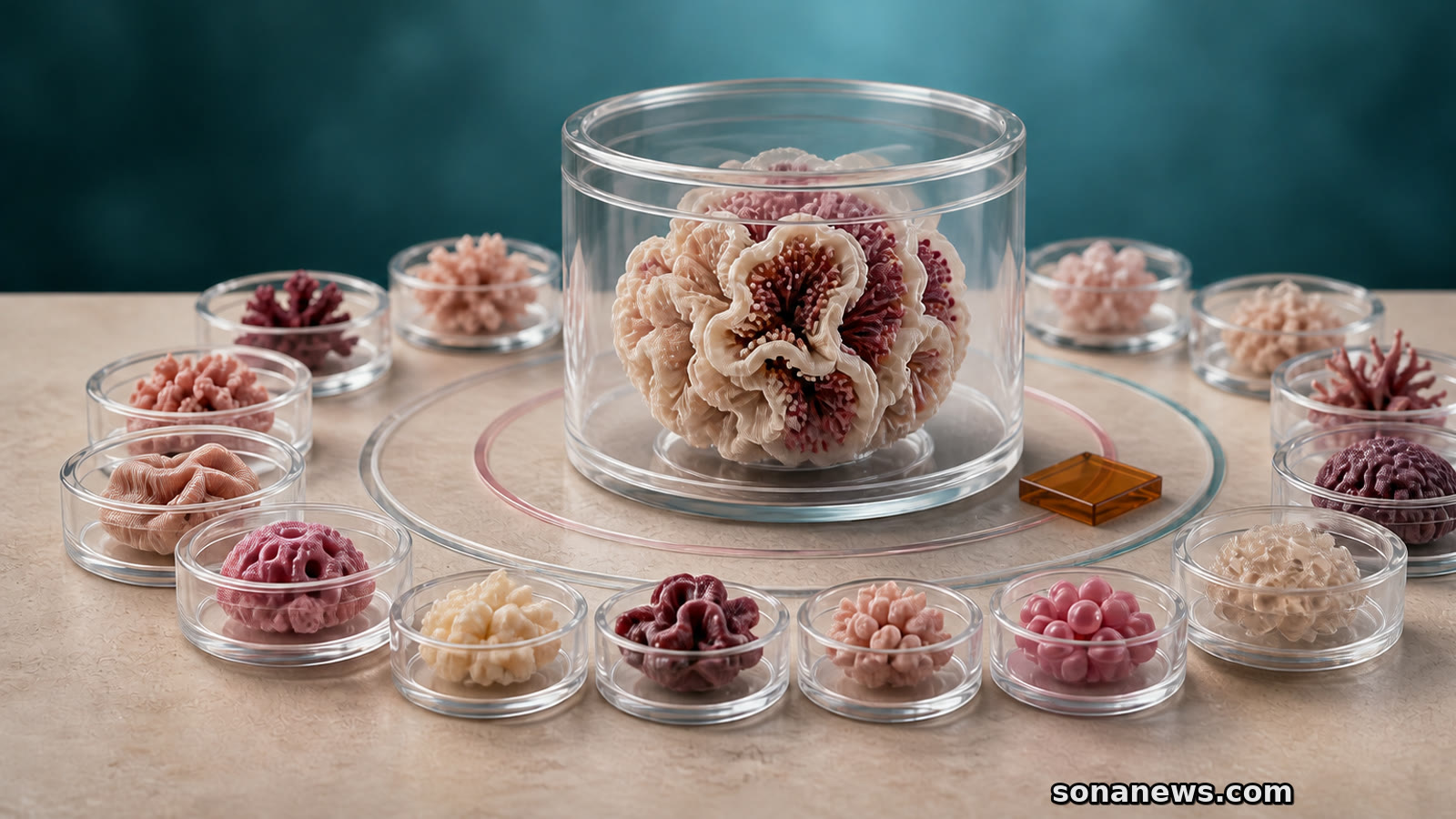

A tumour model can live in a laboratory for a year and still retain much of the molecular character of the tissue from which it began. That is a useful scientific achievement. It is not the same as predicting what will happen to the person who donated the tissue, and it is not a treatment recommendation in a dish.
That distinction sits at the centre of a new paper from the Human Cancer Models Initiative, or HCMI. Published in Nature on 5 August, the international project describes 665 next-generation cancer models spanning 25 malignancies. The models are being made available with molecular and, where present, clinical information so researchers can choose a better experimental system for a specific question.
The scale needs careful unpacking. Between 2016 and 2021, 2,780 people in the United States, United Kingdom, Italy and the Netherlands consented to take part. The final collection contains 665 models derived from 637 patients. A consented donor did not automatically yield a durable model, and some patients contributed more than one. This is a repository created through a demanding selection and quality-control process, not a miniature copy of every tumour that entered the programme.
Most of the collection is three-dimensional. The paper reports that 519 models, or 78 percent, are organoid cultures. Another 37 are spheroids and 109 are two-dimensional patient-derived cell lines. An organoid is a lab-grown three-dimensional structure made from cells under defined conditions. It can preserve more architecture and biological variation than a conventional flat cell line, but it does not recreate a whole person or even every component of a tumour.
The strongest headline number concerns fidelity. In analyses of 421 matched tumour-model pairs, the researchers reported 97.8 percent concordance in DNA alterations and 95 percent concordance in epigenetic features. In the discussion, they reported 92 percent concordance in RNA expression. Those measures show that the collection often keeps important features during extended growth. They are not percentages for treatment accuracy, survival prediction or a patient's chance of responding to a drug.
The mismatches are scientifically important too. The authors estimate that roughly 4 to 8 percent of models appeared less concordant. Detailed single-nucleus work on 16 pairs pointed to three possible reasons: the loss of immune and supporting stromal cells, the selective growth of one tumour subclone, and shifts in cell state that could sometimes be linked to the culture medium. A model can therefore be close to its source while changing in ways that matter for the experiment.
One limit is structural. HCMI models do not include the immune and stromal cells that surround malignant cells in a living tumour. The authors say that absence restricts their use for studying immune responses. Other formats are needed for those questions. The models may still help researchers examine mechanisms inside cancer cells, including features associated with treatment resistance, but that is preclinical investigation rather than evidence that an intervention works in a patient.
The collection also makes a long-running representation problem visible. It includes 153 models of rare cancers and 71 models from donors with predominantly non-European ancestry. Yet 85 percent of the models were assigned predominantly European ancestry. The paper's authors call the diversity insufficient and argue that a much larger international expansion will be needed. A broad catalogue is valuable, but broad is not universal.
What changes now is access. NCI describes HCMI as a collaboration with Cancer Research UK, the Wellcome Sanger Institute and Hubrecht Organoid Technology. Validated models are distributed through the American Type Culture Collection, while NCI provides a searchable catalogue and links to harmonised molecular data. Researchers can filter by features such as diagnosis, model type, treatment history and masked somatic variants. That makes the resource useful as shared infrastructure rather than as a single dramatic finding.
For readers, the practical lesson is about interpreting the next organoid headline. Ask whether the work is preclinical or has reached a human trial. Ask which feature of the original tumour the model preserves, and which cells or conditions are missing. Ask whether the people represented in the model bank match the population to whom a claim is being extended. These are not reasons to dismiss organoid research. They are the questions that keep a powerful research map from being mistaken for a clinical forecast.
The new HCMI collection is substantial because it gives laboratories a better starting point and lets them inspect where that starting point bends. Its success will be measured through reproducible experiments, wider representation and eventual clinical studies, not by treating a faithful lab-grown model as a verdict for one person's care.
Editorial note. This article is for general information about preclinical cancer research and is not medical advice. It does not interpret a diagnosis, tumour profile, organoid result, prognosis or treatment response, and it does not recommend a test or therapy. Personal cancer-care questions require the relevant clinical team or another qualified health professional.
Sources
- Source: National Institutes of Health, "Human cancer models to accelerate research and precision therapies", Dated 5 August 2026; extracted 7 August 2026. Verified: release timing, the 665-model and 25-cancer summary, distribution through ATCC, matched-pair concordance figures and the preclinical framing
- Source: ElHarouni et al., Nature, "A compendium of next-generation patient-derived models for diverse cancers", Published 5 August 2026; extracted 7 August 2026. Verified: consent cohort, models and patients represented, model formats, molecular analyses, discordance mechanisms, immune and stromal limitation, ancestry distribution, rare-cancer representation and authors' stated need for expansion
- Source: National Cancer Institute, "Human Cancer Models Initiative", Extracted 7 August 2026. Verified: international partners, resource purpose, model types, associated data and access through NCI systems
- Source: National Cancer Institute, "About Next-Gen Models", Extracted 7 August 2026. Verified: organoid definition, weaknesses of older cell lines, parent-tumour matching and the research purpose of next-generation models
- Source: National Cancer Institute, "HCMI Searchable Catalog", Extracted 7 August 2026. Verified: catalogue status, searchable clinical and model fields, masked somatic-variant handling and links to the Genomic Data Commons
Help us improve
Was this article useful?
One anonymous tap helps Sona improve future reporting, headlines and source context.
Up next

Primary school sessions begin this week, with secondary pupils following later in autumn. For most families, the practical deadline comes from the local school immunisation team.
Continue readingMore in Health