The tick check belongs after the walk
Official guidance from CDC, UKHSA and ECDC makes tick awareness a small summer habit, not a reason to avoid parks, gardens or trails.
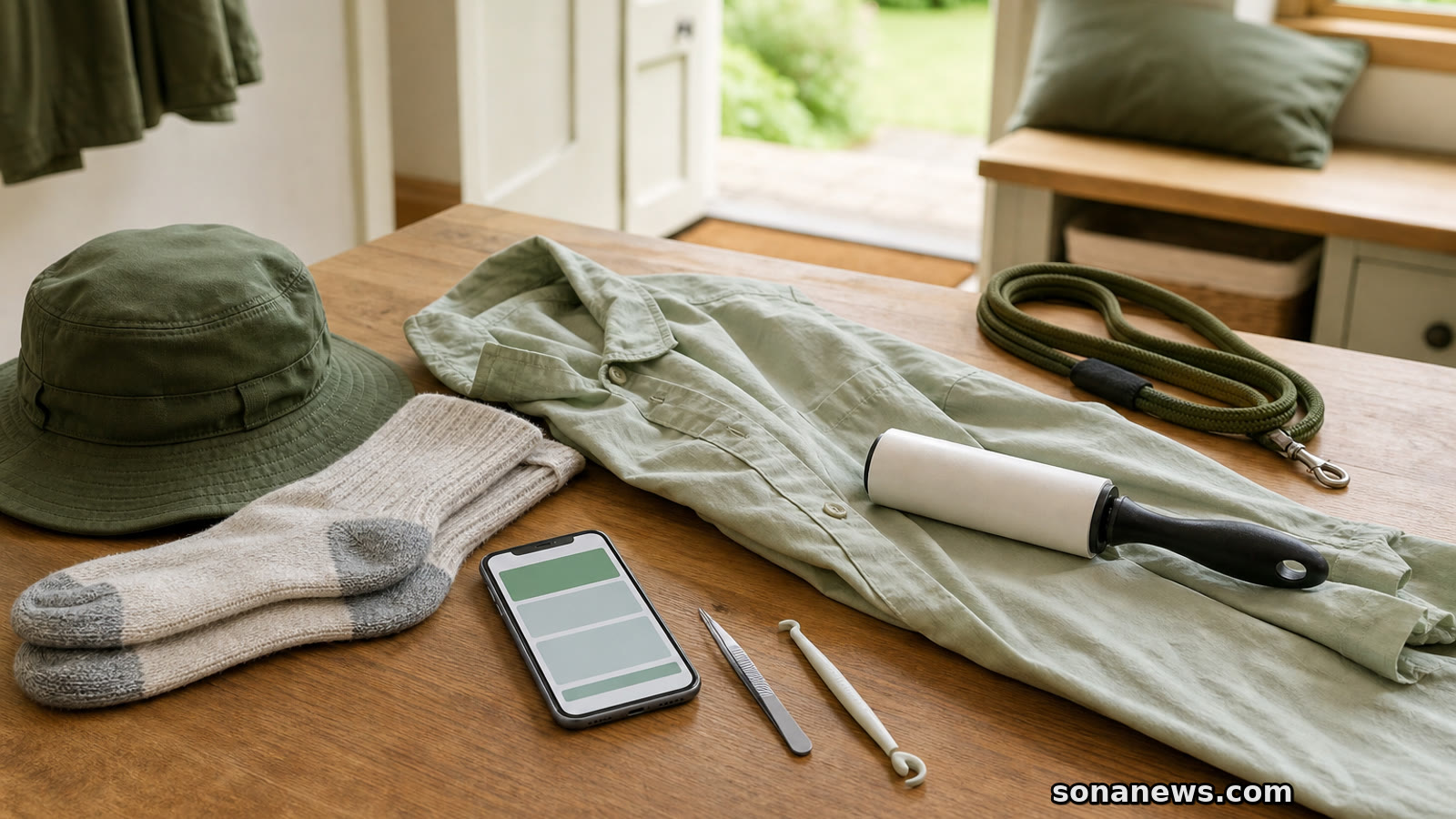

The tick check is easiest to forget because a tick bite rarely looks like a dramatic event. It may follow a dog walk, a garden tidy-up, a picnic in long grass or a weekend trail. It may happen close to home. It may not hurt. By the time the shoes are by the door, the useful part of the story is no longer the landscape. It is the small inspection that happens after coming indoors.
That is the quiet point running through official public-health guidance this summer. CDC says tick exposure can happen year-round in the United States, but ticks are most active during warmer months, from April to September. Its prevention page does not frame ticks as a wilderness-only problem. It names grassy, brushy and wooded areas, leaf litter, animals, dog walking, camping, gardening and time in a yard or neighbourhood.
Lyme disease explains why the subject keeps returning to public-health calendars without needing melodrama. CDC describes Lyme disease as the leading cause of tickborne disease in the United States, with an estimated 476,000 infections diagnosed and treated each year. Most U.S. cases are reported in the Northeast, mid-Atlantic and upper Midwest, with some on the Pacific Coast. The point is not that every outdoor hour is high risk. It is that risk is often local, seasonal and easy to miss.
The UK picture is similar in tone, even if the geography differs. UKHSA told the public to stay tick aware in summer after reporting 1,581 laboratory-confirmed Lyme disease cases in England in 2024, a figure it says is likely to underestimate the true burden. Its guidance is careful about proportion: not all ticks carry the bacteria that cause Lyme disease, not every bite from an infected tick leads to human infection, and seeing a tick crawling on the body before it has attached is unlikely to result in Lyme disease.
Europe adds another reason for a calm, practical habit. ECDC says ticks are abundant in woodlands across Europe from early spring to late autumn, and infected ticks can transmit bacteria or viruses through a bite. Its tick-borne disease pages include Lyme borreliosis and tick-borne encephalitis. In 2025, ECDC published maps showing tick-borne encephalitis hotspots mainly in Central, Eastern and Northern Europe, based on 2023 locally acquired case notification rates. That makes the subject regional rather than vague: place matters, season matters, and official maps matter more than folklore.
The useful habit is not complicated. CDC guidance points to checking the body, clothing, gear and pets during and after time outdoors. UKHSA says tick bites rarely cause pain, so people may not notice they have been bitten unless they look. NHS guidance also notes that ticks can be found in woods, long grass, urban parks and gardens, and that checks after outdoor time should include clothes, skin, children and pets.
Removal guidance is where precision matters. NHS and UKHSA both describe using a tick-removal tool or fine-tipped tweezers, grasping close to the skin and pulling slowly upwards, then cleaning the bite area. UKHSA makes a useful distinction: fine-tipped tweezers are not the same as ordinary eyebrow tweezers, because the goal is to avoid squashing the tick during removal. CDC also tells readers not to delay removal by waiting for a healthcare provider, because delay can increase the chance of infection from some tickborne diseases.
Repellent and clothing guidance can sound fussy until it is viewed as a routine rather than a ritual. CDC lists EPA-registered repellents with active ingredients such as DEET, picaridin, IR3535, oil of lemon eucalyptus, PMD and 2-undecanone, and notes that EPA-registered repellents are safe and effective when used as directed. It also says clothing and gear can be treated with 0.5% permethrin. UKHSA adds the simpler outdoor behaviours: staying on clear paths, avoiding brushing against vegetation, covering skin and checking exposed areas before ticks attach.
The symptom language needs care. This is not a prompt to make a diagnosis from a photograph or to panic at every bite. NHS says a round or oval rash can appear within one to four weeks after a bite, and sometimes later, while flu-like symptoms can also occur. It also notes that the rash may be harder to see on brown or black skin and may look more like a bruise. UKHSA tells people to contact a GP or NHS 111 if symptoms such as a spreading circular rash, flu-like symptoms, nerve pain or facial droop appear within weeks of a bite.
The practical conclusion is modest. A tick check belongs in the same category as washing hands after cooking or checking the UV index before a long day outside. It is not an argument against parks, gardens or trails. It is a way of keeping ordinary outdoor life ordinary, by adding one small public-health habit at the point when it can still make a difference.
Editorial note. This article is for general information only and is not medical advice. Tick exposure, Lyme disease risk, symptoms, removal needs, repellent suitability and vaccination questions can vary by person and place. For personal medical concerns after a tick bite or possible exposure, use an official health service or a qualified health professional.
Sources
- Source: "Preventing Tick Bites", Centers for Disease Control and Prevention, Extracted 2026-06-14. Verified: tick exposure settings, warmer-month activity, checks after outdoor time, EPA-registered repellents, permethrin-treated clothing and sunscreen before repellent order
- Source: "Preventing Lyme Disease", Centers for Disease Control and Prevention, Extracted 2026-06-14. Verified: Lyme disease cause, estimated 476,000 infections diagnosed and treated each year in the United States, main U.S. regions, yard and neighbourhood exposure, pet and tick-check guidance
- Source: "UKHSA reminds public to stay tick aware this summer", UK Health Security Agency on GOV.UK, Extracted 2026-06-14. Verified: 1,581 laboratory-confirmed Lyme disease cases in England in 2024, likely underestimate, summer peak, not all ticks infected, symptom and tick-removal guidance
- Source: "Lyme disease", NHS, Extracted 2026-06-14. Verified: tick locations, rash timing and visibility on different skin tones, safe removal steps, checking clothes, skin, children and pets, and when NHS directs people to seek help
- Source: "Tick-borne diseases", European Centre for Disease Prevention and Control, Extracted 2026-06-14. Verified: European tick season from early spring to late autumn, disease transmission context, Lyme borreliosis and tick-borne encephalitis framing
- Source: "Tick-borne encephalitis (TBE) in Europe: new maps published", European Centre for Disease Prevention and Control, Extracted 2026-06-14. Verified: spring-to-autumn tick activity, Central, Eastern and Northern European TBE hotspot framing, 2023 locally acquired case notification maps and personal protective measures
Help us improve
Was this article useful?
One anonymous tap helps Sona improve future reporting, headlines and source context.
Up next

Primary school sessions begin this week, with secondary pupils following later in autumn. For most families, the practical deadline comes from the local school immunisation team.
Continue readingMore in Health