The UV index belongs in the morning routine
Official health guidance frames UV as a forecasted exposure, not just a holiday or heatwave concern.
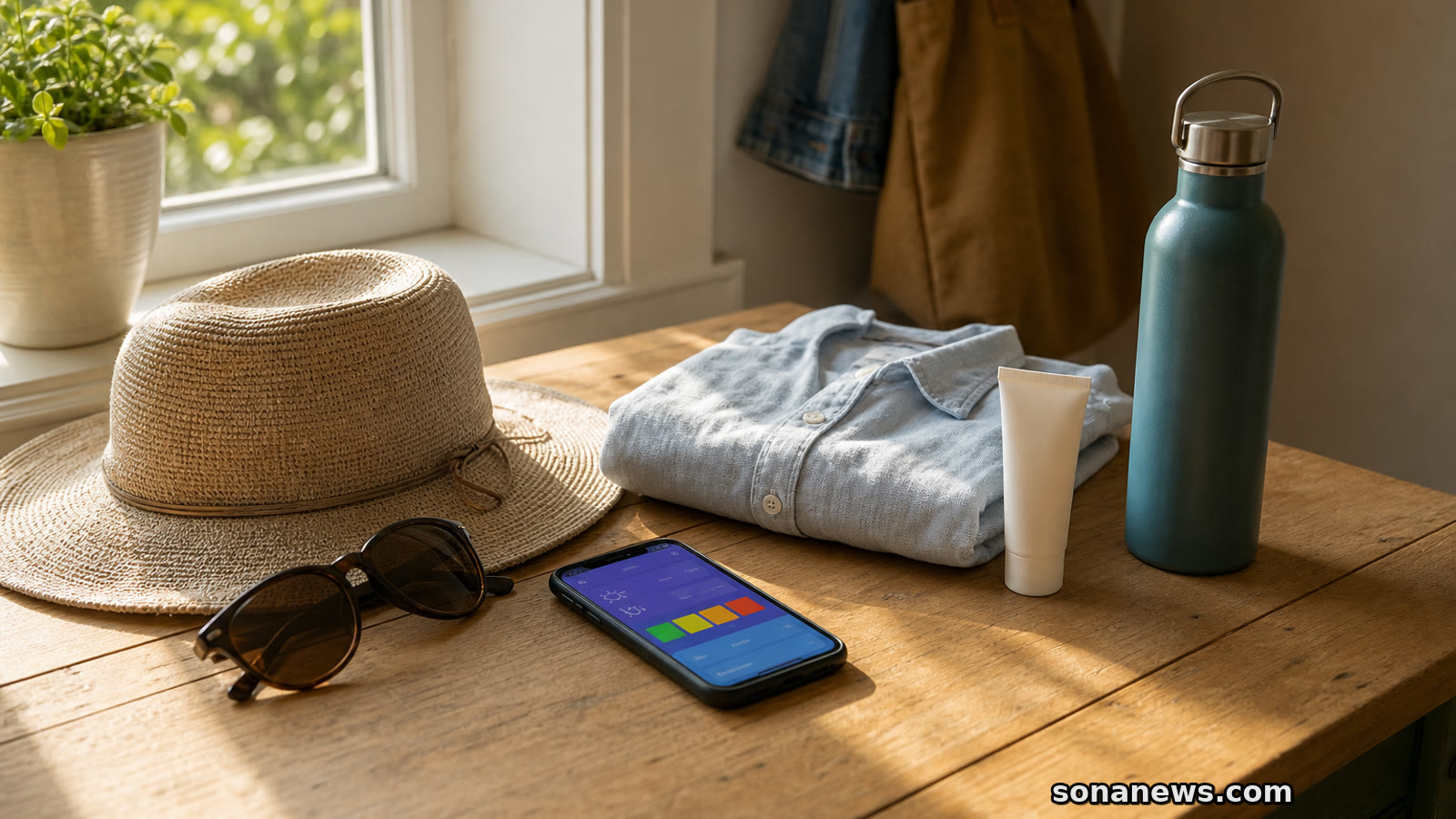

The most useful number in the summer forecast may not be the temperature. A mild morning can still carry strong ultraviolet radiation, while a hot day can distract from the quieter detail that matters for skin and eyes: the UV index.
That small number is easy to skip because it does not behave like weather in the ordinary sense. UV radiation cannot be seen or felt. A breeze can make a day feel gentle. Cloud can make the sky look harmless. Neither is a reliable measure of exposure. Official health guidance keeps returning to the same point because it is practical rather than dramatic: when the UV index rises, sun protection becomes a planning issue.
WHO describes the ultraviolet index as a measure of the level of UV radiation, starting at zero and rising upward. The higher the number, the greater the potential for damage to skin and eyes, and the less time it takes for harm to occur. It is not a moral score for the weather and it is not a command to stay indoors. It is a public-health signal, built so people can match the day to clothing, shade, timing, sunglasses and sunscreen.
The threshold is simpler than many people assume. WHO says sun protection is advised when the UV index is 3 or above. Its guide groups 0 to 2 as low, 3 to 7 as moderate to high, and 8 or above as very high to extreme. The daily maximum usually sits around the four hours around solar noon, which means the riskiest part of the day may not line up neatly with when the air feels hottest.
CDC makes the same point in domestic language. UV protection matters all year, not only in summer. UV rays can reach people on cloudy and cool days, and they can reflect from water, cement, sand and snow. In the continental United States, the agency says UV rays are typically strongest from 10 a.m. to 4 p.m. daylight saving time, or 9 a.m. to 3 p.m. standard time. Local conditions vary, but the habit travels well: check the forecasted UV, then plan the exposed hours with a bit less guesswork.
The reason this small habit matters is not because every walk outside is dangerous. It matters because skin cancer and eye damage are cumulative public-health problems, and the preventable part often looks ordinary. WHO's ultraviolet radiation fact sheet says skin cancers are caused primarily by UV radiation from the sun or artificial sources such as sunbeds. It also reports that globally in 2020, more than 1.5 million skin cancer cases were diagnosed and more than 120,000 skin cancer-associated deaths were reported. Those are large numbers, but the useful response is not panic. It is a routine that lowers unnecessary exposure.
The routine does not have to be theatrical. CDC's sun-safety page points to layers: shade, clothing that covers more skin, a wide-brimmed hat, sunglasses that block UVA and UVB rays, and broad-spectrum sunscreen with SPF 15 or higher on exposed skin. It notes that sunscreen wears off and gives reapplication situations such as staying in the sun for more than two hours, swimming, sweating or towelling off. For babies six months old or younger, CDC says sunscreen is not recommended and points instead to keeping infants out of the midday sun and using protective clothing when needed.
EPA's UV index scale adds a useful visual shortcut. For index values 3 to 7, it says protection is needed, including shade during late morning through mid-afternoon, protective clothing, a wide-brimmed hat, sunglasses and broad-spectrum SPF 15 or higher sunscreen on exposed skin. At 8 or above, it says extra protection is needed. EPA also offers the shadow rule: if a person's shadow is shorter than they are, UV exposure is likely to be higher.
This is where the morning-routine idea helps. The UV index belongs beside the rain chance and temperature because it changes small decisions before the day runs away: whether a lunch break is better in shade, whether a hat goes into the bag, whether a child's outdoor event needs more planning, whether a cloudy day still calls for sunglasses and sunscreen.
It also keeps sun safety from being treated as a beach-only subject. Outdoor work, school sport, dog walks, commuting, gardening, queues, festivals and weekend errands all create exposure. None of those scenes looks like a public-health campaign poster. That is exactly why the forecast number is useful. It makes an invisible exposure a little more visible.
The best version of UV awareness is calm. It does not ask people to fear daylight, and it does not pretend sunscreen alone solves everything. It asks for a glance at a number, then a few sensible layers when that number is 3 or higher. In a forecast full of dramatic icons, the quiet UV index may be the one that changes the day most practically.
Editorial note. This article is for general information only and is not medical advice. Sun exposure, skin cancer risk, eye risk, medication sensitivity, infant care and sunscreen choices can vary by person and place. For personal medical questions, use an official health service or a qualified health professional.
Sources
- Source: "Radiation: The ultraviolet (UV) index", World Health Organization, Extracted 2026-06-13. Verified: UV index definition, zero-upward scale, higher-number risk framing, daily maximum around solar noon, 0-2, 3-7 and 8-plus protection bands
- Source: "Ultraviolet radiation", World Health Organization, Extracted 2026-06-13. Verified: UV radiation is linked to skin and eye effects, 2020 global skin cancer case and death figures, sun protection at UV index 3 and above, cloud, altitude, reflection and other factors affecting exposure
- Source: "Sun Safety Facts", Centers for Disease Control and Prevention, Extracted 2026-06-13. Verified: year-round UV protection, cloudy and cool-day exposure, reflection from surfaces, continental U.S. high-UV hours, layered protection, SPF 15-plus broad-spectrum sunscreen and reapplication contexts
- Source: "UV Index Scale", U.S. Environmental Protection Agency, Extracted 2026-06-13. Verified: U.S. scale follows WHO guidance, protection advice for 3-7, extra protection at 8-plus, and the shadow rule
Help us improve
Was this article useful?
One anonymous tap helps Sona improve future reporting, headlines and source context.
Up next
Primary school sessions begin this week, with secondary pupils following later in autumn. For most families, the practical deadline comes from the local school immunisation team.
Continue readingMore in Health