The recycling reset starts under the kitchen sink
England's Simpler Recycling rules are meant to make bin day less local and more consistent. The useful home question is whether the sorting space now matches the new streams.
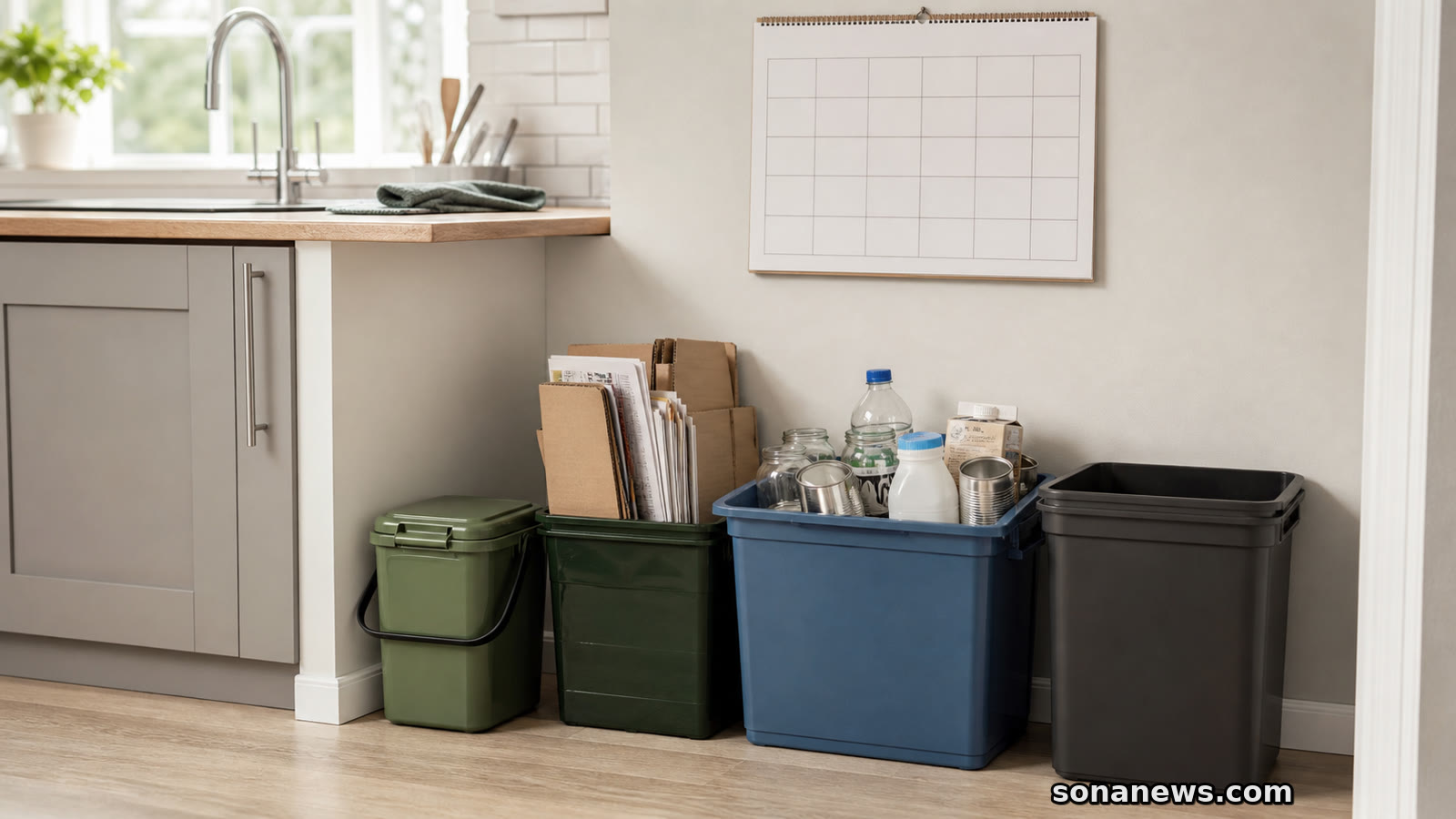

The least glamorous home refresh of the year may be the one hidden under the kitchen sink. Not the paint, not the worktop, not a new appliance, but the place where food scraps, paper, cartons and ordinary rubbish are separated before bin day.
That is where England's Simpler Recycling rules become a household matter. Defra's guidance says that from 31 March 2026, waste collectors must by default collect household waste in separate streams: food and garden waste, paper and card, all other dry recyclable materials such as glass, metal and plastic including cartons, and residual waste. The requirements apply to all households, including flats.
The promise is simple enough: fewer local mysteries over what each council accepts, and a more consistent set of materials across England. The practical reality is less photogenic. People still have to work out where the food caddy lives, how paper stays dry, what happens to a carton, and how much space a flat, shared kitchen or narrow utility room can spare.
This is why the change is not only a council logistics story. It is a home-organisation story. The colours and shapes of bins will still vary locally, and Defra allows some flexibility, including circumstances where paper and card may be collected with other dry recyclable materials. The clearer mental model is not a perfect row of matching bins. It is a set of streams: food waste, paper and card, mixed dry recycling, garden waste where relevant, and residual waste.
Food waste is the most visible shift for many households. The guidance says food waste must be collected weekly and free of charge. That does not automatically make it pleasant in a small kitchen, but it changes the calculation. A caddy that is too awkward to reach will be ignored. A liner rule that nobody in the household understands will create arguments. A system that depends on remembering a council leaflet from months ago will fail quietly, one teabag and plate scrape at a time.
The most useful detail in the guidance is also one of the least intuitive. Food and drink cartons made from fibre-based composite material are not treated as paper and card for these purposes. They belong with the plastic stream, the wider group of glass, metal and plastic including cartons. That is exactly the kind of detail that explains why a tidy kitchen label can matter more than a good intention.
There are other traps for the well-meaning. Defra's household guidance lists examples of items collectors do not need to collect in the standard streams. Non-packaging glass such as drinking glasses, mirrors, vases, ceramics and Pyrex-style cookware is not the same as glass packaging. Electrical items and batteries are not part of ordinary metal recycling. Wet wipes, tissue, toilet paper and absorbent hygiene products are not paper and card recycling. Compostable or biodegradable plastic packaging, including some coffee pods, is not automatically food waste.
None of that means households need to become waste-law specialists. It does mean the old habit of asking whether something feels recyclable is unreliable. A clean jar, a cardboard box and a battery may all sit on the same counter after a weekend clear-out, but they do not belong in the same route. The new rules reduce one layer of confusion while leaving the common-sense sorting work very much alive.
WRAP, which has produced a Simpler Recycling toolkit for local authorities, puts the communications challenge plainly: the reforms are meant to make recycling easier, reduce confusion and increase recycling rates, but clear communication will be key. That line matters because most recycling mistakes are not grand acts of negligence. They happen when a household has three seconds, damp hands, a full bin and no obvious place for the thing in front of them.
The policy backdrop is bigger than kitchen clutter. A government policy update said household recycling rates in England had flatlined at around 44% to 45% since 2015, and linked Simpler Recycling to the ambition to recycle 65% of municipal waste by 2035. Those are national goals. At home, they translate into a smaller question: can the system be boring enough to use every day?
There is also a timing catch. Plastic film packaging and plastic bags are not due to be collected with plastic recycling under the household requirements until 31 March 2027. That makes the next year awkward. People may hear a broad message that recycling is being simplified, then assume every plastic-like item has moved at once. It has not. Local council instructions still matter, especially during the transition.
For households outside England, the lesson is not that this particular rulebook applies. It is that recycling reforms often fail or succeed in the small domestic handover between policy and habit. A policy can say cartons go in one stream, food waste comes weekly and paper is collected consistently. The kitchen has to turn those lines into a caddy, a dry paper slot, a mixed-recycling container and a residual bin that someone can use without stopping to search online every evening.
The best version of the recycling reset will not look heroic. It will look slightly dull: fewer mystery piles near the back door, less wishful recycling, a clearer place for food waste, and a household that knows the difference between a carton and cardboard. If the reform is going to feel real, it probably starts where most home systems start, in the awkward little space beneath the sink.
Sources
- Source: "Simpler recycling: household recycling in England", Extracted 2026-07-01. Verified: Defra guidance for waste collectors; 31 March 2026 start date for household requirements; default separate streams for food and garden waste, paper and card, all other dry recyclables including glass, metal, plastic and cartons, and residual waste; all households including flats; weekly free food-waste collection; plastic film and bags from 31 March 2027; examples of materials not required in standard streams
- Source: "Simpler household recycling rules come into force across England", Extracted 2026-07-01. Verified: official announcement that the rules came into force on 31 March 2026; policy aim to end confusion over local bin rules and create more consistent household recycling; flexibility for paper and card in certain circumstances
- Source: "Simpler Recycling: Toolkit", Extracted 2026-07-01. Verified: WRAP says the reforms aim to make recycling easier, reduce confusion and increase recycling rates; local authority communication and clear resident messaging are central to rollout
- Source: "Simpler Recycling in England: policy update", Extracted 2026-07-01. Verified: policy context on ending inconsistent local collections, avoiding up to seven separate bins, a default maximum of four containers, household recycling rates flatlining around 44% to 45% since 2015, and the ambition to recycle 65% of municipal waste by 2035
Help us improve
Was this article useful?
One anonymous tap helps Sona improve future reporting, headlines and source context.
Up next

A gold-coloured lamp has been recalled because its plug can overheat. With no model or serial identifier published, the order record matters more than a visual match.
Continue readingMore in Home & Living