The run club has become a social calendar
Strava club growth, parkrun participation and running-culture research suggest the current running boom is not only about performance. It is a low-cost way to put a repeatable plan in the week.
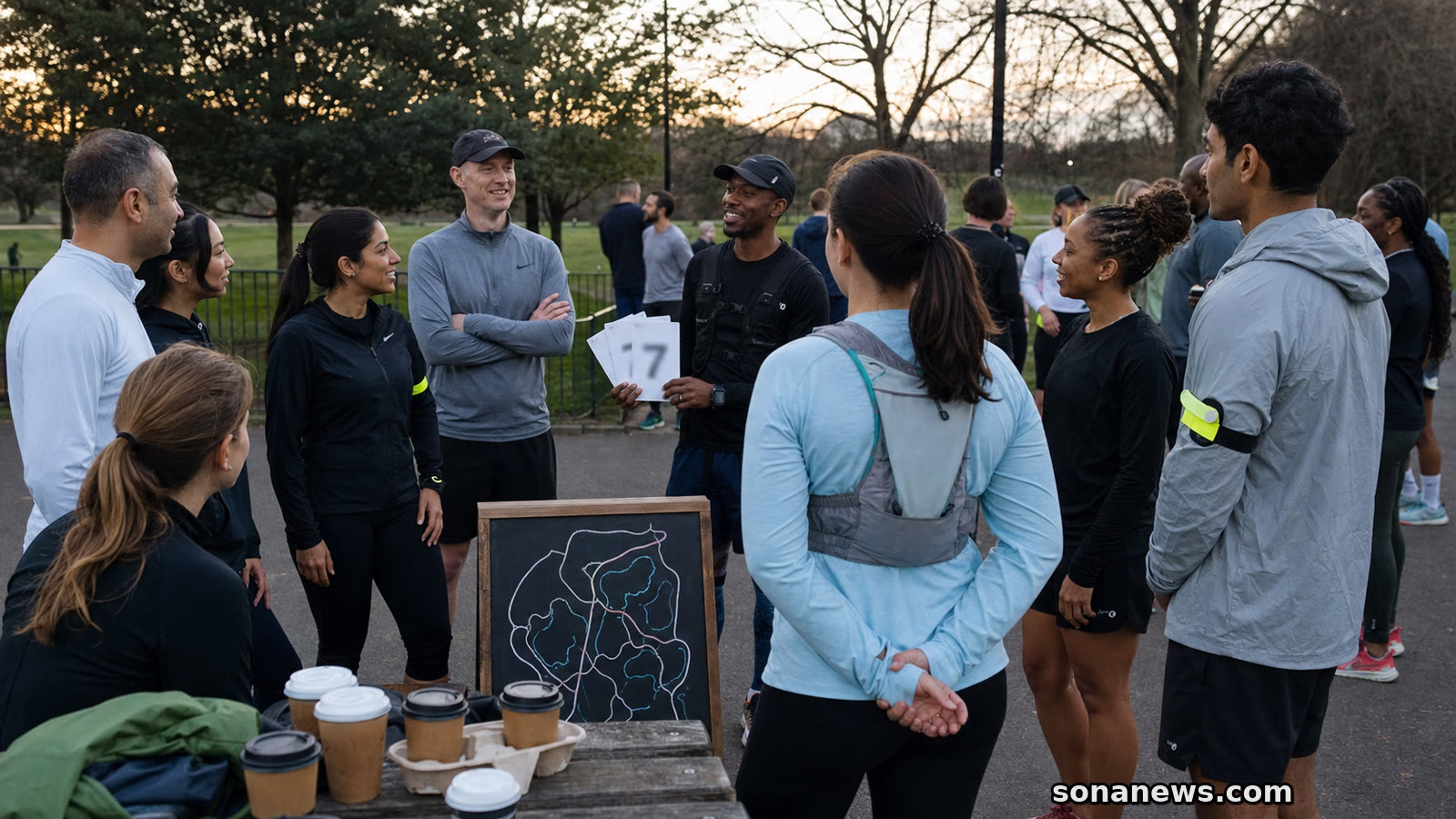

The simplest way to misread the run-club boom is to treat it as another fitness flex. That version has expensive shoes, sunrise selfies, finish-line medals and a little too much moral glow. The more interesting version is plainer. A run club is a social calendar with trainers on: a fixed place, a repeated time, a modest route and a reason to talk to people without organising a dinner.
That matters because social life has become harder to coordinate. Group chats make plans visible but not always real. Drinks are expensive. Paid classes can feel closed to newcomers. A club run, at its best, solves one small problem: it gives the week a default appointment. People can opt in without being the host, and they can leave after the coffee without having failed at friendship.
The evidence is not a census of everyone who runs. It is a set of signals from different corners of the same culture. Strava's 2025 Year in Sport report said it drew on billions of activities and survey insights from more than 30,000 people, alongside a community of more than 180 million users in over 185 countries. It reported 14 billion kudos in 2025, new Clubs on the platform nearly quadrupling, and one million total clubs. Running remained the top sport on Strava, while walking became the second most-recorded activity.
Those numbers carry an obvious caveat. Strava users are self-selecting, and a platform built for active people has every reason to notice active behaviour. Still, the club figure is useful because it shows that the digital layer is not only replacing the physical meeting. Often it is organising it. The app records the run, but the attraction is the person beside you, the pace group ahead, the cup after, and the small social proof of turning up again.
A separate running-culture report from Redtorch, launched with Running Industry Alliance and supported by insights from World Athletics, points in the same direction from search behaviour. It analysed web and YouTube searches for "running" across ten markets from June 2024 to May 2025, benchmarked against the previous five years. Among its trends was the rise of community running, with searches such as "run clubs near me" in the US, "Sunday Running Club" in Germany and "Oysho running club" in Spain. That is consumer evidence rather than civic truth, but it is telling. People are not only searching for how to get faster. They are searching for where to belong.
The older, less glossy proof sits in parkrun's scale. The parkrun Global 2024-25 annual-report summary on Impact Report Hub describes a charity operating free weekly 5k and junior 2k events across 23 countries. It says 2.3 million people took part in 126,593 events at more than 2,600 locations, with 897,689 first-time participants, 309,220 volunteers and 2.2 million instances of volunteering. That model is not a boutique trend. It is a repeatable public ritual, held together by timing, trust, local parks and volunteers who know where the finish tokens go.
Sport England's Active Lives data adds the broader backdrop. Its latest adult survey release, covering November 2024 to November 2025, reported a new high of 64.6% of adults in England doing 150 minutes or more of moderate-intensity physical activity a week. The same page explains the survey's practical thresholds, including activity at least twice in the last 28 days for measuring participation in types of activity, and volunteering at least twice in the last 12 months for sport and physical activity. The point is not that run clubs explain the national figure. They do not. The point is that regular, low-friction formats are exactly the sort of formats that make activity measurable and repeatable.
The best clubs understand that repeatability is cultural, not just athletic. A beginner-friendly route matters. So does a clear meeting point, visible pace information, a no-drop policy where promised, and a tone that does not treat slower runners as guests at someone else's event. The coffee stop, the route board and the volunteer marshal are not decorative extras. They are the social infrastructure.
Running USA's 2025 Global Runner Survey announcement is another reminder that events are about return behaviour as much as registration. The organisation said the survey had more than 12,700 responses worldwide and was designed to understand what motivates runners to sign up, show up and come back. That sequence is the heart of the run-club habit. Signing up is an intention. Showing up is a social act. Returning is culture.
There is a consumer story here too, and it deserves a sceptical eye. Once an activity becomes social, brands arrive. Shoes, watches, vests, gels, club merchandise and creator-led advice all find their place around the route. Redtorch's report notes that 27% of global running-related search volume focused on specific product names. Some of that is useful. Much of it is ordinary market gravity. A run club can lower the cost of socialising, but it can also become a new way to feel under-equipped.
The healthier reading is not to romanticise it. Run clubs can exclude as well as include. Pavement routes may not work for disabled participants. Evening meet-ups can feel unsafe in some places. Shift workers, carers and people with chronic conditions may be left out by the standard timetable. A social run can also become a dating scene, a brand activation or a performance hierarchy if nobody protects the original welcome.
Even with those cautions, the cultural signal is strong. The run club has become popular because it turns a vague aspiration into a place on the calendar. It asks less planning than dinner, less money than many nights out, and less self-display than an online challenge. The route is partly the point. The real habit is the group knowing that, next week, the same corner will fill with trainers again.
Editorial note. This article discusses running clubs as a lifestyle, culture and consumer-behaviour signal. It is not medical, fitness, safety, accessibility or training advice. Anyone considering physical activity, organised runs or volunteering needs to judge their own circumstances and use appropriate local information, event rules and professional guidance where relevant.
Sources
- Strava - "Strava Releases 12th Annual Year in Sport Trend Report, Revealing That Doomscrolling Is Out, Movement Is In" - - extracted 2026-07-04. Verified: 3 December 2025 release, 12th annual report, basis in billions of activities and more than 30,000 survey respondents, over 180 million users in more than 185 countries, 14 billion kudos, new Clubs nearly quadrupling, one million total clubs, running as top sport and walking as second most-recorded activity
- Running Industry Alliance - "Redtorch Launches SportOnSocial Global Running Culture 2025 Report in Partnership with RIA" - - extracted 2026-07-04. Verified: 17 June 2025 release, Redtorch report partnership with Running Industry Alliance and World Athletics insights, analysis of web and YouTube searches for "running" across ten markets from June 2024 to May 2025, community-running searches including "run clubs near me", "Sunday Running Club" and "Oysho running club", and 27% of running-related search volume focused on specific product names
- Impact Report Hub - "Annual Report 2024-2025 - parkrun Global" - - extracted 2026-07-04. Verified: parkrun Global description as a UK-based charity delivering free weekly 5k and junior 2k events across 23 countries, 2.3 million participants, 126,593 events, more than 2,600 locations, 897,689 first-time participants, 309,220 volunteers, 2.2 million volunteering instances and 190 new events
- Sport England - "Active Lives data tables" - - extracted 2026-07-04. Verified: latest adult release covering November 2024 to November 2025, record 64.6% of adults in England doing at least 150 minutes of moderate-intensity physical activity a week, and survey resources for levels of activity, types of activity, volunteering, outcomes and attitudes
- Running USA - "Running USA Releases 2025 Global Runner Survey Findings, with Largest Response Ever" - - extracted 2026-07-04. Verified: 11 September 2025 announcement, more than 12,700 worldwide responses, March to July 2025 fielding period, broad definition of runner including runners, joggers and walkers, and survey focus on what motivates runners to sign up, show up and return
Help us improve
Was this article useful?
One anonymous tap helps Sona improve future reporting, headlines and source context.
Up next

Slow looking offers a different plan for a gallery visit: choose a work, stay with it and compare what you notice. Museum guidance makes the case without turning art into another wellbeing prescription.
Continue readingMore in Lifestyle