Solar AI flags active regions early, but it does not forecast flares
A research Transformer flagged active-region emergence 4.73 hours early on average in a small held-out test. It is not operational, and an emerging region is not itself a flare forecast.

A machine-learning system can flag the Sun's next active region before its dark surface signature is fully visible. That sounds like a new solar-storm warning. It is not.
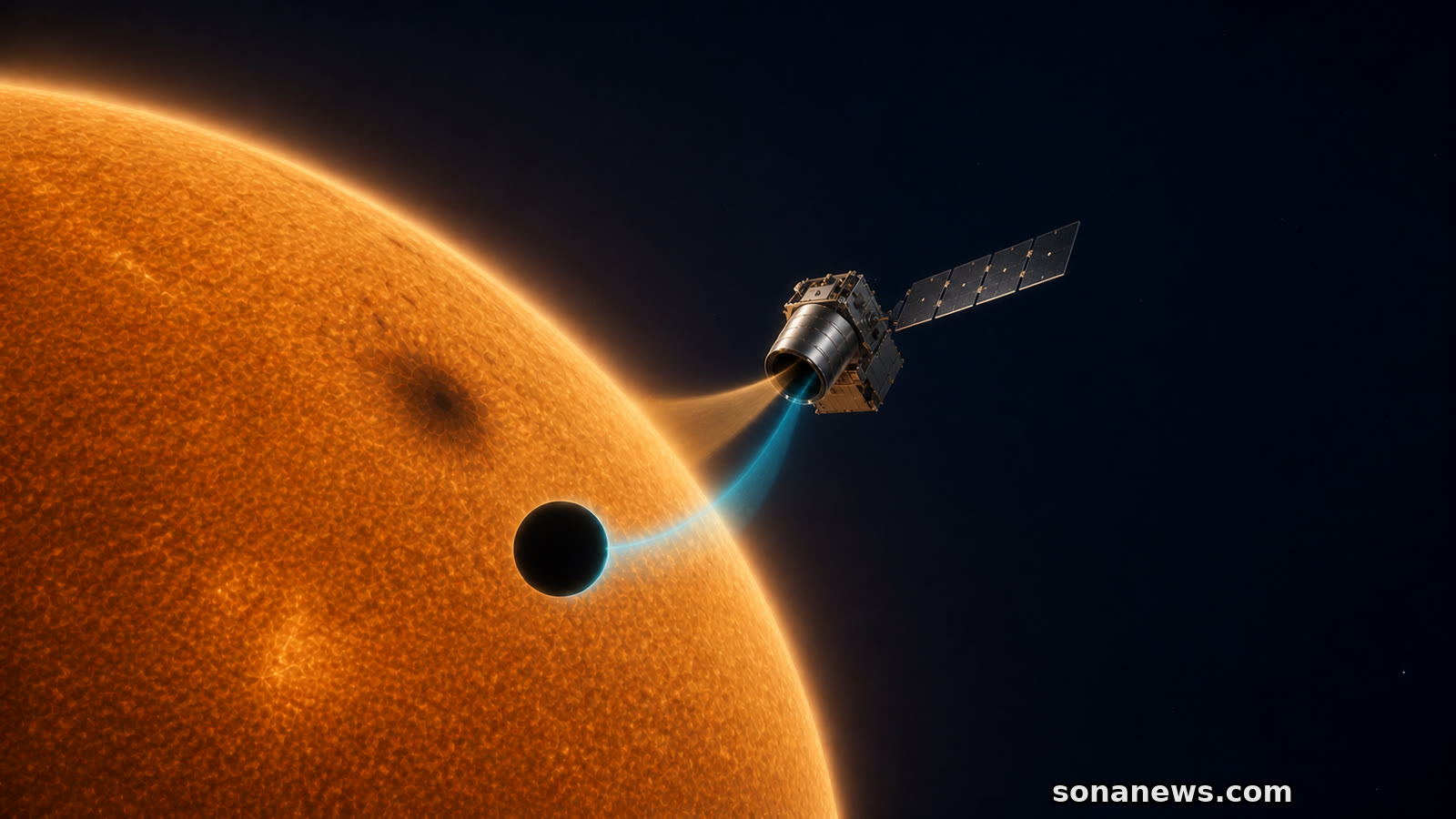
The research model described by NASA's COFFIES science centre predicts a fall in visible-light intensity associated with an active region emerging through the solar surface. Its best configuration reported an average lead of 4.73 hours in a small held-out test. The model did not predict whether those regions would produce a flare, launch a coronal mass ejection or disturb Earth's magnetic field.
That boundary is the most useful part of the result. Active regions are concentrated magnetic areas that can produce disruptive events, but many do not. Finding where one may appear could eventually give space-weather forecasters an earlier place to watch. It does not, by itself, say what that region will do.
The study used observations from the Helioseismic and Magnetic Imager aboard NASA's Solar Dynamics Observatory, or SDO. HMI monitors the Sun's surface magnetic field, Doppler velocity and continuum intensity, a measure of visible-light brightness.
Researchers derived acoustic-power measurements from the Doppler data in four frequency bands. They combined those measurements with the line-of-sight magnetic field, then asked a Transformer model to forecast the next 12 hours of continuum intensity. A sustained drop in that intensity serves as the study's marker for active-region emergence because sunspots appear darker than their surroundings.
Each forecast used the preceding 110 hours of data from a local solar patch divided into tiles. The model was not producing a photograph of magnetic structures inside the Sun. It was learning time patterns in indirect surface measurements that can change as magnetic flux rises.
The phrase "up to 12 hours" therefore describes the model's forecast horizon. It does not mean that every active region was detected 12 hours before emergence. Under the paper's stricter timing test, the best model's average prediction arrived 4.73 hours before the measured intensity drop.
The Solar Active Region Emergence Dataset, known as SolARED, contains observations of 50 large regions recorded from 2010 to 2023. Four were excluded from this experiment because of gaps or quality problems. The researchers used 41 regions for training and validation and kept five aside for testing.
The dataset is deliberately selective. Its regions emerged within 30 degrees of the central meridian, lasted more than four days and reached at least 200 millionths of a solar hemisphere. Those cuts reduce projection effects and create cleaner examples, but they also leave smaller, short-lived and near-limb events outside this test.
The best system, called EarlyDetect, was designed to favour faint early changes rather than smooth predictions. It achieved a normalised root mean square error of 0.1189, which the authors report as a 10.6 per cent improvement over their LSTM baseline. Its average timing was also earlier.
But the five-region appendix shows why the average should not be mistaken for reliability. For active region 13165, EarlyDetect was 26.25 hours early on average across the evaluated tiles, with a very large spread. For region 13179, it was 17 hours late. Other tile-level results included false positives and failures to detect emergence. The authors explicitly describe a trade-off between early sensitivity and increased variance.
The evaluation was also more directed than a live, full-Sun search. Historical patches were centred around regions known to emerge, and the test analysis selected rows intersecting the main emergence sites. That is appropriate for comparing model architectures, but it does not demonstrate that the system can scan the entire solar disk blindly, locate every new region and reject all quiet areas in real time.
Current operational forecasters monitor regions already visible on the Sun, measure their magnetic complexity and estimate the probability of flares. An earlier emergence flag could add a preparatory stage: watch this location because a concentrated magnetic region may be about to appear.
That extra notice may be useful to organisations protecting astronauts, satellites and radio systems, especially as missions move beyond low Earth orbit. It could also help researchers schedule closer observations of the emergence process itself.
Several steps remain before that possibility becomes an operational service. The model needs validation on many more events, quiet-Sun controls and data collected outside its development sample. It would need a full-disk detection pipeline, stable real-time inputs, calibrated false-alarm rates and tests showing that performance survives changes in the solar cycle and viewing geometry.
A separate forecasting stage would still be required to estimate whether a newly emerged region will flare, whether an eruption will escape as a coronal mass ejection, where it will travel and what effects it may have. Those are related questions, not one prediction.
NASA describes the work as a route towards predicting active regions several hours before they become visible. The paper supports that as an early research result, with a 12-hour forecast window and a 4.73-hour average lead for the best model in its held-out evaluation. It also documents late detections, false alarms and substantial variation.
That combination makes the result more credible, not less interesting. The researchers have moved the potential warning point from an already visible sunspot towards faint magnetic and acoustic changes that precede it. They have not turned those changes into a dependable forecast of solar storms.
For now, EarlyDetect is best understood as a prototype lookout for where an active region may surface. If broader tests hold up, it could give forecasters a little more time to pay attention. What happens next on the Sun would remain a second problem.
Sources
- NASA Science: NASA's COFFIES Uses AI to Predict Storm-Causing Active Regions on Sun. Published 14 August 2026. Verified the research status, SDO/COFFIES context, 12-hour forecast horizon, distinction from current operational forecasting and statement that the model is not ready for real-time operations
- Tirona et al., Journal of Geophysical Research: Machine Learning and Computation: Forecasting Continuum Intensity for Solar Active Region Emergence Prediction Using Transformers. DOI 10.1029/2025JH001207. Verified the architecture, 46-region experiment, 41/5 split, 110-hour input, 12-hour output, evaluation criterion, RMSE, 4.73-hour average lead, variance and individual failure cases
- Tirona et al., arXiv:2601.13144. Open full manuscript used to verify methods, tables and limitations where the publisher page was not machine-readable
- Kasapis et al.: SolARED: Solar Active Region Emergence Dataset for Machine Learning Aided Predictions. Verified the 50-region dataset, SDO/HMI observables, 2010 to 2023 coverage, tiled processing and research purpose
- NASA Science: Solar Dynamics Observatory mission overview. Verified HMI/SDO's role in monitoring the Sun's interior, atmosphere, magnetic field and energy output
Help us improve
Was this article useful?
One anonymous tap helps Sona improve future reporting, headlines and source context.
Up next
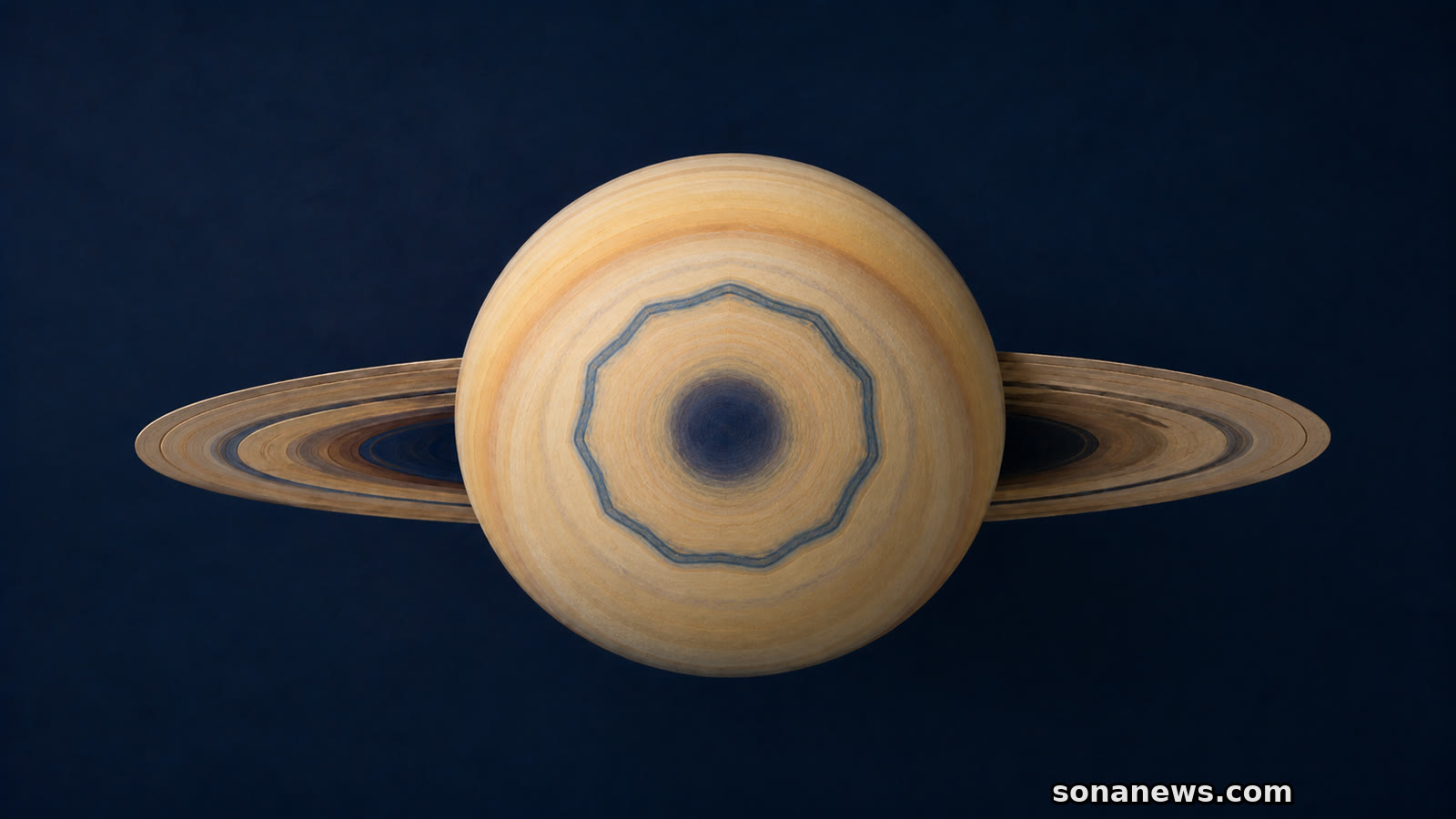
Hubble data trace a 10-sided atmospheric wave from faint 2023 hints to a clearer 2025 pattern. Its slow drift and 32-day wobble do not yet explain why it formed.
Continue reading