The UK banknote wildlife vote is not a cash deadline
The Bank of England is asking which animals should appear on future notes, but current £5, £10, £20 and £50 notes are still the money in people's wallets.
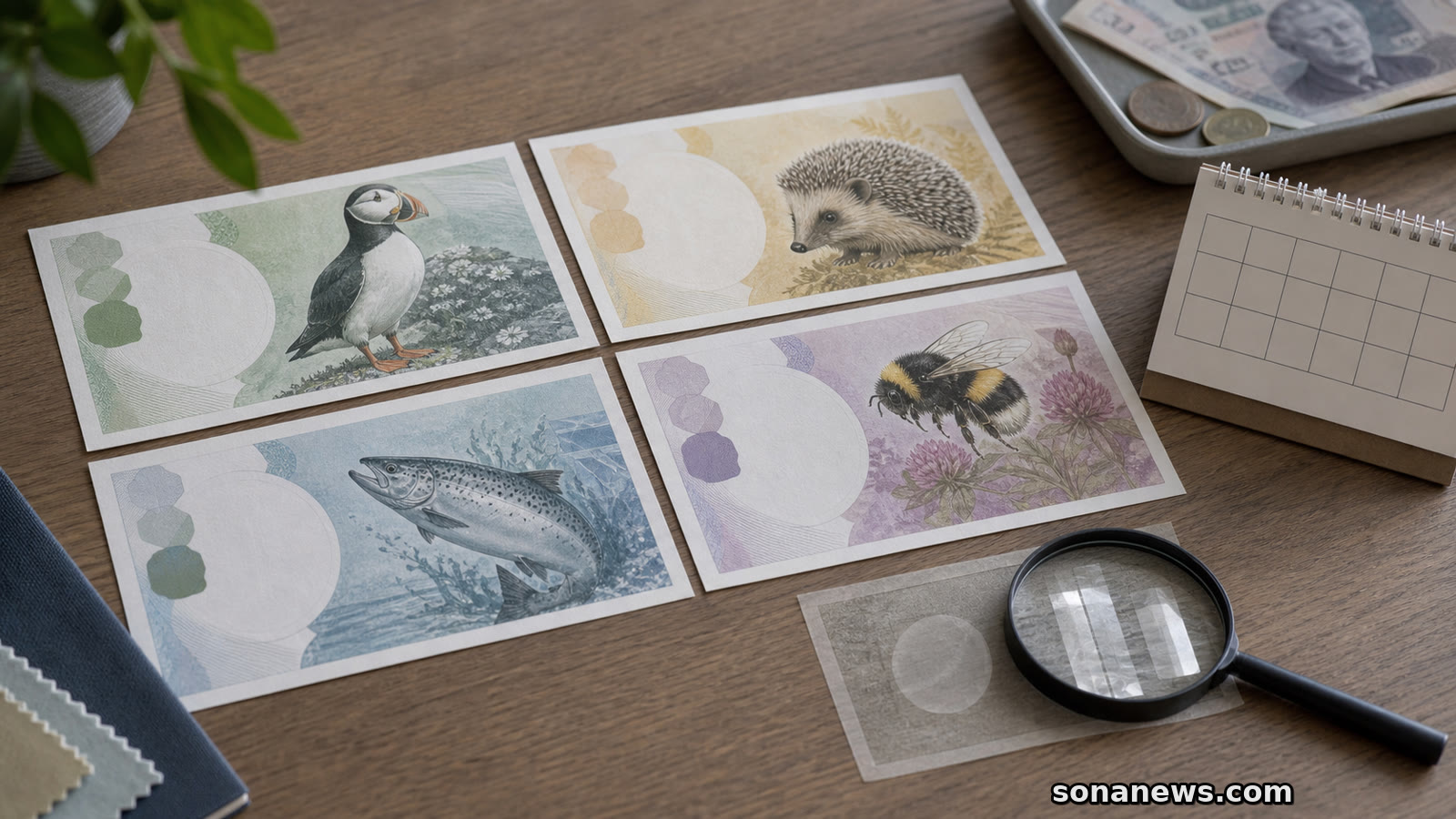
The next UK banknote series has acquired a public vote, and the subject is disarmingly charming: wildlife. The Bank of England is asking people to choose from a shortlist of native animals that could appear as the central images on future £5, £10, £20 and £50 notes.
That is the visible story. The more useful money story is what the vote does not mean. It is not a deadline for current cash, not a prompt to swap notes, and not a sign that the notes in purses, tills and kitchen drawers are about to lose their place.
The consultation opened on 3 June 2026 and closes at 11.59pm BST on Friday 3 July 2026. The Bank says UK residents and British citizens living abroad can choose up to two animals from each of three groups: mammals; birds; and amphibians, insects and fish. The published shortlist includes animals such as the European hedgehog, Atlantic puffin, common kingfisher, Atlantic salmon, buff-tailed bumblebee and marsh fritillary butterfly. Alternative nominations are not being sought for the main images.
The final notes will not simply be a popularity contest. The Bank says public feedback will be an important factor, but the final four animals need to work as a coherent series. The denominations must be easy to tell apart, the animals need to be distinct, and the set should represent different UK environments. Andrew Bailey, the Governor of the Bank of England, will make the final decision after considering the feedback. The outcome is expected by the end of 2026.
That timetable matters because banknotes are public infrastructure, not merchandise. A note has to be recognisable in a hurry, usable by blind and partially sighted people, resilient against counterfeiting and practical for cash machines, retailers and banks. A beautiful animal illustration is only one part of a much more technical object.
The Bank says the next series will take a number of years to launch. The work includes design, testing, printing, accessibility checks, quality assurance and the addition of updated security features. The future notes will still include a portrait of the monarch, representation of the Home Nations, the existing sizes, the overall colour scheme and accessibility features. In other words, this is a design process beginning in public view, not a cash replacement event happening this summer.
Current Bank of England notes remain the relevant money for daily use. The Bank's current-notes page lists four denominations in circulation: £5, £10, £20 and £50. Notes featuring King Charles III began entering circulation in June 2024, but Queen Elizabeth II notes remain legal tender and co-circulate with them. The Charles notes introduced no design changes apart from the portrait, and new notes are being printed only to replace worn or damaged notes or to meet any overall increase in demand.
That slower approach is not accidental. It follows guidance intended to reduce environmental and financial impact. It also reflects how cash actually changes hands in a country where many people use cards and phones for most payments, but cash remains important for others. The Bank's consultation page says cash is still the preferred payment method for around one in seven people, and that the value of cash in circulation reached £91.5 billion at the end of February 2026.
Those two facts sit together. Cash use has declined over the past two decades, but confidence in the notes that remain in circulation still matters. A new series is partly about keeping ahead of counterfeiting technology and preserving trust in a payment method that some households use by preference and others use because it is still the most practical option.
The old-note exchange rules also point away from panic. The Bank's exchange guidance says there is no deadline to exchange old banknotes with the Bank of England. It also explains the routes that may be available for withdrawn notes, including a UK bank, the Post Office, post to the Bank, or the Bank's counter, depending on circumstances and limits. That is separate from the wildlife consultation. The existence of a design vote does not make currently circulating notes withdrawn.
A sensible reading of the consultation is therefore narrower and calmer than the animal shortlist may suggest. It is a chance to influence the imagery on future notes, after an earlier consultation found strong support for nature as the theme. It is not a financial event in the way a rate change, tax threshold or compensation scheme is a financial event. No household budget changes because a puffin, hedgehog or salmon is shortlisted.
There is also a small lesson in how official money changes are communicated. The Bank is publishing deadlines, design constraints, the shortlist and the expected decision process. It is also clear that the launch will take years. That kind of slow, formal process is the opposite of pressure. If someone tries to turn future banknote design into urgency around today's cash, that urgency is not coming from the Bank's published timetable.
For readers, the practical value is in separating three things that can blur together: the consultation, the future series and the notes in circulation now. The consultation closes on 3 July 2026. The chosen animals are expected to be announced by the end of 2026. The new banknotes themselves are a multi-year project. Meanwhile, current £5, £10, £20 and £50 Bank of England notes continue to do their ordinary job.
The wildlife vote may make banknotes feel newly visible, which is no bad thing. Cash is often noticed only when a machine is down, a shop refuses it or an old note turns up in a drawer. Here, the conversation is more deliberate. The Bank is asking what the next notes should look like, while also showing how slowly trusted money changes.
Editorial note. This article is for general information only and is not personal financial, legal, tax, fraud-prevention or consumer-rights advice. Sona News does not know any reader's circumstances. For decisions about cash, withdrawn notes, banking access, fraud concerns or financial products, use official Bank of England information, regulated providers, free money guidance services or a qualified adviser where appropriate.
Sources
- Source: "Public asked to help select UK wildlife to appear on new banknote series", Bank of England, Extracted 2026-06-26. Verified: consultation launch date, 3 July 2026 closing time, shortlist structure, response method, decision process, expected outcome by the end of 2026, and the point that public feedback may not mean the four most popular animals are chosen
- Source: "Help us celebrate the UK's wildlife", Bank of England, Extracted 2026-06-26. Verified: nature and wildlife theme, full shortlist examples, no alternative nominations for main images, multi-year launch timeline, security and accessibility aims, current sizes and colour scheme, and cash-use context including one in seven people preferring cash and £91.5 billion in circulation at the end of February 2026
- Source: "Current banknotes", Bank of England, Extracted 2026-06-26. Verified: current denominations, King Charles III and Queen Elizabeth II notes co-circulating, Queen Elizabeth II notes remaining legal tender, and new Charles notes being printed only to replace worn or damaged notes or meet increased demand
- Source: "Exchanging old banknotes", Bank of England, Extracted 2026-06-26. Verified: there is no deadline to exchange old banknotes with the Bank of England, and available exchange routes include a UK bank, the Post Office, post to the Bank, or the Bank's counter depending on circumstances
Help us improve
Was this article useful?
One anonymous tap helps Sona improve future reporting, headlines and source context.
Up next
From September 2026, HMRC is signing up some UK sole traders and landlords who missed Making Tax Digital enrolment. The confirmation starts a software and records process; it does not complete it.
Continue readingMore in Money