The recurring payment is becoming a permission screen
A new UK open banking scheme aims to make regular payments more flexible, but the real change for households is the limit, consent and dispute process before money leaves.
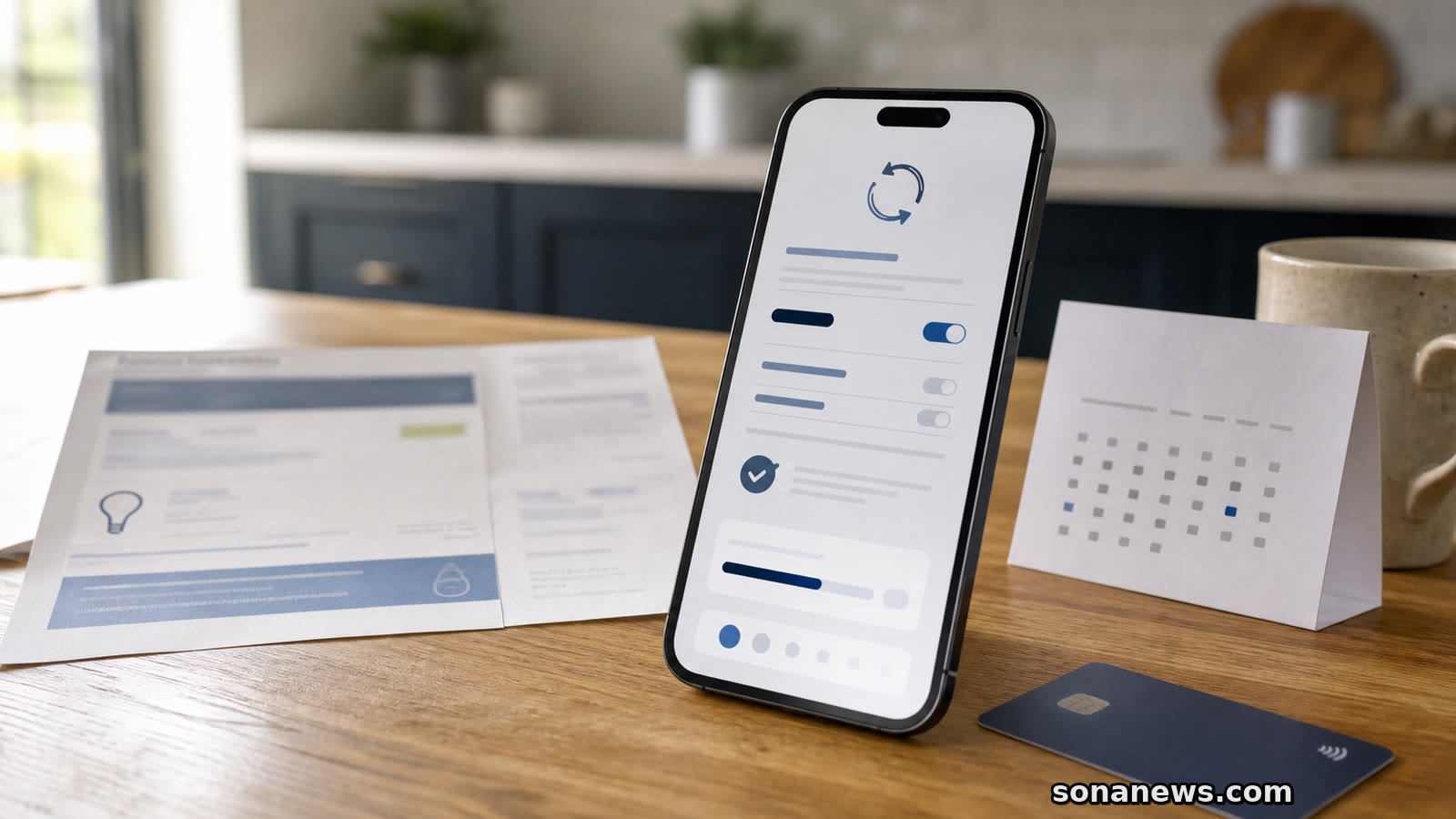

The recurring payment used to be one of the quietest parts of household finance. A direct debit form, a card left on file, a subscription that renewed in the background: useful when it worked, easy to forget when it did not. The UK's latest open banking push is trying to change that interface. It is not promising that bills become painless. It is suggesting that regular payments can be made through a more explicit permission screen.
The immediate trigger is the UK Payments Initiative, an industry-led scheme launched in June with regulatory support from the Financial Conduct Authority. The FCA described the launch as a step forward for open banking and commercial variable recurring payments, known as cVRP. In plain language, this is a way for a person to authorise a trusted provider to take payments directly from a bank account, within limits agreed in advance.
That sounds technical because it is. The consumer question is simpler: what exactly has been authorised, for whom, for how much, and for how long?
UKPI says its scheme is built around account-to-account payments, especially variable recurring payments that could be used as an alternative to card payments and direct debit in some settings. The framework includes a shared rulebook, operational standards, a commercial model, consumer safeguards and dispute processes. It also says payments can only be taken within the limits agreed by the consumer, including who can collect money, how much can be taken and how long the permission lasts.
Those limits are the point. A direct debit is already a powerful and familiar tool, backed in the UK by established protections. Card-on-file payments are convenient, but card details expire, change or sit with merchants for years. Open banking payments shift the emphasis from stored card details or a traditional mandate to a bank-connected permission. If the model works well, the payment instruction becomes more visible and more adjustable. If it works poorly, it risks becoming another screen that people approve without reading.
Regulators are treating that design question seriously. A joint FCA and Payment Systems Regulator update published in December said open banking had reached more than 16 million active users in 2025, with open banking payments up 53% year on year. Variable recurring payments already accounted for 16% of open banking payments, though much existing activity has involved moving money between accounts in a person's own name. Commercial VRP takes the idea into payments to third parties, such as utilities, government services and financial services.
This is why the first phase matters more than the launch headline. Regular bills are where flexibility can help, but also where mistakes are felt quickly. A household with uneven income may value a payment method that can adapt more easily than a fixed date. A business may value fewer failed payments. But the safeguards have to be understandable before the money moves, not only buried in a complaints process afterwards.
The UK government's Payments Forward Plan gives the wider context. It sets out a three-year regulatory roadmap for payments, linked to the National Payments Vision, with aims including innovation, competition, security and financial inclusion. Open banking and open finance sit inside that plan, alongside work on payment services regulation, fraud, cash, digital assets and infrastructure. The message is that recurring-payment design is not a fringe fintech experiment. It is part of a broader attempt to modernise how payments are authorised and supervised.
There is still a gap between a scheme launch and a household habit. The FCA has said it wants competition between commercial open banking schemes and expects to consult on a long-term regulatory framework by the end of 2026, subject to legislation giving it new powers. The earlier FCA and PSR update also pointed to practical questions around access, implementation, pricing, consumer protection and current account coverage. A permission screen is only useful if enough banks, merchants and payment providers support it consistently.
The careful way to read the change is as infrastructure becoming visible. Most people do not want to think about payment rails. They want the bill paid, the subscription clear, the cancellation route not hostile and the refund path not mysterious. Commercial VRP will have to earn that trust in ordinary settings: utilities, council payments, loans, memberships, shopping and subscriptions.
The useful promise is not that open banking makes every recurring payment better. It is that a recurring payment can be designed around explicit consent rather than quiet drift. The screen before the payment becomes the story: a named recipient, a purpose, a maximum, a duration and a way to challenge something that goes wrong. For a financial technology that has often lived in the plumbing, that is a human-sized test.
Editorial note. This article is for general information only and is not personal financial, legal, regulatory, banking, debt, fraud-prevention or payment advice. Sona News does not know any reader's circumstances. For decisions about banking, payments, bills, borrowing, complaints or financial products, use official guidance, regulated providers, free money guidance services or a qualified adviser where appropriate.
Sources
- Source: "Open banking takes next step forward with launch of UK Payments Initiative scheme", Financial Conduct Authority, Extracted 2026-06-23. Verified: FCA statement dated 2 June 2026, UKPI launch, cVRP relevance, consumer choice for recurring goods and services, support for standards work and planned consultation on a long-term framework by the end of 2026 subject to legislation
- Source: "Commercial variable recurring payments: Update on delivery", Financial Conduct Authority and Payment Systems Regulator, Extracted 2026-06-23. Verified: open banking user growth, 53% payment growth, VRPs at 16% of open banking payments, distinction between sweeping VRP and commercial VRP, phase-one use cases and regulatory questions around access, pricing and consumer protection
- Source: "Payments Forward Plan", HM Treasury, Bank of England, FCA and PSR, Extracted 2026-06-23. Verified: three-year payments regulatory roadmap, National Payments Vision context, planned modernisation of payment services regulation and open banking/open finance relevance
- Source: "UK banks and fintechs join forces to launch new payment scheme", UK Payments Initiative, Extracted 2026-06-23. Verified: UKPI scheme purpose, account-to-account payment focus, shared rulebook, operational standards, safeguards, dispute processes, agreed payment limits and rollout status after live proving
- Source: "An Industry First: The UK's New Commercial Open Banking Scheme", Open Banking Limited, Extracted 2026-06-23. Verified: industry context, nearly 16% VRP share of open banking transactions and focus on secure, scalable, sustainable scheme delivery
Help us improve
Was this article useful?
One anonymous tap helps Sona improve future reporting, headlines and source context.
Up next

From September 2026, HMRC is signing up some UK sole traders and landlords who missed Making Tax Digital enrolment. The confirmation starts a software and records process; it does not complete it.
Continue readingMore in Money