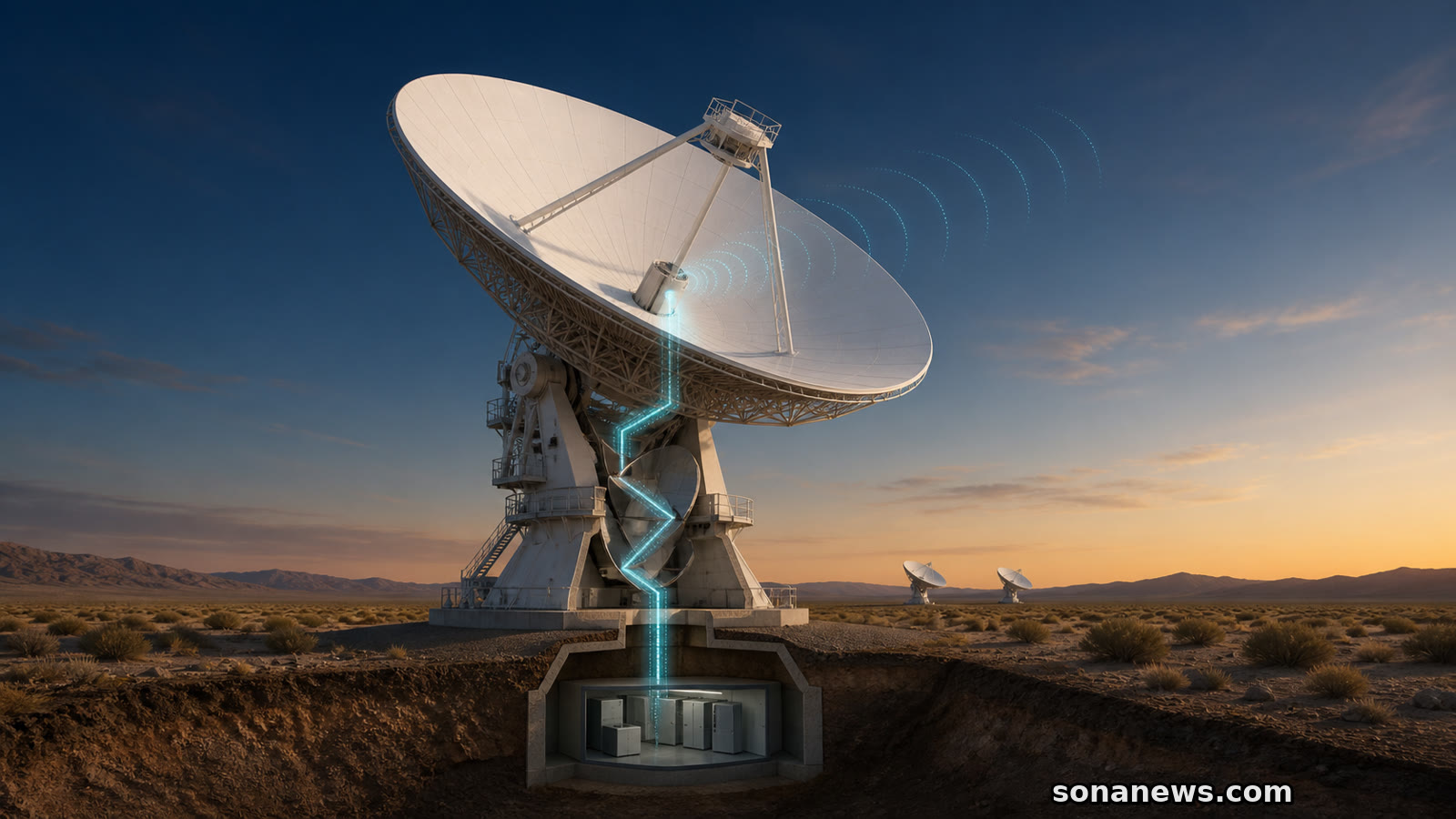
SkyFall's Mars radar antenna has to bend before it can look underground
JPL's 150-gram fabric antenna survived 200 simulated landings, but the future SkyFall mission still faces deployment and flight-qualification tests.

NASA wants its next Mars helicopters to look down as well as fly forward. The awkward part is that the radar antenna needed for the job is longer than the aircraft's landing legs.
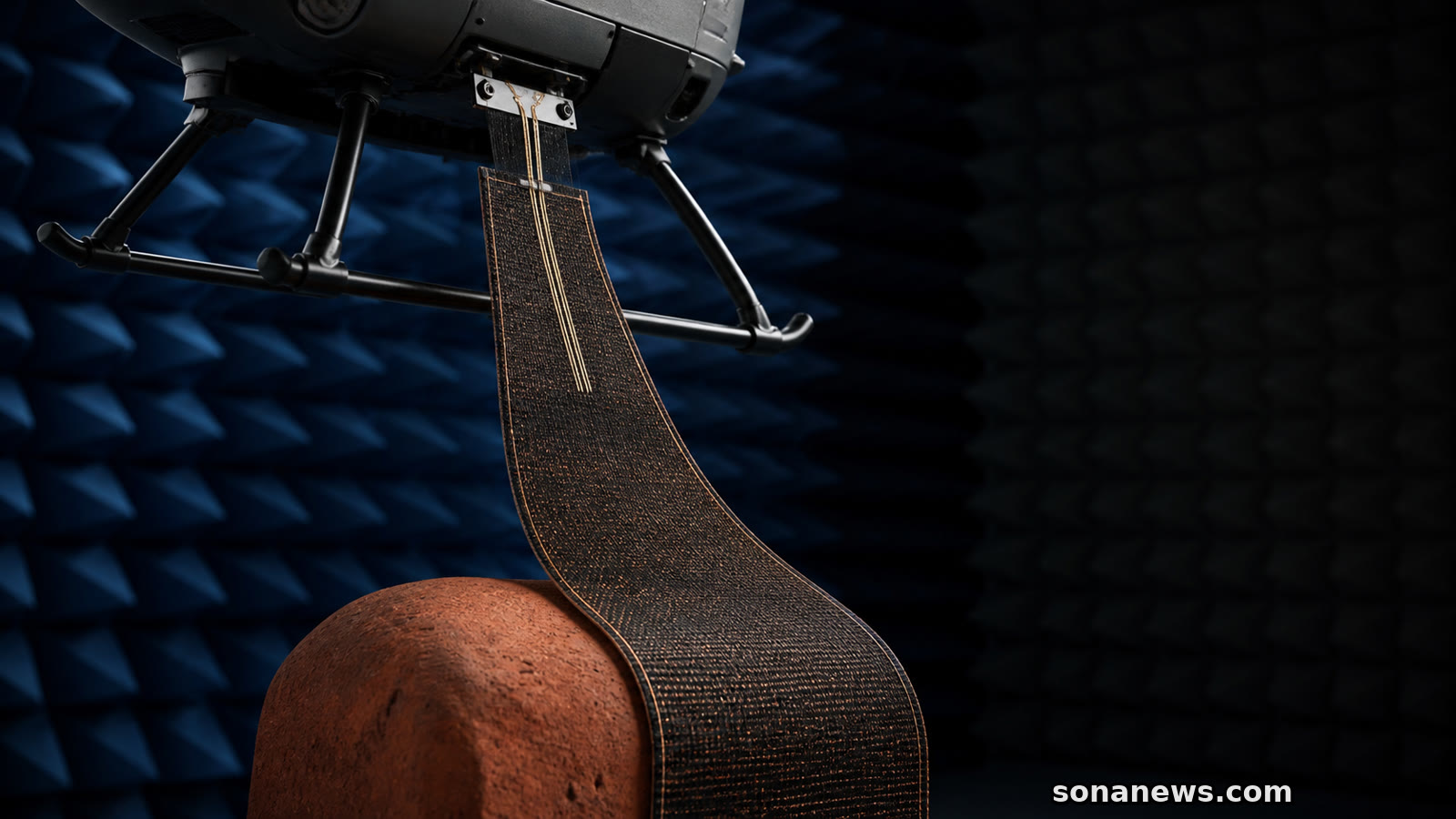
The solution being tested at NASA's Jet Propulsion Laboratory is not a rigid rod. It is a 150-gram tapered strip made from metallised fabric, springy fibreglass and a magnesium mount. It is meant to flex around the surface when a SkyFall helicopter touches down, then straighten beneath the aircraft during flight.
JPL reported on 6 August that a prototype survived 200 simulated landings without a measurable loss of radio-frequency performance. That is a meaningful durability result, not a declaration that the system is ready for Mars. Vibration, deployment and outdoor flight tests remain ahead.
SkyFall is a future NASA mission built around three helicopters derived from Ingenuity. Each aircraft is planned to carry cameras, weather and radiation sensors, and ground-penetrating radar. NASA currently lists a late-2028 launch, with the landing site still to be selected.
The radar is intended to distinguish shallow layers of dust, rock and possible ice. NASA's mission profile gives a nominal depth range of about 0.5 to 3 metres, with deeper penetration possible in favourable material.
Radar depth and detail pull the antenna design in opposite directions. Longer wavelengths can reach farther into the ground, but they normally need a larger antenna. JPL says a conventional design for the low end of SkyFall's broad frequency range would be about 48 centimetres long. The clearance beneath the helicopter is only about 15 centimetres.
Engineers therefore used a Vivaldi antenna, a flat tapered-slot form that can operate across a wide range of frequencies. The tapered strip extends below the landing gear in flight. On touchdown, two flexible tape springs in its spine allow it to bend around a rock or uneven patch instead of taking the full impact as a brittle mast.
That geometry is the crucial detail: flexibility is not an optional protective cover around the science instrument. It is what makes the instrument fit the aircraft at all.
The test campaign focused on repeated mechanical stress and whether that stress changed the antenna's radio behaviour. Engineers flexed the prototype in different directions and through positions intended to represent varied landing conditions. They paused periodically to measure its performance in JPL's electromagnetic-interference chamber.
The NASA Photojournal record shows the actual test article connected to measurement equipment inside that chamber. For the radio tests, the team pointed the antenna upward to reduce reflections and interference. That orientation also put more stress on the mount under Earth's gravity than the hanging configuration would experience in flight in Mars' weaker gravity.
Reaching 200 cycles matters because JPL says it is twice the landing count required for SkyFall's planned primary mission. The absence of a measured performance decline gives engineers margin against repeated bending. It does not reproduce every condition from launch to Mars, nor does it guarantee that every landing surface will be harmless.
The next engineering model is expected to face launch-vibration testing, simulated deployment in the Martian atmosphere and trials in JPL's Mars Yard. Those steps test different failure modes: whether the antenna stays stowed during launch, unfurls as intended, survives contact and produces useful signals while the aircraft flies.
Mars already has orbital radar coverage, but an instrument flying metres above the terrain can target shallow structure at much finer local scale. The aim is not simply to produce a picture labelled "ice". Radar records reflections caused by changes in the electrical properties of underground material. Scientists then interpret those patterns alongside surface images, terrain and other observations.
That distinction matters because buried water ice is both a science target and a possible future resource. Ice distribution can preserve evidence about Mars' recent climate. In longer-term exploration planning, accessible ice could support water, oxygen and fuel production.
A US Geological Survey review notes that present ice-resource maps combine datasets with different depths, resolutions and caveats, and still lack dedicated ground truth. SkyFall's helicopters could narrow that gap across selected local areas, but they have not yet detected anything. NASA has not selected a landing site, and the mission schedule is still prospective.
The antenna result resolves one specific engineering question: a wideband radar element can be made light and flexible enough to endure far more simulated contacts than the primary-mission requirement, while retaining measured performance in the lab.
The harder sequence is still to come. The integrated radar must survive launch loads, deploy after the journey to Mars, operate without destabilising the helicopter and return interpretable echoes from real terrain. The flexible strip has passed a demanding bend test. It has not yet passed Mars.
Sources
- NASA/JPL: NASA Tests Featherweight Radar Antenna for SkyFall Mars Helicopters. Published 6 August 2026. Verified: 150-gram construction, Vivaldi design, dimensions and clearance, flexible tape springs, 200 simulated landings, radio-frequency test result, test orientation, mission margin and planned next tests
- NASA Science: SkyFall mission profile. Accessed 6 August 2026. Verified: future-mission status, three-helicopter architecture, late-2028 scheduled launch, unselected landing site, planned instrument suite, nominal 0.5-to-3-metre radar depth and science objectives
- NASA Photojournal PIA26759: Antenna Testing for NASA's SkyFall Mission. Added 6 August 2026. Verified: actual chamber-test context, cable connection, upward orientation and NASA/JPL-Caltech image provenance
- JPL Robotics: Mars Science Helicopter. Verified: technology-development context for carrying science payloads on Mars rotorcraft
- US Geological Survey: Ice resource mapping on Mars. 2024 publication record. Verified: shallow-ice resource rationale, multi-dataset mapping caveats, depth and resolution differences, and lack of dedicated ground truth
Help us improve
Was this article useful?
One anonymous tap helps Sona improve future reporting, headlines and source context.
Up next
Hubble data trace a 10-sided atmospheric wave from faint 2023 hints to a clearer 2025 pattern. Its slow drift and 32-day wobble do not yet explain why it formed.
Continue readingMore in Space