The July Self Assessment bill is an advance payment, not a penalty
HMRC is reminding Self Assessment taxpayers about the 31 July payment-on-account deadline. The useful bit is knowing whether the bill is an advance instalment, a balancing payment, or a separate payment plan.
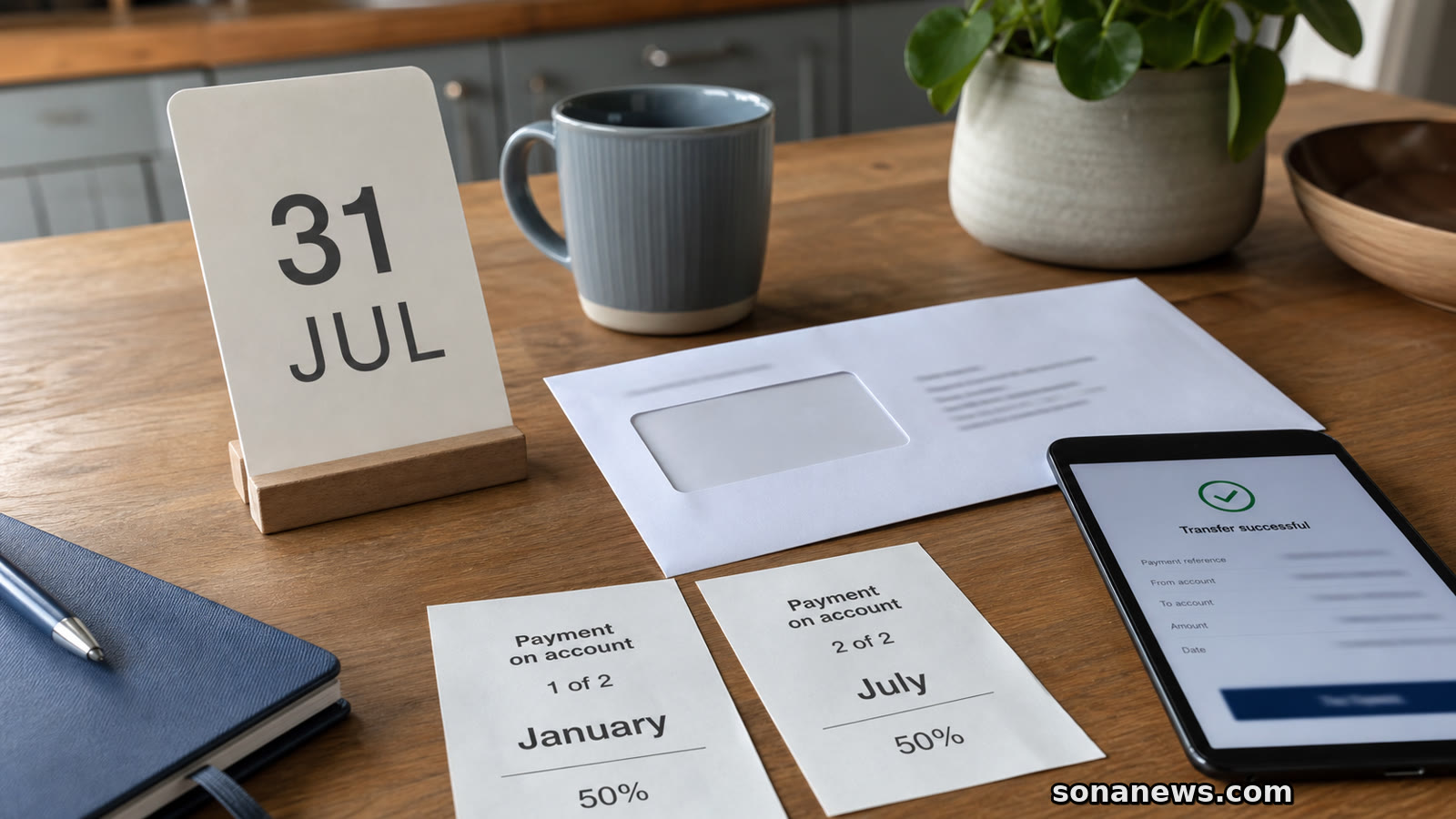

HMRC's latest Self Assessment reminder lands just as the July payment date comes into view. The department says taxpayers have one month to prepare for the second payments-on-account deadline on 31 July 2026, and it is nudging people towards GOV.UK, the HMRC app and payment-plan options rather than a last-minute scramble.
The practical story is less dramatic than a tax scare headline. For many people in Self Assessment, the July amount is not a penalty and not a new tax rule. It is the second advance instalment towards the tax bill for the year, based on the previous year's bill. That distinction matters, because a payment on account can feel like an unexpected extra charge when it appears beside a balancing payment, interest warning or app notification.
GOV.UK describes payments on account as payments towards the next Self Assessment bill, including Class 4 National Insurance for self-employed taxpayers where relevant. They are designed to split the estimated bill into two instalments, due on 31 January and 31 July. Each instalment is generally half of the tax owed in the previous year.
There are limits to that rule. HMRC says payments on account are usually not required if last year's tax bill was less than £1,000, or if more than 80% of the tax owed was paid outside Self Assessment, such as through a tax code or tax already deducted from savings interest. For everyone else, the online account or statement is the place where the amount due is shown.
The confusion often comes from timing. The July payment due in 2026 relates to the 2025 to 2026 Self Assessment year, whose online return and final balancing payment deadline is 31 January 2027. The return itself may not yet have been filed. That means a household can be asked for an advance payment before the final figure for the year is complete. If the final bill turns out higher, a balancing payment may be due later. If it turns out lower, the account can be adjusted or a refund may be available.
HMRC's 29 June reminder also points to payment methods. It says more than 110,000 Self Assessment payments have been made through the HMRC app since April, and nearly 2 million have been paid through the app since its launch in January 2022. The department says the app can show payment history, take payments through bank apps or online banking, and set reminders. GOV.UK also lists bank transfer, card, Direct Debit and other routes, with processing times that matter when a deadline is close.
The payment-plan language is easy to blur, so it is worth separating two ideas. A Budget Payment Plan is for people who are up to date and want to make weekly or monthly Direct Debit payments towards the next Self Assessment bill before the deadline. A Time to Pay arrangement is different. It is for an overdue bill, or a bill that cannot be paid on time, and HMRC may ask for income, spending and bank details before setting one up.
None of that makes the July bill painless. For self-employed workers, landlords, people with untaxed income or people whose income moves around, payments on account can still clash with a tight month. The useful question is not whether the date is annoying. It is what type of amount is showing: an advance payment, a balancing payment, interest, a penalty, or a payment plan already being collected.
There is one more calendar wrinkle this year. HMRC's reminder says around 300,000 Self Assessment customers affected by the High Income Child Benefit Charge will have Child Benefit payment information pre-populated in their online return from mid-July 2026. It also notes that sole traders and landlords with turnover above £50,000 are now in Making Tax Digital for Income Tax, with a first quarterly submission deadline on 7 August 2026. Those are separate obligations, but they add to the sense that July is becoming a busy administrative month.
The safest reading is deliberately plain. The 31 July date is a payment deadline inside an existing Self Assessment system. It is not a signal about anyone's personal tax position, and it is not a substitute for checking an official HMRC account, statement or professional advice where circumstances are complicated. But for readers who see the line on a statement and wonder why tax is due again in the summer, the label matters. A payment on account is HMRC asking for an advance instalment, not announcing a surprise fine.
Editorial note. This article is for general information only and is not personal financial, tax, legal, debt, welfare-benefit, accountancy or consumer-rights advice. Sona News does not know any reader's tax position, income, residency, filing status, debts, eligibility or payment history. Self Assessment deadlines, penalties, interest, payment plans and Child Benefit Charge issues can depend on individual circumstances. Use official HMRC and GOV.UK services, HMRC contact routes, free debt guidance, or a qualified tax professional where appropriate.
Sources
- Source: "Taxpayers urged to get ahead of July Self Assessment payment deadline", GOV.UK and HM Revenue and Customs, Extracted 2026-06-29. Verified: publication date, 31 July 2026 second payments-on-account reminder, HMRC app usage figures, payment-plan messaging, High Income Child Benefit Charge pre-population note, Making Tax Digital note and 31 January 2027 filing/payment deadline
- Source: "Understand your Self Assessment tax bill: Payments on account", GOV.UK, Extracted 2026-06-29. Verified: definition of payments on account, 31 January and 31 July instalment pattern, half-of-last-year calculation, under-£1,000 and 80% exceptions, and balancing-payment explanation
- Source: "Pay your Self Assessment tax bill", GOV.UK, Extracted 2026-06-29. Verified: usual payment deadlines, payment methods, processing-time caution, late interest and possible penalty wording, and link to support for payment difficulty
- Source: "Pay your Self Assessment tax bill: Pay weekly or monthly", GOV.UK, Extracted 2026-06-29. Verified: Budget Payment Plan purpose, requirement to be up to date, weekly or monthly Direct Debit option, pause option and distinction from payment plans for bills that cannot be paid on time
- Source: "If you cannot pay your tax bill on time: Setting up a payment plan", GOV.UK, Extracted 2026-06-29. Verified: Time to Pay/payment-plan context for overdue or unaffordable bills, information HMRC may request, and Budget Payment Plan distinction for future bills
Help us improve
Was this article useful?
One anonymous tap helps Sona improve future reporting, headlines and source context.
Up next

From September 2026, HMRC is signing up some UK sole traders and landlords who missed Making Tax Digital enrolment. The confirmation starts a software and records process; it does not complete it.
Continue readingMore in Money