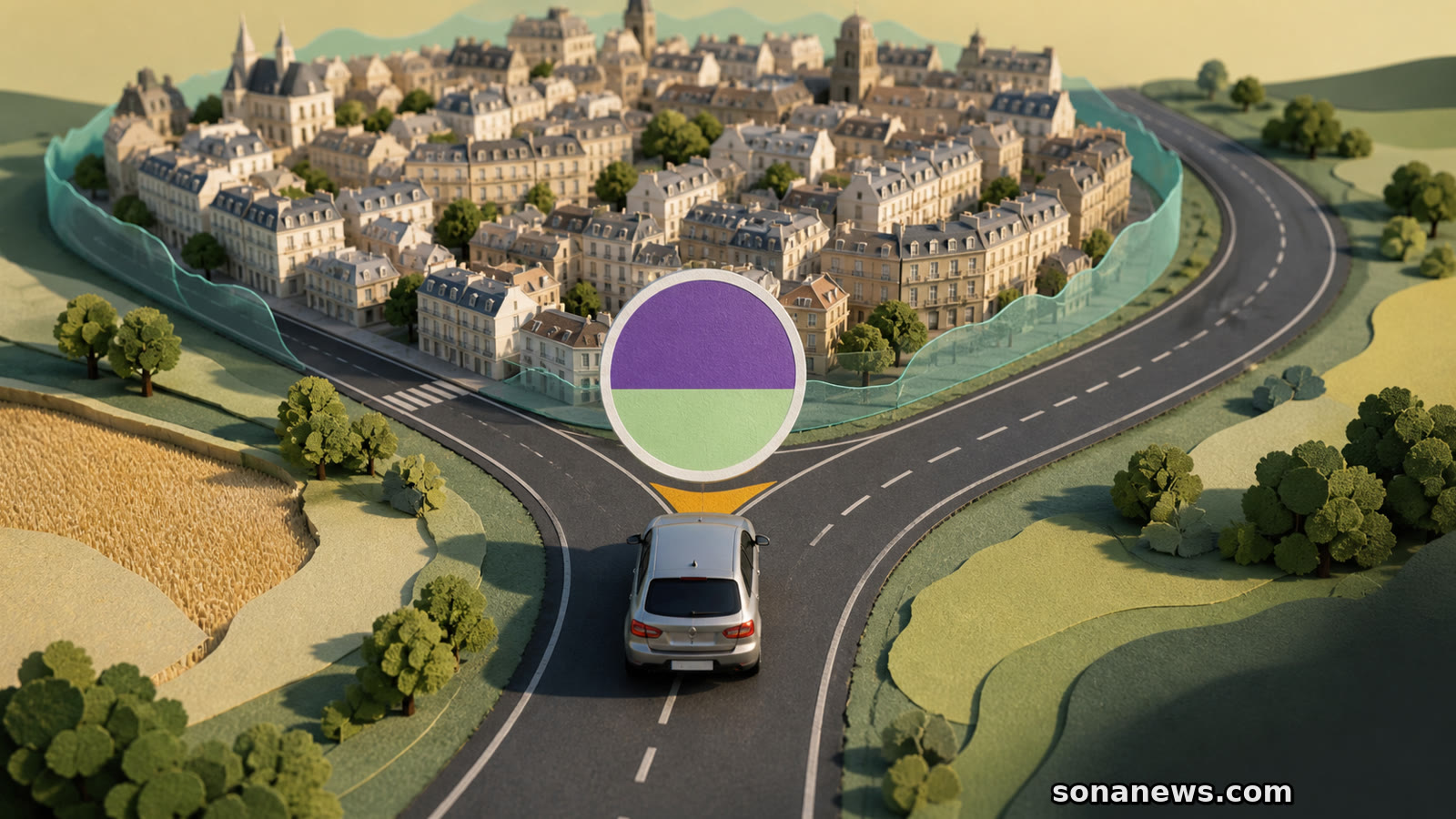
Spain’s V16 road rule starts with the car’s registration
A Spanish rental car and a foreign-registered visitor car can follow different breakdown-signalling paths. The glovebox check now matters before the drive.
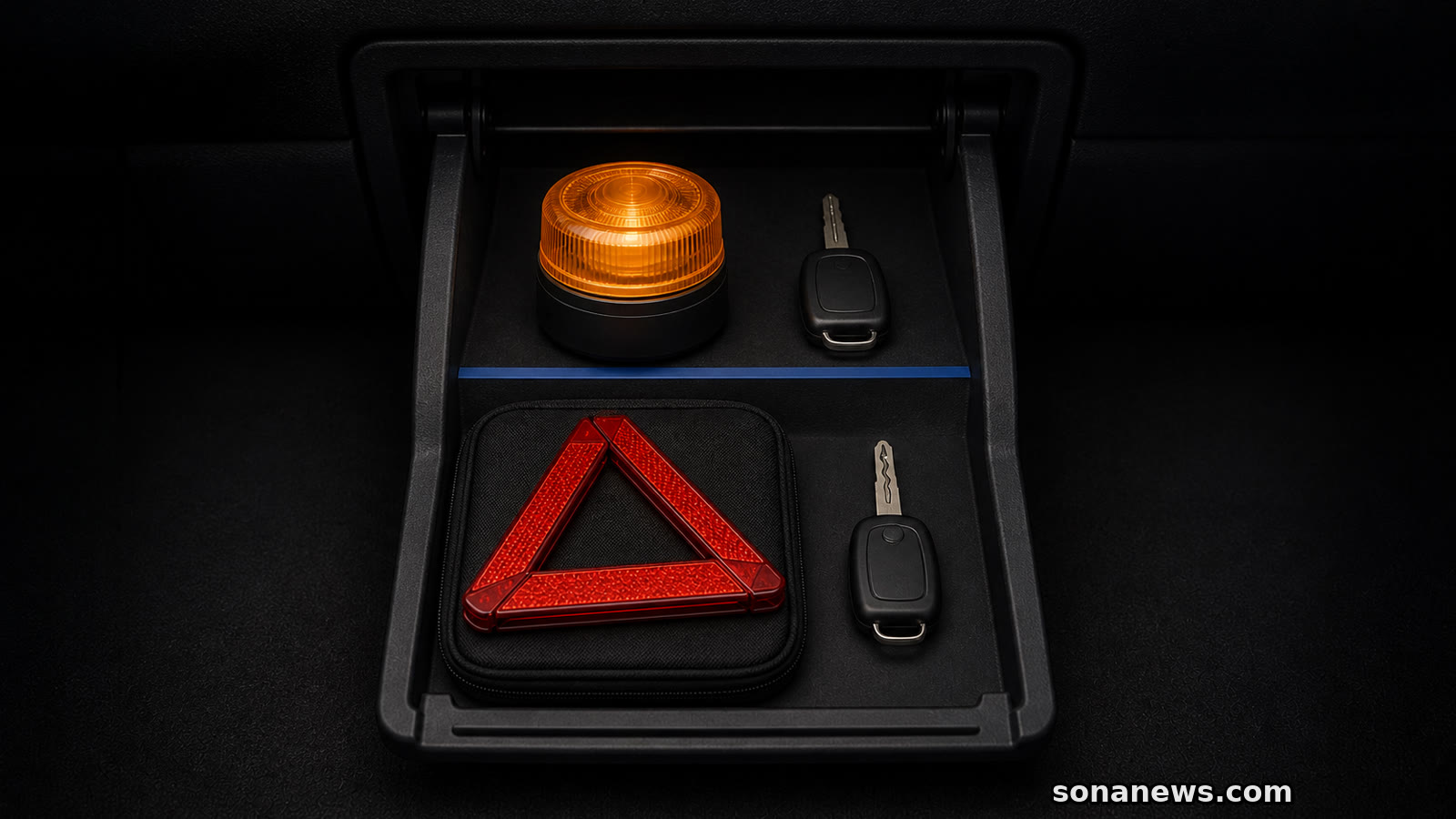

The small amber light in a Spanish car’s glovebox is no longer just another emergency accessory. Since 1 January 2026, Spain has made the connected V16 beacon the legal device for signalling an immobilised Spanish-registered car. For travellers, the important question starts before any breakdown: which country is the car registered in?
That makes a Spanish rental and a car driven across the border potentially different cases. Spain’s Directorate-General for Traffic, the DGT, says cars registered in Spain must carry an approved connected V16. It also says a vehicle registered elsewhere and travelling in Spain under international-circulation rules can comply with warning triangles, or a similar device recognised by its country of registration.
The distinction is easy to miss because the road is the same. The legal equipment path may not be.
A conventional hire car collected in Spain is normally Spanish-registered, so the practical pre-drive check is the equipment inside that particular car. The DGT says the V16 should be charged, accessible and stored in the glovebox or another reachable place. A traveller does not need to buy one merely because the holiday includes driving, but should confirm that the supplied vehicle has the required equipment and ask the rental company how its emergency procedure works.
This is not a promise that every hire vehicle has been checked, nor a reason to accept an unverified device. The DGT maintains an online list of certified makes and models. It says only approved connected beacons are valid for the Spanish rule, and that a non-connected light is not a substitute simply because it looks similar.
The same caution applies to a car-share vehicle, borrowed Spanish car or other Spanish-registered vehicle. The registration is the useful first clue, but the operator’s instructions, the vehicle documents and the actual emergency kit remain the evidence for that car.
The DGT’s international-circulation instruction protects an important exception. A vehicle registered in another country can travel in Spain with the warning equipment recognised under the applicable international framework. The DGT specifically says such vehicles can comply by carrying or, when needed, using warning triangles or another device with a similar function implemented by the country of origin.
That does not mean every foreign-plated vehicle is automatically exempt in every circumstance. The DGT ties the treatment to vehicles in international circulation, a term defined through the Geneva and Vienna road-traffic conventions. A long-term import, re-registration case or vehicle outside that framework may require a different assessment. Travellers should not infer a residency or registration answer from the colour of a number plate alone.
It also does not mean using a triangle is always the safest action. Roadside conditions can make leaving a vehicle dangerous. The legal equipment distinction and the immediate safety decision are related but not identical.
When activated, a certified V16 emits an amber warning light and sends the immobilised vehicle’s location to the DGT 3.0 platform. The DGT says that information can then reach nearby drivers through navigation systems, mobility applications, onboard systems and variable-message signs.
The connection is built into the device. The official guidance says no phone pairing or separate app is needed, and at least 12 years of connectivity is included in the purchase price. It also says the beacon transmits only when activated and does not identify a person or number plate.
The beacon is not an automatic emergency call. The DGT says it does not contact emergency services or a roadside-assistance company and does not determine what has happened. A traveller still needs the rental firm, insurer, breakdown provider or emergency service when the situation requires it.
Before leaving a rental bay or setting out across the Spanish border, identify the vehicle’s registration country and locate its emergency equipment. In a Spanish-registered car, look for a certified connected V16 in an accessible position. In a qualifying foreign-registered visitor car, check the equipment required by the registration country and the DGT’s international-circulation guidance.
Do not wait for a hard shoulder to read packaging, search for a model number or discover that the beacon battery is flat. If the equipment is missing, inaccessible or unclear in a rental car, the sensible place to resolve it is with the operator before departure.
In an actual incident, follow the current official safety instructions for the road and conditions. Spain’s rule is designed to reduce the need to walk into traffic to place warning triangles, but the DGT still says occupants must judge whether leaving the vehicle is safe. The safest position can depend on the carriageway, traffic, weather and whether there is a protected place away from moving vehicles.
The V16 rule is therefore not simply “Spain banned triangles for everyone”. It is a registration-sensitive system. A Spanish rental car should lead the traveller towards a certified connected beacon. A qualifying foreign visitor car can retain the signalling route recognised for international circulation. The most useful travel preparation is to know which car is actually being driven and what is already in its glovebox.
Editorial note. This article provides general travel-planning information from official Spanish traffic guidance available at publication time. It is not personalised legal, registration, contractual, insurance or roadside-safety advice. Check the actual vehicle, rental terms and current DGT instructions before driving, and contact the relevant operator or authority when a specific case is unclear.
Sources
- Spain’s Directorate-General for Traffic, “Dispositivos de preseñalización V16”, Updated 3 August 2026 and extracted 13 August 2026. Verified: current 1 January 2026 rule; covered vehicle types; certified-model list; glovebox/accessibility guidance; activation and placement; DGT 3.0 connection; no phone or app; 12-year minimum connectivity; no personal or vehicle data; no emergency-service call; and foreign-registered international-circulation exception
- DGT, “Tráfico publica una Instrucción para clarificar los usos de la señal V-16 en casos de circulación internacional”, Published 24 January 2025 and extracted 13 August 2026. Verified: Spanish-registered versus foreign-registered treatment; international-circulation definitions; triangle or analogous-device compliance for qualifying foreign vehicles in Spain; and V16 compliance for Spanish vehicles abroad under the cited conventions
- DGT, “DGT recuerda la obligación de disponer de la baliza V-16 para señalizar averías y accidentes en carretera”, Published 25 November 2025 and extracted 13 August 2026. Verified: active obligation; vehicle scope; certification checks; integrated SIM and autonomous operation; glovebox storage; location-only activation; no personal or number-plate identification; no emergency call; and the need for occupants to judge whether leaving the vehicle is safe
- DGT, “DGT 3.0 ya envía a los navegadores la ubicación de los vehículos averiados que utilizan la V-16 conectada”, Published 27 December 2023 and extracted 13 August 2026. Verified: location distribution through navigation and mobility systems; certification-list advice; self-contained connectivity; 12-year minimum service; and expiry-date check
Help us improve
Was this article useful?
One anonymous tap helps Sona improve future reporting, headlines and source context.
Up next

A new official warning says ham sandwiches, pork dumplings and inflight leftovers should be discarded or declared before customs.
Continue readingMore in Travel