App store rules are getting a paper trail in the UK
Britain's competition regulator has moved Apple and Google into a monitored commitments phase, making review decisions, rankings and developer data harder to leave as black boxes.
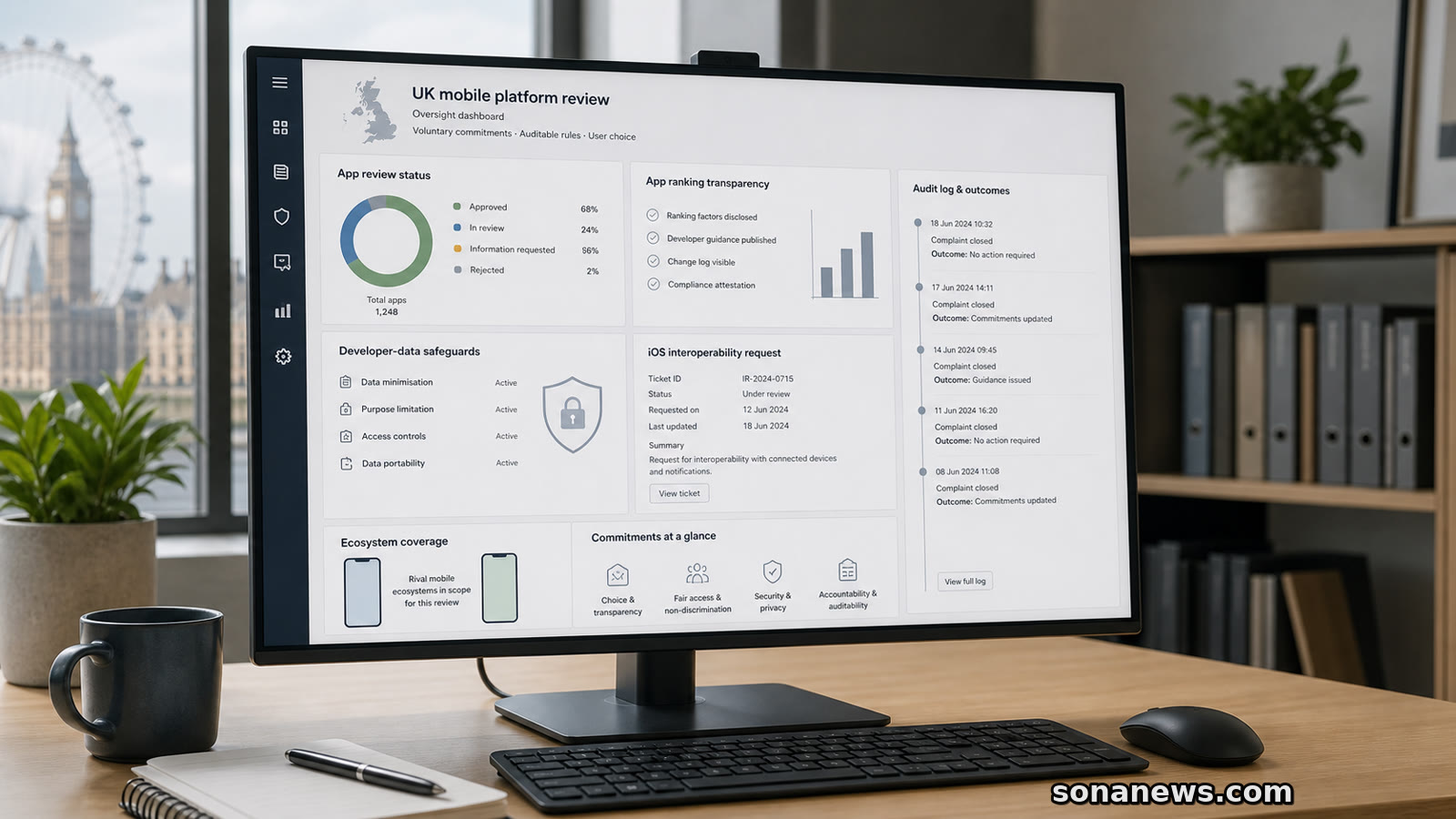

The most practical change in app-store regulation may not look like a dramatic new download button. It may look like a receipt.
In the UK, the Competition and Markets Authority has moved Apple and Google into a more closely watched phase of the country's digital markets regime. Both companies were designated with strategic market status in mobile platforms in October 2025. On 1 April 2026, the regulator published final voluntary commitments from Apple and Google covering the areas that most developers complain about when an app has to pass through a dominant store: review, ranking, use of developer data and, for Apple, access to iOS and iPadOS features.
That does not mean British phone users will wake up to a different App Store or Google Play overnight. The more interesting shift is quieter. A decision that used to feel like a black box is being pushed toward something that can be described, measured and challenged.
The CMA's mobile-platform pages define the relevant activity broadly. For Apple, the designation covers iOS and iPadOS, the App Store, Safari and WebKit. For Google, it covers Android, Google Play and other native app distribution routes, Chrome and Blink. The designations last for five years, but they do not automatically prove wrongdoing. They give the regulator a framework for targeted interventions where it sees competition problems.
The first visible package is about app-store certainty. Apple and Google have committed to run app reviews in a fair, objective, transparent and non-discriminatory way, including where an app competes with one of their own services. They have also committed to more transparency around app ranking and to safeguards around app data gathered during review. Apple's additional commitment is a route for developers to request interoperable access to features and functionality within its mobile operating systems.
For a developer, those words matter because the business risk is often procedural before it is technical. A rejected update can delay a payment feature, a health-adjacent tool, a game release or a banking fix. A ranking change can make a product disappear from discovery. Data collected during review can feel sensitive when the platform operator also competes downstream. The CMA is trying to make those processes less dependent on trust and more dependent on a record.
The regulator's February announcement gave a hint of what that record may look like. Apple and Google are expected to provide metrics on the proportion of apps submitted, approved, rejected and appealed, the time taken for review, complaint volumes and outcomes, and, for Apple's interoperability process, the number and handling of requests. That is not a consumer feature in the ordinary sense. Most people will never inspect those figures. But it changes the incentives around unexplained delay or inconsistent treatment.
This is also why the UK approach is worth watching beyond Britain. Mobile app stores are not just places to download games. They are routes to market for banks, transport services, subscriptions, identity tools, media apps and small software businesses. The CMA's press release said the UK app economy was valued at £28 billion in 2025, contributed an estimated 1.5 percent of UK GDP and supported about 400,000 jobs. Even allowing for regulatory framing, that gives the paperwork a real-world edge: store rules affect which services reach users, not only which companies win a platform argument.
The commitments are still a modest instrument. They are voluntary commitments accepted within a regulatory process, not a full rewrite of mobile computing. They do not settle every dispute over fees, alternative stores, browser engines, payment links or default settings. The CMA is separately gathering evidence on recent developments in app-store rules, and its wider mobile-platform programme includes other workstreams, including digital wallets and NFC access. The practical point is narrower: app review, ranking and data use are being moved into a monitored file.
There is a risk of overstating what transparency can do. A clearer appeals channel does not guarantee that an appeal will succeed. A ranking explanation can still be broad. A data-use safeguard needs monitoring, not just nice wording. Interoperability access can get tangled in security claims, technical limits and commercial incentives. The regulator's own programme page says it may move to formal requirements if the commitments are not effective or are not followed.
For users, the clearest effect may be indirect. If developers have better notice of review changes, clearer reasons for rejection and a route to complain, fewer useful updates should get stuck in unexplained limbo. If ranking rules are less arbitrary, a competing app has a slightly better chance of being judged on relevance rather than platform politics. If developer data is ring-fenced more clearly, small firms may feel less exposed when they show a new idea to the gatekeeper that controls the store.
The app-store debate often gets pulled toward sweeping claims about openness, security and innovation. The UK's first commitments package is more prosaic, which is why it may matter. It turns a platform promise into a file of review times, rejection reasons, complaints, appeals and interoperability requests. A paper trail will not make mobile ecosystems neutral. It can make them harder to manage by shrug.
Editorial note. This article is general technology and competition-policy information. It is not legal advice, business compliance advice or a recommendation about any app store, platform or developer strategy.
Sources
- Source: Competition and Markets Authority, "The CMA's programme of work across mobile platforms", Extracted 2026-06-27. Verified: Apple and Google were designated with strategic market status on 22 October 2025, designations last five years, mobile platform scope includes operating systems, app distribution, mobile browsers and browser engines, commitments are monitored and the CMA may move to formal requirements if needed
- Source: Competition and Markets Authority, "Commitments made in respect of aspects of Apple's mobile platform", Extracted 2026-06-27. Verified: 1 April 2026 publication date, voluntary commitments by Apple, areas covered include app review, app ranking, use of data and developer requests for interoperable access to features and functionality within Apple's operating system
- Source: Competition and Markets Authority, "Commitments made in respect of aspects of Google's mobile platform", Extracted 2026-06-27. Verified: 1 April 2026 publication date, voluntary commitments by Google and areas covered including app review, app ranking and use of data
- Source: Competition and Markets Authority, "CMA secures commitments from Apple and Google to improve fairness in app store processes and enhance iOS interoperability", Extracted 2026-06-27. Verified: proposed commitments, app economy figures, 90 to 100 percent UK mobile device platform share statement, metrics expected for review, appeals, complaints and interoperability requests, and the regulator's warning that formal conduct requirements may follow if needed
- Source: Competition and Markets Authority, "Apple's mobile platform", and "Google's mobile platform", https://www.gov.uk/cma-cases/googles-mobile-platform. Extracted 2026-06-27. Verified: open case status, 1 April 2026 updates, SMS designation scope for Apple and Google, and links to final commitments
Help us improve
Was this article useful?
One anonymous tap helps Sona improve future reporting, headlines and source context.
Up next

The coming Android 16 feature lets Gemini save where you say you left keys or a passport. That can be useful, but it only knows the location you entered.
Continue readingMore in Tech