The blood pressure check starts before the number
New CDC pages and long-running WHO, NHS and AHA guidance make the home cuff useful only when the reading routine is careful, boring and repeatable.
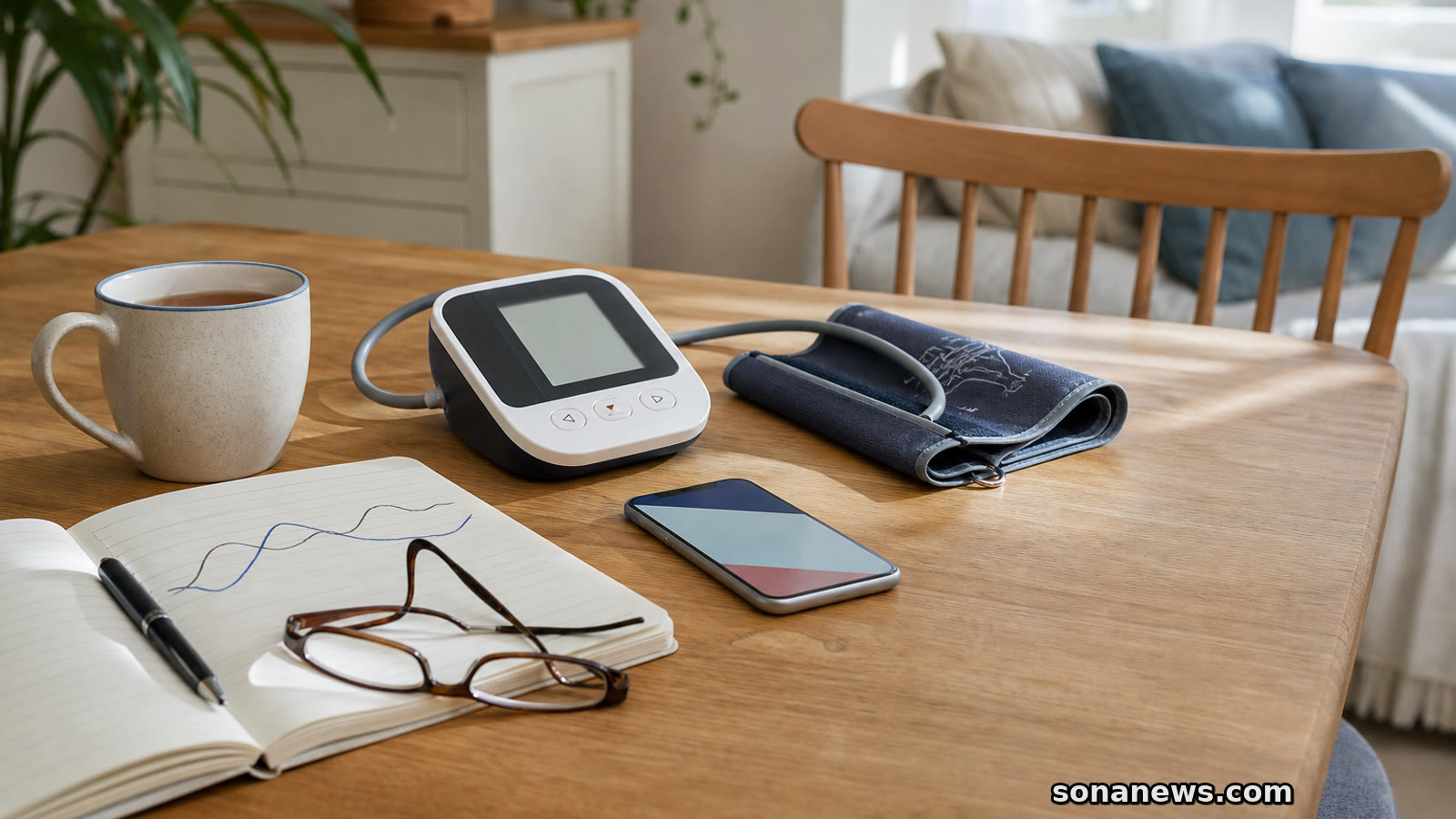

The home blood pressure cuff looks like a shortcut to certainty. Press a button, wait for the squeeze, write down a number. In public-health terms, though, the useful part begins earlier than that. It begins with the device, the cuff, the chair, the arm, the quiet minute and the question of whether one reading is being mistaken for the whole story.
That matters because blood pressure is one of the health measurements that has moved from the clinic into ordinary rooms. A kitchen table, a pharmacy machine and a GP surgery are now part of the same chain of information. The shift can be helpful, but it also makes the boring details more important. A home reading is not magic because it happened at home. It is useful when it is accurate enough to discuss with a health professional.
CDC's high blood pressure pages, updated in May and June 2026, give the scale of the issue without turning it into a scare story. The agency says high blood pressure usually has no warning signs or symptoms, and that measuring blood pressure is the only way to know whether it is high. Its U.S. facts page says nearly half of U.S. adults, 48.1% or 119.9 million people, have high blood pressure by its definition, while only 22.5% of adults with high blood pressure have it under control.
The global picture is just as plain. WHO's 2025 hypertension fact sheet estimates that 1.4 billion adults aged 30 to 79 had hypertension in 2024, about one third of that age group. It also says roughly 600 million adults with hypertension were unaware they had it, and about 320 million had it under control. Those are large numbers, but the reader utility is modest: measurement is not a lifestyle badge. It is one part of finding risk that may otherwise stay quiet.
Home monitoring is already built into health systems. NHS England says more than eight million people in England are diagnosed with hypertension, and that home blood pressure monitoring lets people with hypertension measure and share readings with their GP from home. It also says more than 220,000 blood pressure monitors have been distributed around England through the Blood Pressure @home programme since October 2020. The programme's premise is not that the living room replaces clinical care. It is that a well-kept record can give clinicians a better view of what happens between appointments.
The trap is treating the number as cleaner than the routine that produced it. CDC lists several things that can distort a reading: smoking, alcohol, caffeine or exercise within 30 minutes, a full bladder, crossed legs, an unsupported arm, or an arm hanging below chest height. It also notes the familiar office problem known as white coat syndrome, saying as many as one in three people with a high reading at a doctor's office may have normal readings outside it. The point cuts both ways. A single setting can mislead, and so can a sloppy setup at home.
The cuff itself is part of the story. NHS England tells people buying a home monitor to use one approved for use in the UK and validated for accuracy by the British and Irish Hypertension Society. Target:BP, an American Heart Association and American Medical Association initiative, says upper-arm cuff devices provide the most accurate blood pressure readings, that cuff size should be selected by mid-arm circumference, and that wrist cuffs are for situations where an upper-arm cuff cannot be used. It also says finger and cuffless smartwatch-style devices are not recommended for high blood pressure decisions because evidence is not yet strong enough.
That can sound technical, but it is really a consumer warning. A monitor bought because it is cheap, neat or wearable may not answer the question a clinician needs answered. A cuff that does not fit the arm may make the reading look more precise than it is. A notebook of readings taken at random, after coffee one day and after a quiet sit another day, may create noise rather than clarity.
The calm version is less dramatic. CDC advises using a blood pressure log, measuring at the same time each day when home monitoring is part of a care plan, and taking at least two readings one or two minutes apart. The American Heart Association's home measurement sheet is similarly ordinary: no smoking, caffeinated drinks, alcohol or exercise 30 minutes beforehand; a validated device with the correct cuff size; bladder emptied; back supported; feet on the floor; legs uncrossed; arm supported at heart level; no talking during measurement.
None of that turns a home cuff into a personal verdict machine. It makes the reading easier to interpret. A careful routine can help separate a pattern from a blip, a clinic effect from a home pattern, and a usable record from a pile of anxious numbers. The strongest message from the official guidance is not panic. It is repeatability.
So the blood pressure check starts before the number because the number needs a setting. The device has to be plausible. The cuff has to fit. The body has to be positioned in a consistent way. The reading has to be written down with enough context to be useful. For a measurement that often finds a silent risk, that quiet preparation may be the most important part of the whole exercise.
Editorial note. This article is for general information only and is not medical advice. Blood pressure readings, monitoring routines, device choice and care decisions can vary by person and medical history. For personal concerns about blood pressure, symptoms, medication, pregnancy or a home reading, use an official health service or a qualified health professional.
Sources
- Source: "Measuring Your Blood Pressure", Centers for Disease Control and Prevention, Extracted 2026-06-15. Verified: May 12 2026 page date, no-warning-signs framing, self-measured blood pressure monitoring, home log, same-time measurement, two readings spaced one or two minutes apart, factors that can distort readings and white coat syndrome figure
- Source: "High Blood Pressure Facts", Centers for Disease Control and Prevention, Extracted 2026-06-15. Verified: June 2 2026 page date, U.S. prevalence of 48.1% or 119.9 million adults, 22.5% control figure, heart disease and stroke risk context
- Source: "Hypertension", World Health Organization, Extracted 2026-06-15. Verified: 25 September 2025 fact-sheet date, 1.4 billion adults aged 30 to 79 with hypertension in 2024, 600 million unaware and 320 million controlled
- Source: "Home blood pressure monitoring", NHS England, Extracted 2026-06-15. Verified: more than eight million diagnosed with hypertension in England, purpose of home monitoring, more than 220,000 monitors distributed since October 2020, approved and BIHS-validated monitor advice
- Source: "Selecting a Cuff Size", Target:BP, American Heart Association and American Medical Association, Extracted 2026-06-15. Verified: upper-arm cuff preference, mid-arm circumference sizing, wrist cuff limits, finger-device and cuffless-device caution
- Source: "Home Blood Pressure Measurement Instructions", American Heart Association PDF, Extracted 2026-06-15. Verified: validated device and correct cuff size, quiet seated positioning, 30-minute pre-measurement cautions, two readings and health-professional sharing
Help us improve
Was this article useful?
One anonymous tap helps Sona improve future reporting, headlines and source context.
Up next

Primary school sessions begin this week, with secondary pupils following later in autumn. For most families, the practical deadline comes from the local school immunisation team.
Continue readingMore in Health