The New World screwworm alert is low-risk, but not background noise
CDC and USDA say the current U.S. risk remains very low and the food supply is safe. The useful story is how animal surveillance, border maps and wound-aware public health fit together.

A public-health alert can sound larger than the risk it describes. The New World screwworm response in the United States is a good test of that distinction. The words are unsettling, the parasite is real, and federal agencies have moved resources into place. At the same time, CDC and USDA are saying something quieter and more important for the public: the current U.S. risk to people and animals is very low.
That does not make the story trivial. It means the story belongs in the space between panic and dismissal. New World screwworm is mainly an animal-health problem, but it sits inside a One Health response because livestock, pets, wildlife, human health, trade and the food system are connected. When a pest can cross borders through animals and environments, surveillance becomes a public-health tool before most people have any direct contact with it.
CDC’s situation summary, dated 23 June, says there have been no reports of New World screwworm infestations in humans acquired in the United States. It also says USDA APHIS had reported 16 domestically acquired animal cases in the U.S. as of 22 June. The first U.S. animal case in the current outbreak was confirmed on 3 June. A travel-associated human case had been confirmed in August 2025 in a person returning from El Salvador, but CDC’s current U.S. line is clear: no locally acquired human cases.
The response language is worth reading carefully. On 12 June, CDC said it had activated a Level 3 emergency response, in support of USDA and Texas health officials. Level 3 is the lowest of CDC’s three emergency response levels. That matters because the word emergency can easily be stripped of scale online. In this case, it signals coordination, staffing and preparedness rather than a declaration that ordinary households across the country are facing an immediate human health threat.
USDA’s screwworm.gov page uses similar framing. It says New World screwworm is a serious pest of livestock and wildlife, that USDA is leading a coordinated One Health response, that the issue is not a food-safety issue and that the U.S. food supply remains safe. It also says the current risk to animals and people in the United States is very low. Those statements are not decorative reassurance. They are the central facts that prevent an animal outbreak from being rewritten as a national food panic.
The reason officials still take it seriously is biological and economic. New World screwworm flies lay eggs near wounds or body openings in warm-blooded animals. Larvae can damage living tissue. Livestock are the main concern, but pets, wildlife and, rarely, people can be affected in areas where the flies are present. CDC says the risk is localized to places where New World screwworm flies are circulating, and the present public risk remains very low.
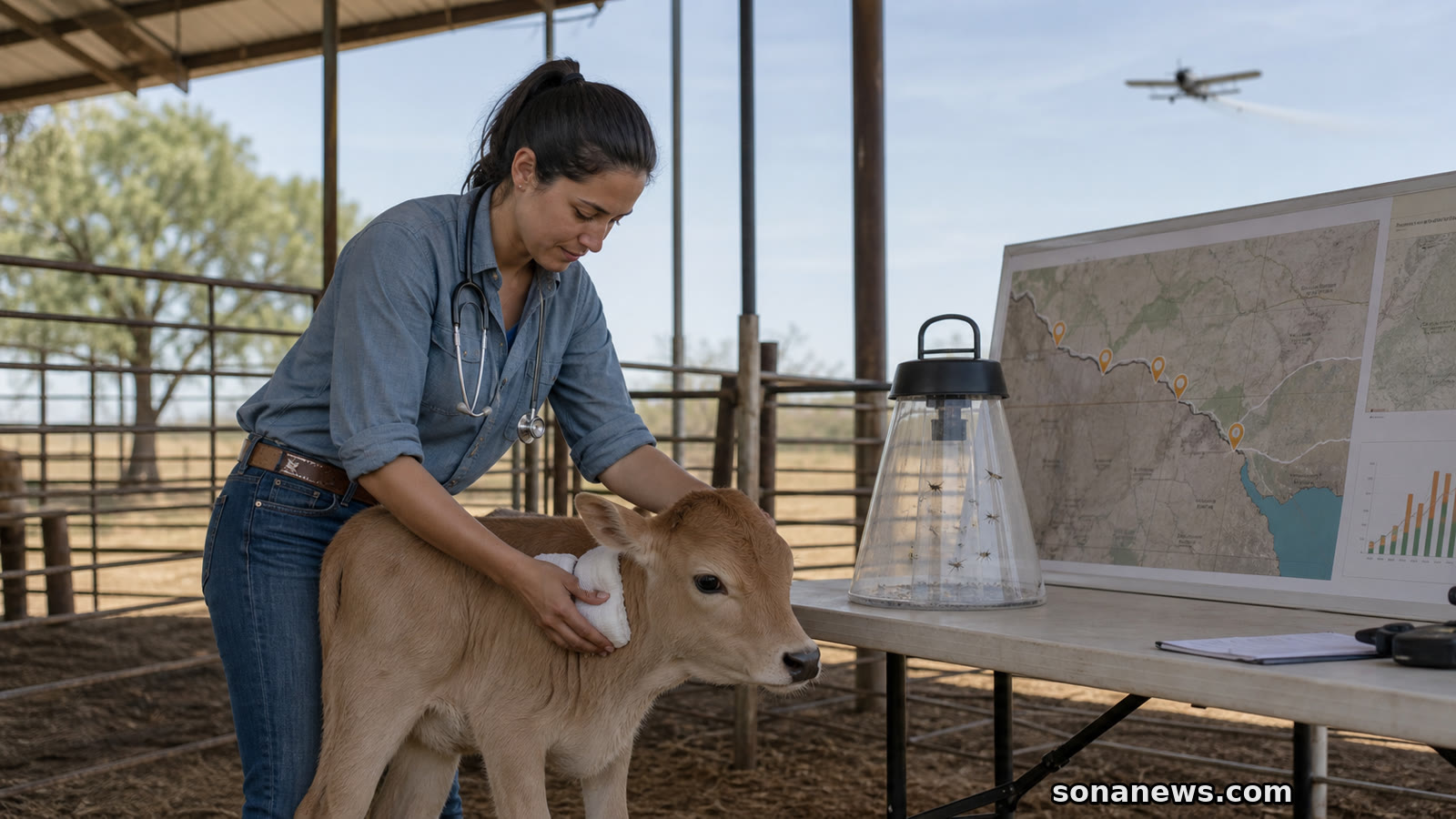
Texas offers the clearest local example. The Texas Department of State Health Services said on 4 June that New World screwworm had been confirmed in a bovine in Zavala County, a three-week-old calf with larvae found in its umbilical area. The state said there is no human-to-human transmission of the infestation and that the Texas food supply is safe from screwworm, with state and federal meat inspectors examining animals for signs of disease and pests.
For readers outside affected areas, the most useful move is not to memorise parasite biology. It is to notice how official risk information is built. CDC points readers to screwworm.gov for the latest animal reports. USDA maintains current-status pages and dashboards, with updates to maps and case lists. Texas health officials direct clinicians and the public toward local health departments for suspected human cases, while animal-health reporting runs through veterinary and agricultural channels. The structure is boring by design, and that is a strength.
The public-facing precautions are also narrower than a viral headline might imply. CDC and Texas officials discuss wound covering, insect precautions and prompt professional attention in areas where the flies are present or where exposure is plausible. That is general public-health information, not a basis for self-diagnosis. A suspicious wound in a relevant area is a matter for qualified health or veterinary professionals, not social-media comparison charts.
There is also a travel footnote. CDC says Central American countries and Mexico have reported large numbers of animal cases and human cases since the regional re-emergence, while the U.S. has had one travel-associated human case since that spread. Travellers, farm workers, animal handlers and people living near reported animal detections will read this differently from readers in places with no current signal. That is why the map matters more than the mood.
The best summary is deliberately unexciting. New World screwworm is not background noise for animal-health officials, border agencies or clinicians in affected areas. It is also not evidence of a broad U.S. human health crisis. A mature reading holds both points at once: low public risk, active surveillance, safe food supply, local reporting pathways and a response built before the average person needs to think about it.
Editorial note. This article is for general public-health information only and is not medical or veterinary advice. It does not assess any individual symptom, wound, exposure, animal case, travel history or clinical risk. People concerned about their health or an animal’s health should use current official public-health, veterinary and clinician guidance.
Sources
- Source: "New World Screwworm Outbreak", Centers for Disease Control and Prevention, Extracted 2026-06-25. Verified: CDC’s 23 June situation summary, very-low current U.S. risk, no locally acquired human cases reported, 16 domestically acquired animal cases as of 22 June, first current U.S. animal case on 3 June, and One Health response framing
- Source: "CDC Activates Emergency Operations Center for New World Screwworm Response", Centers for Disease Control and Prevention, Extracted 2026-06-25. Verified: CDC activated a Level 3 response on 11 June, Level 3 is the lowest CDC response level, and CDC is supporting USDA and Texas partners
- Source: "Screwworm.gov Unified Government Response To Protect the United States", USDA APHIS, Extracted 2026-06-25. Verified: USDA says NWS is a serious pest of livestock and wildlife, not a food-safety issue, the U.S. food supply remains safe, current risk is very low, and sterile-fly production and surveillance are response tools
- Source: "DSHS provides precautions following animal New World screwworm case in Texas", Texas Department of State Health Services, Extracted 2026-06-25. Verified: Texas confirmation in a bovine in Zavala County, no human-to-human transmission, Texas food-supply reassurance, and local health reporting guidance
- Source: "Current Status of New World Screwworm", USDA APHIS, Extracted 2026-06-25. Verified: official current-status hub, reporting link for suspicious wounds, maggots or infestations, dashboard and update cadence for maps and case lists
Help us improve
Was this article useful?
One anonymous tap helps Sona improve future reporting, headlines and source context.
Up next

Primary school sessions begin this week, with secondary pupils following later in autumn. For most families, the practical deadline comes from the local school immunisation team.
Continue readingMore in Health