Your next appliance may come with a repair paper trail
EU repair rules due from July 2026 will not make every broken product easy to fix. They may make the repair offer, spare parts and guarantee choice less opaque.
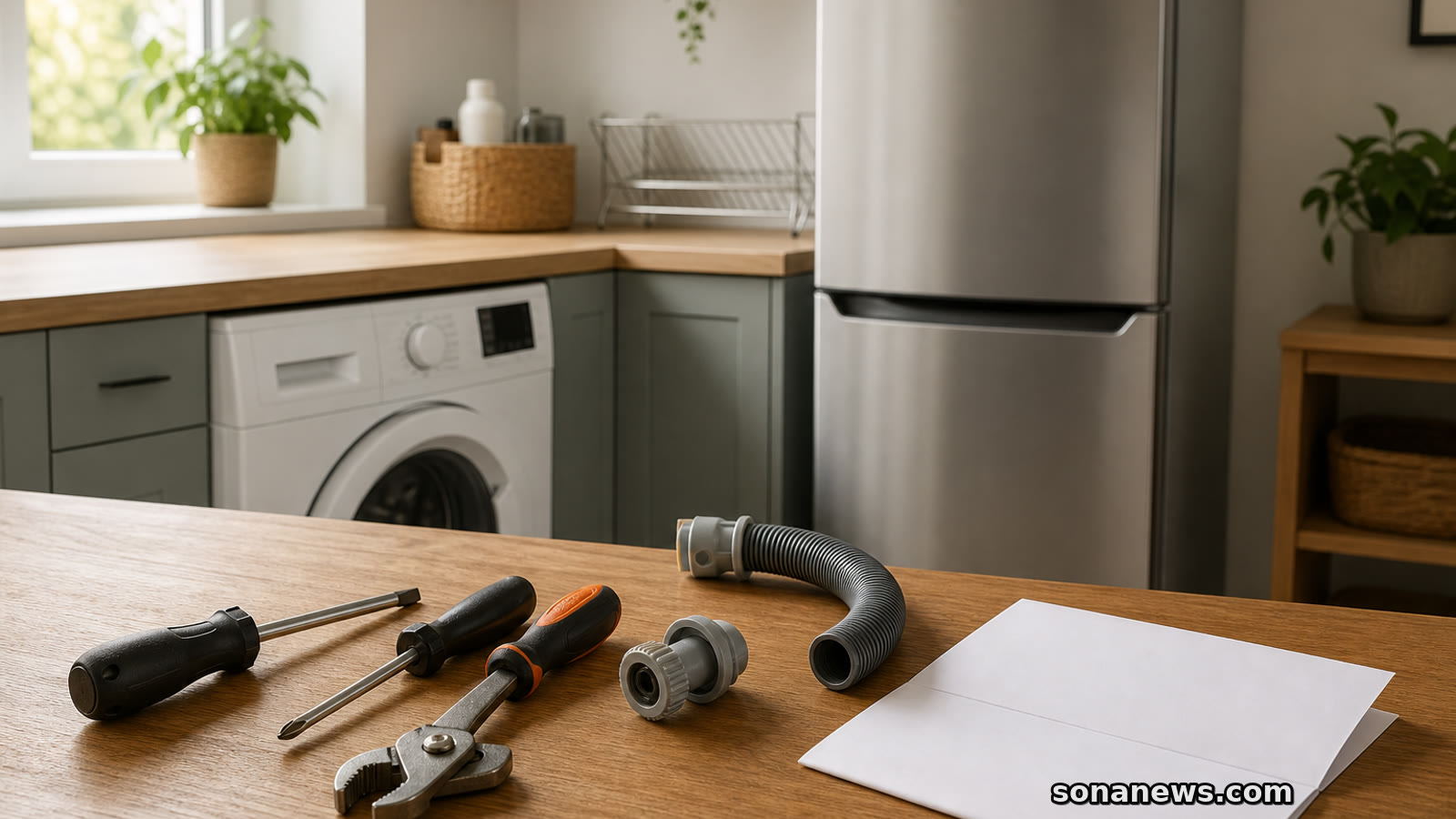

The awkward moment in many homes is not always the breakdown. It is the hour after it, when a washing machine, fridge or phone has to become a decision: pay for repair, chase a part, use the guarantee, or replace the whole thing and hope the new one lasts longer.
Europe is about to put more paperwork around that moment. The EU Directive on common rules promoting the repair of goods was adopted in June 2024, entered into force in July 2024, and must be applied by member states from 31 July 2026, according to the European Commission. It is not a magic wand for every cracked screen or tired appliance. It is a move toward something more modest and possibly more useful: making repair harder to hide behind vague service pages.
The rule matters because repair usually collapses under friction. A product may be technically repairable, but the part is expensive, the quote is unclear, the authorised route is slow, or the buyer cannot tell whether repair will leave them worse off under the guarantee. The Directive tries to shift that balance by creating duties around repair information, repair offers, spare parts and the legal guarantee.
Its scope is narrower than the slogan suggests. The repair obligation does not cover every household object. The Commission says manufacturers of certain products subject to EU reparability requirements must repair those products within a reasonable time and for a reasonable price. The Commission’s examples include fridges and smartphones, and the legal text ties the repair obligation to goods covered by EU repairability requirements listed in Annex II.
That caveat matters. A reader should not hear “right to repair” and assume every appliance in the house now has a cheap fix waiting. The obligation depends on product-specific EU rules. The wider ecodesign and energy-labelling framework already covers familiar home categories such as dishwashers, washing machines, washer dryers, tumble dryers, fridges, freezers, range hoods, air conditioners, comfort fans, water heaters and light sources. Repair policy is being stitched into that existing product-rule system, not dropped on top of the whole market at once.
The most practical change may be the repair paper trail. The Directive creates a European Repair Information Form that repairers may give consumers before a repair contract is agreed. The Commission says the form is meant to help people compare offers more easily. If a repairer chooses to provide it, the repair conditions listed in it must remain valid for 30 days. EUR-Lex adds that the form is generally free, although a diagnostic service can carry a cost if the consumer is told before requesting the form.
That is dry, but useful. A repair quote often fails as a consumer document because it mixes diagnosis, labour, parts, collection, timing and exclusions into one foggy number. A standard form will not make the price low. It can make the offer easier to compare with another repairer, or with replacement, without pretending the consumer has time to become an appliance engineer.
There is also a guarantee nudge. The Commission says consumers who choose repair instead of replacement under the legal guarantee will receive an extra year of legal guarantee. That is meant to make repair feel less like the risky option. Again, the detail will sit in national rules and the specific case, so it should not be read as personal legal advice. But the policy direction is clear enough: repair should not be penalised simply because replacement is easier to administer.
The Directive also goes after some of the ways repair can be blocked. The Commission says manufacturers will be prohibited from using contractual clauses, hardware techniques or software techniques that impede repair of covered goods, unless justified by legitimate and objective factors. It also says manufacturers must provide access to spare parts at reasonable prices. Those phrases leave room for argument, which is why enforcement will matter. Still, they target a real household frustration: a product that looks repairable until the part, tool or software lock says otherwise.
By 2027, another piece is due to arrive. The Commission says a European Repair Platform is expected to become operational as an extension of the Your Europe portal. The idea is to help consumers find repairers more easily, while member states manage registration conditions for repairers in their territory. That could be useful if it avoids becoming yet another government directory that nobody opens until a crisis.
There is already a consumer information layer around appliances. Your Europe says EU energy labels help buyers compare products by energy use, with the current A to G scale and colours from green to red. EPREL, the European Product Registry for Energy Labelling, is the Commission database that makes energy and environmental performance information available for models bearing the energy label. For appliance buyers, the direction of travel is fairly clear: the product label is becoming less of a sticker and more of a trail of evidence.
The limits are worth saying plainly. Repair still has to be convenient enough to beat replacement. A 30-day quote is not much use if the only repair slot is weeks away. Spare parts at “reasonable” prices will mean little without pressure from regulators and competition from independent repairers. Some people will still replace products because the household cannot wait.
But the shift is not trivial. For years, the smarter home-buying question was mostly about running cost: how much energy will this use? The next question is repair: when it fails, can I find the part, the quote, the repairer and the guarantee position without starting from scratch?
That is not as photogenic as a new appliance. It is probably more useful.
Editorial note. This article is general consumer policy information. It is not legal advice, repair advice or a substitute for checking the rules and repair options in your country.
Sources
- European Commission - “Directive on repair of goods” - - extracted 2026-06-07. Verified: adoption on 13 June 2024, entry into force on 30 July 2024, member-state application from 31 July 2026, obligation to repair covered products, reasonable time and price wording, repair information duties, spare-parts access, extra year of guarantee after repair, repair platform expected in 2027 and European Repair Information Form conditions
- EUR-Lex - Directive (EU) 2024/1799 - - extracted 2026-06-07. Verified: official legal title, in-force status, 31 July 2026 application date, scope outside the seller liability period, Annex II limitation for repairability requirements, Article 4 form details and repairer definition
- European Commission - “Product List” for energy efficient products - - extracted 2026-06-07. Verified: covered product categories under ecodesign and energy labelling, including dishwashers, washing machines, washer dryers, tumble dryers, fridges and freezers, range hoods, air conditioners, comfort fans, water heaters and light sources
- Your Europe - “Energy efficiency labels of appliances” - - extracted 2026-06-07. Verified: the A to G energy label scale, colour coding, older plus-sign label phaseout for several categories since 2021, and consumer link to EPREL
- European Commission - “EPREL” - - extracted 2026-06-07. Verified: EPREL is the Commission database for energy and environmental performance information on models bearing the energy label, with model search, product information sheets and additional data
- European Consumer Centre France - “Spare parts and repairs” - - extracted 2026-06-07. Verified: consumer-facing repair context, existing European spare-parts measures for appliances, and the broader circular-economy repair push. Used as supporting context, not as the legal source for the Directive
Help us improve
Was this article useful?
One anonymous tap helps Sona improve future reporting, headlines and source context.
Up next
A gold-coloured lamp has been recalled because its plug can overheat. With no model or serial identifier published, the order record matters more than a visual match.
Continue readingMore in Home & Living