A U.S. Cuisinart recall puts the grill brush on the checklist
Nearly 1.72 million metal-wire brushes are covered. The useful check is the model number, including brushes sold inside larger barbecue tool sets.
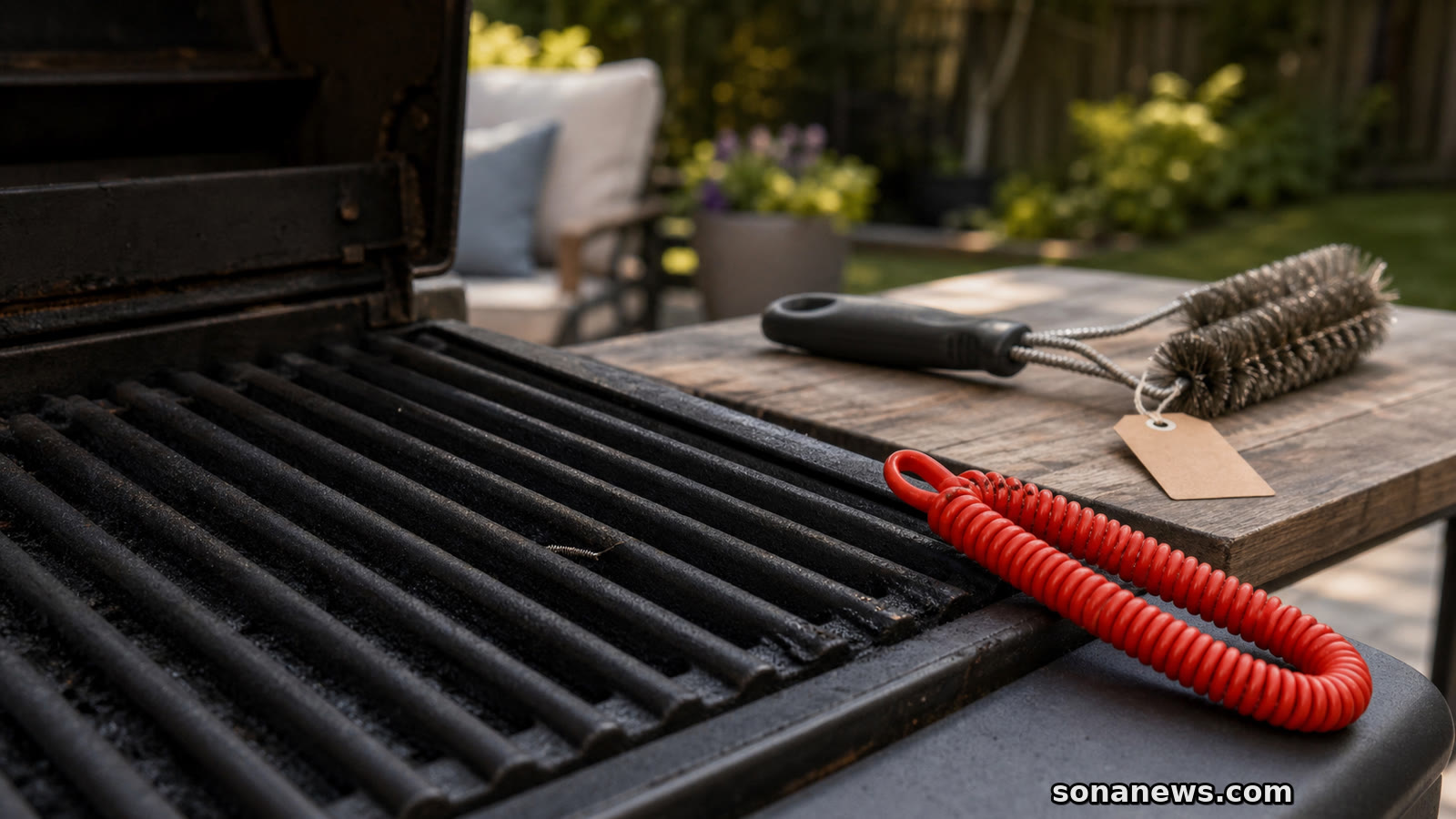

The least memorable tool at a summer barbecue may now deserve the first look. It is not the grill, the gas bottle or the thermometer. It is the brush that has spent years scraping yesterday's food from the grate, then disappearing into a drawer or weathered box.
A U.S. recall announced on 2 July covers about 1,719,995 Cuisinart metal-wire bristle grill brushes. The Consumer Product Safety Commission says small wire bristles can detach, remain on the grill or stick to food. If swallowed, they can cause serious internal injuries that may require surgery.
The size of the recall is only one reason it is easy to miss. The affected products do not share a single silhouette. CPSC lists eight brush models, with black plastic, stainless-steel or wood handles, and distribution dates reaching as far back as June 2009. Some were sold by themselves. Others were tucked into larger barbecue tool sets, where the set's box may have vanished years before the brush did.
That turns the household task into a model-number check rather than a visual guess. The brush models named in the recall are CCB-100, CCB-4125, CCB-5014, CCB-6450, CCB-8012, CCB-4114, CCB-W2 and CSBS-777. CPSC says the model number can be found on the product packaging, while the word Cuisinart is stamped on the brush handle.
Four tool sets are also part of the identification trail: Premium Grill 10 Piece set CGS-2010, 13 Piece Wooden Handle Grill Tool Set CGS-W13, 14 Piece Deluxe Stainless Steel Grill Set CGS-5014 and 20 Piece Deluxe Grill Set CGS-5020. That matters for a brush inherited with a grill, bought as part of a house move or stored without its own label. A person may remember buying a set without remembering that the brush inside had a separate model.
CPSC says the products were sold at Burlington, TJ Maxx and Ross stores, and online at Amazon and Cuisinart, from June 2009 through March 2026 for between $8 and $20. Those dates describe the overall sales window, not the distribution period of every model. The official recall table gives separate dates for each one.
The incident record is specific and should stay that way. Conair is aware of at least 54 reports and reviews in which small wire bristles detached, according to CPSC. Three reports involved consumers who swallowed metal bristles and sought medical treatment to remove them from the digestive tract or throat. That does not mean every wire brush has shed a bristle, nor that every Cuisinart grill accessory is recalled. It means the listed models should not be treated as ordinary worn tools.
The remedy is also more precise than simply replacing a brush after the next shop. CPSC says consumers should stop using recalled brushes immediately and contact Conair for either a full refund or Cuisinart.com credit worth the refund plus 20%. The recall process asks consumers to discard the affected brush. Owners should use the official CPSC or Conair route for verification and remedy details rather than relying on a marketplace listing or social post.
There is a broader reason the tiny bristle matters. A CDC case series published in 2012 documented six patients treated after wire grill-brush bristles became embedded in food. Injuries ranged from punctured neck tissue to gastrointestinal perforation requiring emergency surgery. The report advised careful examination of the grill surface before cooking and said alternative cleaning methods or products might be considered.
Health Canada has issued similar general consumer guidance. It advises regularly inspecting a wire barbecue brush for damage, checking the grill and barbecued food for loose bristles, replacing brushes to avoid wear-related problems and stopping use if bristles become loose or stick to the grill. That guidance provides context, but it is not a substitute for the current U.S. recall. A recalled model should be taken out of use even if it still looks intact.
This distinction is worth keeping. Inspection is a useful routine for a product that is not recalled. It is not a home test that can clear a recalled brush as safe. A missing package can make identification awkward, but it should not invite improvised stress tests, pulling at wires or running a suspect brush over the grate one last time.
For households outside the United States, the CPSC remedy may not apply in the same way. Local product-safety notices and the manufacturer's regional service route should decide what happens next. The underlying domestic habit travels more easily: keep product and set details when practical, check recall databases before barbecue season and retire a tool through the official route when its model is named.
A grill brush can last long enough to outlive its receipt, packaging and the memory of where it came from. That is why this recall is not really a story about recognising one familiar black handle. It is about the quiet paper trail attached to a cheap, durable object, and the small wire fragment that is easier to prevent than to spot on a plate.
Editorial note. This article is general household, product-safety and public-health information, not medical, legal, cooking or product-disposal advice. Use the official recall notice and manufacturer route for a specific brush. If a wire bristle may have been swallowed or someone has pain or other concerning symptoms, seek prompt guidance from an appropriate local medical service. For an immediate emergency, use local emergency services.
Sources
- Source: "Conair Recalls Over One Million Cuisinart Grill Brushes Due to Ingestion Hazard", U.S. Consumer Product Safety Commission, Extracted 2026-07-12. Verified: 2 July 2026 recall date; about 1,719,995 units; eight brush model numbers and four affected tool sets; model-location guidance; separate distribution periods; overall sales channels, dates and price range; detachment and ingestion hazard; at least 54 reports and reviews, including three people who sought treatment; stop-use instruction; refund or credit remedy; recall number 26-601
- Source: "Injuries from Ingestion of Wire Bristles from Grill-Cleaning Brushes, Providence, Rhode Island, March 2011-June 2012", CDC Morbidity and Mortality Weekly Report, Extracted 2026-07-12. Verified: six-patient case series; range of injuries from neck-tissue puncture to gastrointestinal perforation requiring emergency surgery; advice to examine grill surfaces carefully before cooking and consider alternative cleaning methods or products; limits on identifying safer brands or designs
- Source: "Consumer Product Update: Have you inspected your wire barbecue brush lately?", Health Canada, Extracted 2026-07-12. Verified: repeated use can loosen bristles; guidance to inspect the brush, grill and food, replace worn brushes and stop use if bristles loosen or stick to the grill; product-safety context and incident-reporting route
Help us improve
Was this article useful?
One anonymous tap helps Sona improve future reporting, headlines and source context.
Up next
Heat-pump tumble dryers do not need an exhaust hose through an outside wall. Their water tank, drainage options and installation instructions still deserve a check before delivery.
Continue readingMore in Home & Living