The boxed mattress check starts with the sewn label
A CPSC recall of EVLWZL and Gunugu mattresses shows why a spare-room mattress-in-a-box deserves a label, receipt and fitted-cover remedy check.
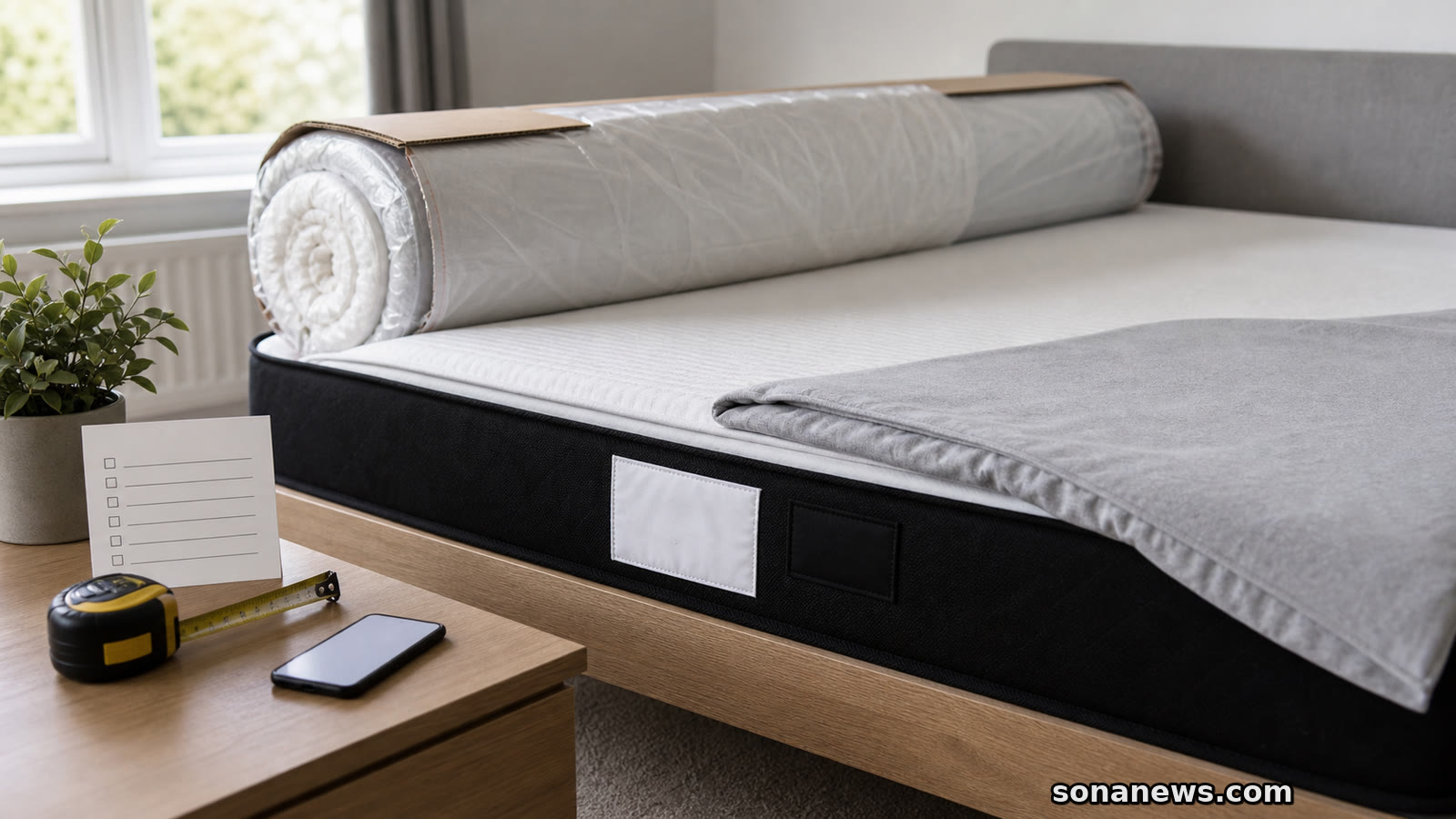

A mattress-in-a-box is built for forgetting. It arrives compressed, expands, sheds its carton and quickly becomes ordinary bedroom furniture. In a guest room or a child's room, the order email may sit with one person while the mattress is used by someone else. That gap matters when a safety recall depends on a sewn label and a sales record rather than a visible fault.
The U.S. Consumer Product Safety Commission announced a recall on 7 May 2026 for EVLWZL and Gunugu mattresses. The notice covers about 670 mattresses that CPSC says violate the mandatory flammability standard for mattresses, creating a risk of serious injury or death from fire. The agency's notice says no incidents or injuries had been reported. That detail is important, but it does not turn the recall into a suggestion. It means the official notice is based on a compliance failure, not on a reported household fire.
The affected products are specific. CPSC describes 10-inch and 12-inch mattresses in twin, full, queen and king sizes, with black tops and sides, sold compressed in a box. A white sewn-on label on the cover lists fibre content, size and the words "WG/P Foundation". EVLWZL also appears on a black sewn-on label on the front side. The recalled mattresses were sold online from October 2025 through March 2026 for about $100 to $260, with EVLWZL sold on Amazon and Wayfair and EVLWZL/Gunugu sold on Walmart.
The remedy is also specific. CPSC says consumers are to stop using the recalled mattress immediately and contact EVLWZL for a repair. The remedy is a free fitted cover that is intended to bring the mattress into compliance with mandatory flammability standards. If a household has trouble obtaining the remedy, the recall page links to a CPSC complaint form for non-responsive recall remedies. Federal law also prohibits selling products subject to a CPSC recall, which matters for spare-room furniture, marketplace resale and hand-me-down moves.
The broader lesson is not that every boxed mattress is suspect. It is that a mattress is one of the household products where a label can matter long after the packaging has gone. Mattress recalls are awkward because the product is large, private and sometimes bought cheaply for a temporary room. A person may remember the size and comfort level but not the brand name, sales channel or order month. That is exactly why the sewn label deserves a quick photograph before the bed is made up and forgotten.
CPSC's mattress guidance explains why the standard language is technical. U.S. federal mattress rules include two main flammability standards. One, 16 CFR part 1632, deals with smouldering ignition and uses a lighted cigarette test for mattresses and mattress pads. The other, 16 CFR part 1633, deals with open-flame flammability and measures the size of the fire generated by a mattress set during a 30-minute test. CPSC says the standards are intended to reduce deaths and injuries associated with mattress fires.
Those tests are not the same as a domestic experiment, and they should not be copied at home. The useful household action is identification, not testing. Part 1632 sets a char-length criterion in a controlled cigarette-ignition test. Part 1633 sets limits on peak heat release and total heat release in a controlled open-flame test. These figures are regulatory performance measures. They are not instructions for a consumer to decide whether a mattress is safe by sight, smell or a flame.
For imported and online furniture, the record trail can be the difference between a clear answer and a shrug. A saved order page, a label photo, the brand name on the sewn tag, the mattress thickness and the purchase window can help match a product to an official notice. The absence of a famous logo is not reassurance by itself. Many low-cost home products move through marketplaces under short-lived brand names, which makes exact wording and dates more useful than memory.
There is a practical second-hand angle as well. Mattresses move into spare rooms, first flats, student houses and family storage with very little paperwork. A recalled mattress should not quietly re-enter circulation because nobody wants to deal with a bulky item. If a product matches an official recall, the recall route and manufacturer remedy matter more than improvising a cover, reselling it or relying on a marketplace comment thread.
The calm check is therefore small but worth doing. Look for the sewn labels, compare the brand, size, thickness, colour and sales period with the official CPSC notice, keep the order record where possible and use the listed remedy route if the product matches. The point is not to turn bedtime into a safety audit. It is to make sure a mattress-in-a-box does not become invisible the moment the box is gone.
Editorial note. This article is general household and product-safety information, not legal, medical, fire-engineering, building, bedding, resale or emergency advice. For a specific recalled product, use the official recall notice and manufacturer contact route. For fire risk, installation, injury, rented housing, disposal or immediate hazards, use qualified local professional, medical or emergency guidance.
Sources
- Source: "EVLWZL and Gunugu Mattresses Recalled Due to Risk of Serious Injury or Death from Fire Hazard; Violates Mandatory Standard for Mattress Flammability", U.S. Consumer Product Safety Commission, Extracted 2026-06-27. Verified: recall date May 7, 2026; recall number 26-478; about 670 affected mattresses; 10-inch and 12-inch sizes; twin, full, queen and king sizes; black top and sides; sewn-label identifiers; online sale dates, platforms and prices; no incidents or injuries reported; stop-use, fitted-cover repair and complaint-form remedy route
- Source: "Mattresses, Mattress Pads, & Mattress Sets", U.S. Consumer Product Safety Commission, Extracted 2026-06-27. Verified: purpose of federal mattress flammability standards; 16 CFR part 1632 smouldering-ignition scope; 16 CFR part 1633 open-flame scope; definition context for mattresses, mattress pads and mattress sets; labelling and certification framework
- Source: "16 CFR Part 1633, Standard for the Flammability (Open Flame) of Mattress Sets", Electronic Code of Federal Regulations, Extracted 2026-06-27. Verified: purpose and applicability of the open-flame standard; 30-minute test; peak heat-release limit of 200 kW; total heat-release limit of 15 MJ for the first 10 minutes; importer and renovator coverage; certification-label context
- Source: "16 CFR Part 1632, Standard for the Flammability of Mattresses and Mattress Pads", Electronic Code of Federal Regulations, Extracted 2026-06-27. Verified: cigarette-ignition resistance standard; mattress and mattress-pad scope; prototype testing context; 2-inch char-length criterion; renovated mattresses intended for sale treated as manufactured for sale
Help us improve
Was this article useful?
One anonymous tap helps Sona improve future reporting, headlines and source context.
Up next
A gold-coloured lamp has been recalled because its plug can overheat. With no model or serial identifier published, the order record matters more than a visual match.
Continue readingMore in Home & Living