The grill safety zone starts before the first barbecue
Official fire-safety advice turns the summer grill from a patio prop into a small household layout decision: distance, ventilation, grease, gas and children all matter.

The first barbecue of summer is usually treated as a shopping list. Charcoal, gas, skewers, salads, ice. The less glamorous list is the one that decides where the grill actually stands.
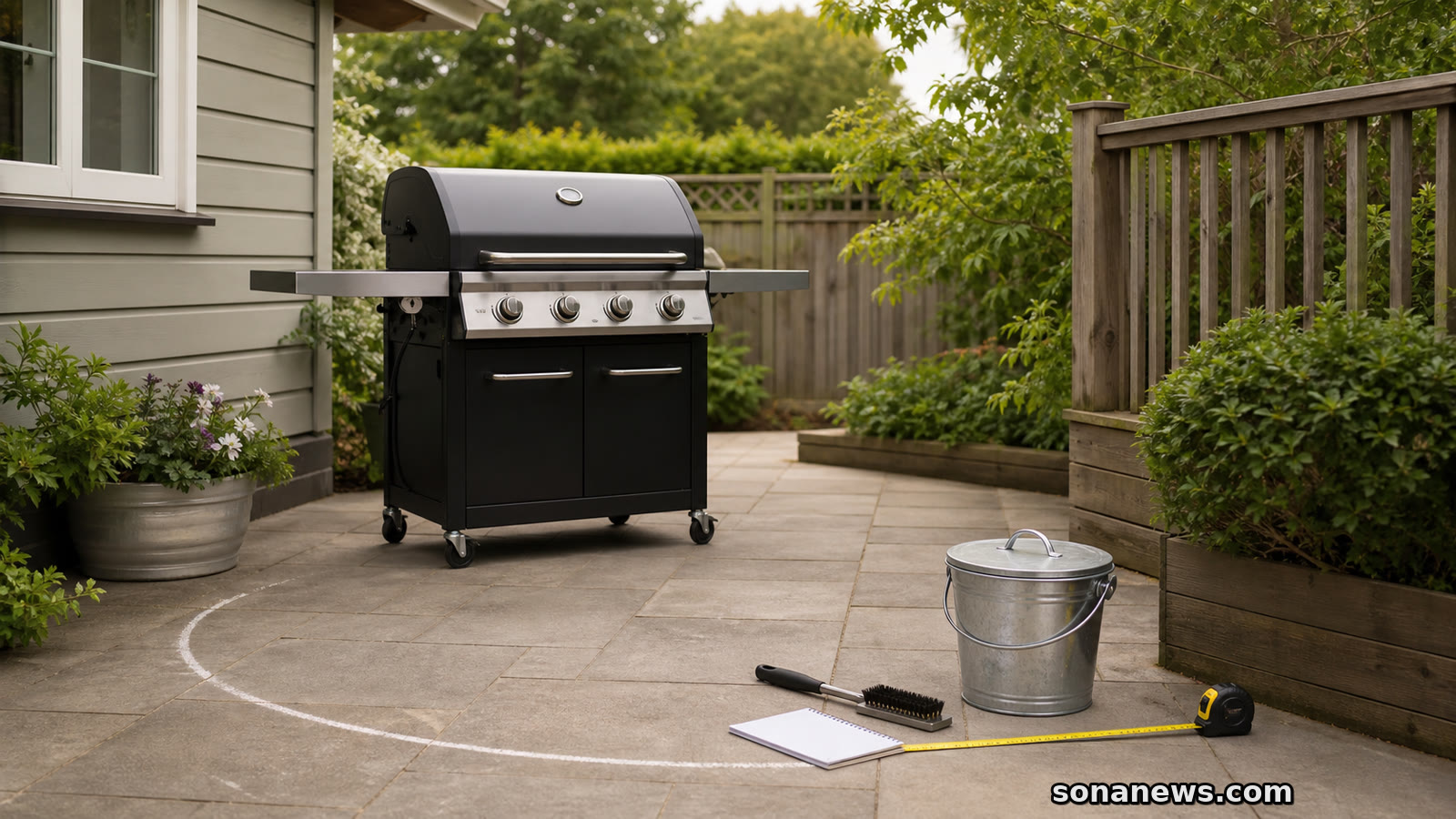
Official fire-safety guidance is blunt about that part. The U.S. Fire Administration tells households to use grills outside, keep them at least 3 feet from siding, deck rails and eaves, keep a 3-foot safe zone around the grill, open a gas grill before lighting, stay with lit grills and clean grease after each use. Its separate pictograph repeats the point visually: the grill belongs away from siding, deck railings, eaves and overhanging branches.
That makes grill safety feel less like a seasonal warning and more like a small outdoor layout problem. A barbecue placed tight against a wall, tucked beneath an overhang or crowded by a table of children’s drinks may look convenient. It is also exactly where the risk becomes harder to manage. The safer version is not dramatic. It is just a little more boring: outdoor air, clear space, no low branch above, no loose route for a child or pet to drift into the heat.
The Consumer Product Safety Commission frames the same household habit from the equipment side. Its summer grilling safety sheet says to check CPSC recall information, look over the grill and gas hoses for cracking, brittleness, holes and leaks, replace damaged parts where needed, and use gas or charcoal grills outside only in well-ventilated areas. It also warns against using grills indoors, in a garage, breezeway, carport, porch or under a surface that can burn.
Carbon monoxide is one reason the outdoor-only rule matters. Gas and charcoal grills can produce a fire risk, but charcoal also brings the familiar problem of an invisible, odourless gas. The domestic mistake is to think of a grill as simply hot, then move it somewhere sheltered when the weather turns. Official advice treats shelter differently. If the space is enclosed, covered in the wrong way or poorly ventilated, convenience is no longer the useful test.
There is a second, smaller habit hidden in the advice: clean the grill before the grease has its own story. USFA says cleaning after each use removes grease that can start a fire. CPSC says to clean with a ball of aluminium foil or nylon brushes rather than wire grill brushes, to avoid stray wire strands ending up in food. Neither point is stylish. Both are the kind of domestic admin that separates a summer ritual from a safety incident.
The end of cooking also deserves more respect than it usually gets. USFA's flyer says cooled coals belong in a metal can with a lid. Mass.gov advises letting ashes cool for 48 hours before disposal, or soaking them thoroughly and placing them in a metal container if they must be handled sooner. That is not a decorative detail. A bin, bag or wooden deck can turn a nearly finished barbecue back into a fire problem if embers are treated as ordinary rubbish.
Gas grills add their own checks. Massachusetts fire officials advise opening the lid when lighting a gas grill because propane can build up inside a closed grill. Their guidance also describes a soapy-water check for leaks at connections and warns not to use matches or lighters to check for leaks. For households outside Massachusetts, the local legal details may differ, especially around balconies, decks and shared buildings. The principle travels more easily than the bylaw: manufacturer instructions, local fire rules and open-air placement all matter before the flame is lit.
Apartment and balcony living is where the barbecue fantasy often collides with building rules. A small grill on a balcony can look harmless in a product photograph, but local fire codes, lease terms and building design may say otherwise. Mass.gov lists restrictions on grills on certain porches, balconies, decks and fire escapes, which is a useful reminder not to copy a neighbour’s setup as proof that a space is safe or allowed.
The best summer safety habits are rarely heroic. They are checks made while nothing is happening yet. Is the grill outside and away from the building? Is there a clear zone for children and pets? Are the hoses sound? Is the lid open before lighting? Is grease being removed, and are cooled coals going into a metal container with a lid? None of that spoils the barbecue. It simply moves the boring work to the right moment: before the first match, click or spark.
Editorial note. This article is general household and product-safety information, not emergency, legal, building-code or product-specific advice. For a particular grill, building or fuel setup, use the owner’s manual, official recall notices, local fire rules and qualified emergency guidance where relevant.
Sources
- Source: "Grilling Fire Safety", U.S. Fire Administration, Extracted 2026-06-20. Verified: outdoor-only use; at least 3 feet from siding, deck rails and eaves; 3-foot safe zone; open gas grill before lighting; stay with lit grills; clean grease after each use; cooled coals in a metal can with a lid
- Source: "Pictograph: Have a 3-foot Safety Zone Around Your Grill", U.S. Fire Administration, Extracted 2026-06-20. Verified: visual public-safety message that grills belong at least 3 feet from siding, deck railings, eaves and overhanging branches
- Source: "Summer Grilling Safety", U.S. Consumer Product Safety Commission, Extracted 2026-06-20. Verified: check recalls; inspect gas hoses for cracking, brittleness, holes and leaks; use grills outside only in well-ventilated areas; never indoors or under a burnable surface; use aluminium foil or nylon brushes instead of wire grill brushes; fire and carbon monoxide risk framing
- Source: "Grilling Safety", Massachusetts Department of Fire Services, Extracted 2026-06-20. Verified: open gas grill lid when lighting; propane build-up explanation; soapy-water leak check; keep children and pets at least 3 feet away; restrictions around fire escapes, certain porches, balconies and decks; safe ash disposal guidance
Help us improve
Was this article useful?
One anonymous tap helps Sona improve future reporting, headlines and source context.
Up next

A gold-coloured lamp has been recalled because its plug can overheat. With no model or serial identifier published, the order record matters more than a visual match.
Continue readingMore in Home & Living