The quiet home upgrade hiding above the hob
Kitchen ventilation is easy to ignore until a small, sealed home starts holding on to smells, steam and particles. The practical answer is less glamorous than a new appliance.
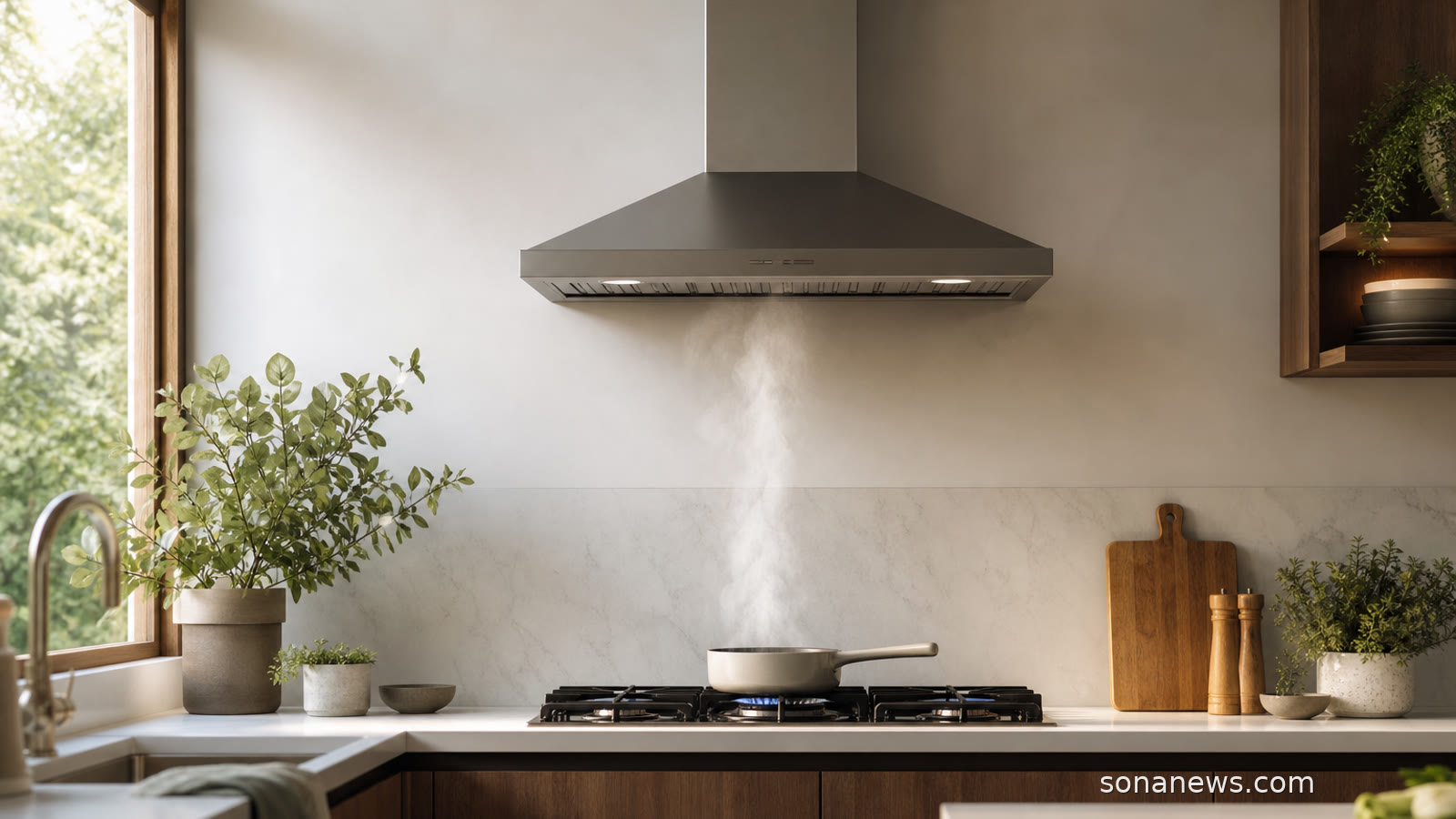

The first sign is usually not a warning light. It is the sweet, stale trace of last night’s onions in the hallway, a bathroom mirror that takes too long to clear, or a film of moisture near a window that was meant to be part of an efficient modern home. The extractor fan, if there is one, is either too loud to use, too weak to notice, or quietly sending air somewhere it should not.
Home improvement has a habit of selling visible transformation: new tiles, new counters, new paint, new storage. Ventilation does not photograph as well. It is a switch, a duct, a grille, a slightly irritating hum above the hob. Yet in tighter homes, especially those designed to lose less heat, the management of indoor air has moved from background detail to everyday comfort.
The US Environmental Protection Agency describes indoor air quality as the air quality within and around buildings, especially as it relates to the health and comfort of occupants. Its introduction to indoor air quality identifies two plain causes of many problems: pollution sources that release gases or particles indoors, and inadequate ventilation that fails to dilute or carry those pollutants out. High temperature and humidity can increase concentrations of some pollutants.
The mechanism is plain. Cooking, cleaning, showers, candles, hobbies, damp materials, combustion appliances and outdoor pollution can all affect the air inside a home. Some sources are constant; some arrive in bursts. The EPA notes that pollutant concentrations can remain in the air for long periods after some activities. A kitchen is one of the rooms where short bursts happen often.
This does not mean every home needs a specialist system or an anxious monitor on the counter. It does mean the old assumption - open a window occasionally and hope for the best - can be weak in homes built or retrofitted for energy efficiency. The Department of Energy says ventilation is especially important in energy-efficient homes because tighter construction can reduce natural air exchange. It distinguishes between spot exhaust systems, such as kitchen and bathroom fans, and whole-house ventilation, which gives controlled air exchange across the building.
The least glamorous specification in this story may be one of the most useful. The Department of Energy’s Energy Saver guidance says kitchen range hoods should be rated at at least 100 CFM and should vent air outside the home rather than into attics, crawlspaces or wall cavities. The number will not mean much to most people until it is translated: a fan that only recirculates air through a filter, or pushes moisture into the wrong place, is not doing the same job as a properly ducted exhaust.
This is where design and maintenance meet. A fan that is too noisy will not be used. A filter that is clogged will underperform. A duct that is long, kinked or poorly installed can reduce airflow. A cooker hood mounted too far from the hob, or too small for the way a household cooks, can look tidy while missing much of the plume it is supposed to capture. The best solution is rarely the most theatrical; it is the one that matches the room, vents correctly and is tolerable enough to use.
There is a policy angle as well as a domestic one. The World Health Organization’s household air pollution fact sheet is focused heavily on people who cook with open fires or inefficient stoves using kerosene, biomass or coal. It says around 2.1bn people worldwide cook with such polluting fuels and technologies. That is a very different problem from a middle-class apartment with a poor extractor fan, and the distinction matters. It would be wrong to flatten both into one lifestyle concern. But WHO’s framing is a reminder that cooking energy, ventilation and housing design are not trivial: they are part of how homes protect, or fail to protect, the people in them.
For wealthier households, the risk is often not a single dramatic exposure. It is a series of habits that a home either handles well or handles badly. Frying food without turning on the hood. Drying laundry indoors without enough airflow. Running a bathroom fan for too short a time. Buying scented products to cover stale air rather than asking why the air is stale. Treating condensation as an aesthetic annoyance rather than a sign that moisture is being held somewhere.
A sensible home audit starts with the boring questions. Does the kitchen fan exhaust outdoors? Is the filter clean? Is the duct route known? Does the bathroom fan run long enough after a shower? Can outdoor air be brought in safely when outdoor conditions are good? Are there combustion appliances that need professional maintenance? Does the home already have a whole-house system that has been switched off because nobody explained it?
The answers are local. A flat on a busy road will not use window opening in the same way as a rural house. A humid climate changes the calculation. A home with a fireplace, gas appliances or attached garage has different concerns from an all-electric apartment. The EPA’s own guidance warns that ventilation can be limited by outdoor pollution sources. More air is not automatically better if the incoming air is poor.
That is why ventilation belongs in Home & Living rather than in the realm of gadgets. It is not a single product recommendation. It is a relationship between building, climate, cooking style, maintenance and tolerance for noise. The fan above the hob is only one piece, but it is a useful place to begin because people understand what the kitchen feels like when it is failing.
A home that breathes well is not necessarily draughty, wasteful or high-tech. It is managed. The modern home asks us to think about heat loss, energy bills and insulation. The next step is to remember that sealing a home also changes the way air leaves it. The upgrade hiding above the hob is not glamorous. That may be why it is so often overlooked.
Editorial note. This article is general information. For carbon monoxide concerns, combustion appliance issues, damp, mould or building-code questions, consult qualified local professionals and public-health guidance.
Sources
- US EPA - “Introduction to Indoor Air Quality” - - extracted 2026-06-04. Verified: definition of indoor air quality; role of indoor sources, ventilation, humidity and pollutant persistence
- US EPA - “Improving Indoor Air Quality” - - extracted 2026-06-04. Verified: source control, ventilation and filtration as basic strategies; kitchen fans exhausting outdoors listed as ventilation method
- US Department of Energy - “Ventilation” - - extracted 2026-06-04. Verified: energy-efficient homes need ventilation; spot exhaust and whole-house categories; kitchen range hoods at least 100 CFM and vent outdoors
- World Health Organization - “Household air pollution” - - extracted 2026-06-04. Verified: global clean-cooking context and the 2.1bn figure; used for global distinction, not for direct comparison with affluent homes
Help us improve
Was this article useful?
One anonymous tap helps Sona improve future reporting, headlines and source context.
Up next

For dishwashers with a built-in water softener, local water hardness and the model's settings still matter. The tablet packet is only part of the check.
Continue readingMore in Home & Living