The microwave bowl lid check starts before the leftovers go in
A June recall of Kitchen HQ thermal insulated bowls shows why the hinge, spring and microwave label deserve a place in the kitchen safety routine.
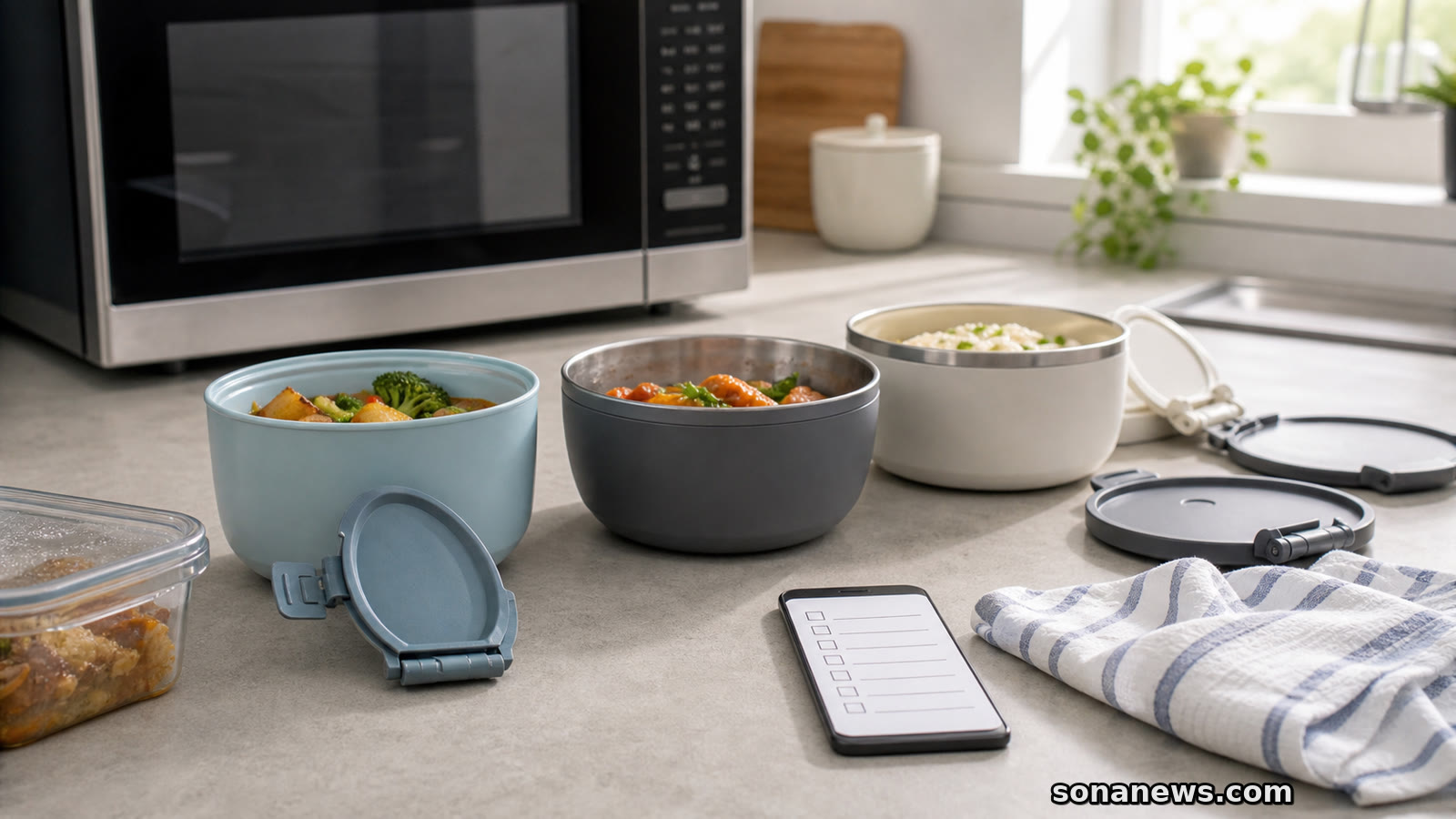

The microwave is one of the least ceremonial machines in the home. Leftovers go in, a lid goes on, someone presses a familiar number and the kitchen moves on. That casual rhythm is exactly why a small part of a container can matter more than it looks.
On June 11, the U.S. Consumer Product Safety Commission announced a recall of about 86,040 Kitchen HQ Thermal Insulated Bowls with Detachable Hinged Lids sold by HSN. The agency says metal springs in the detachable hinged lid can catch fire when used in the microwave, creating a fire hazard. The recall notice lists 30 reports that the bowls smoked, sparked, melted or caught fire when microwaved, including one fire that caused property damage. The notice does not list reported injuries.
The recall is not a warning against every insulated bowl or every microwave lunch. It is a precise product notice, and that precision matters. CPSC says the recalled Kitchen HQ bowls were sold in several colours, with a metal interior, plastic exterior and the words "KITCHEN HQ" on the front. Affected products include a 10-cup bowl with SKN 817800, a two-bowl set with SKN 884907 and a three-bowl set with SKN 900600. They were sold through HSN.com, HSN televised shows and HSN digital shopping platforms from July 2023 through February 2026, for about $20 to $60.
The useful household lesson is less about brand drama than about how products are actually used. A container may be remembered as a bowl, while the risk in this notice sits in a detachable lid. A microwave label may be read once, then forgotten. A metal-looking interior, a vent, a hinge, a hidden spring and a clip can blur into the same object when lunch is being reheated between calls or school runs.
CPSC's remedy is specific. The agency says consumers are to stop using the recalled insulated bowls immediately and contact HSN for a refund. A full refund is available for a complete bowl and lid set, while a partial refund is available for people who wish to keep the bowls without the lid. That distinction is the point of the story: the bowl and the lid are not always the same safety question.
The broader fire-safety context is not theoretical. The U.S. Fire Administration says cooking is, by far, the leading cause of home fires and home fire injuries. Its 2021 estimate was 170,000 home cooking fires in the United States, causing 135 deaths, 3,000 injuries and more than $494 million in property loss. USFA identifies unattended equipment as the leading factor in ignition for nonconfined home cooking fires. That statistic is not about this bowl recall specifically, but it explains why small kitchen routines get official attention.
CPSC's own fire-safety centre keeps the message similarly plain: working smoke alarms, staying in the kitchen while cooking, keeping a plan for escape and replacing old smoke alarms are not glamorous home upgrades. They are the background systems that matter when a small hazard turns into something larger. A recall notice for a microwave container is one tile in that wider mosaic.
For readers outside the United States, the product route will differ, but the habit translates. Product-safety notices are written around exact names, model numbers, stock numbers, dates and remedy instructions. Marketplace reviews and short social posts may alert a household that something is wrong, but they are a poor substitute for the official page when money, repair, disposal or continued use is involved.
There is also a quieter second-hand problem. Bowls move between flats, dorm rooms, family kitchens and office cupboards with very little paperwork. A lid can be separated from its box within minutes of delivery and still be used for years. When a recall names a stock number rather than a visible logo, the buyer's receipt, a saved product page or a label photograph may be the only bridge back to the official notice.
A practical kitchen record does not need to be elaborate. A photograph of a label, a saved order email, a quick scan of official recall pages when a product name appears in the news and a willingness to treat lids, inserts and attachments as separate parts can prevent confusion later. The point is not to turn the kitchen into a paperwork drawer. It is to recognise that modern containers are not always just containers.
The microwave bowl check is therefore a small act of attention before the leftovers go in. Is the product named in an official notice? Is the lid part of the microwave instruction, or only the bowl? Is the remedy current? The answer may be boring. In home safety, boring is often the best outcome.
Editorial note. This article is general household and product-safety information, not medical, legal, electrical, repair or fire-safety advice. For a specific recalled product, use the official recall notice and seller contact route. For smoke, fire, burns, wiring concerns or immediate hazards, use qualified local professional, medical or emergency guidance.
Sources
- Source: "HSN Recalls Kitchen HQ Thermal Insulated Bowls Due to Fire Hazard", Extracted 2026-06-16. Verified: recall date June 11, 2026; recall number 26-537; about 86,040 affected units; hazard language; affected SKNs; sales channels, dates and prices; incident reports and refund remedy
- Source: "Cooking Fire Safety", Extracted 2026-06-16. Verified: cooking is the leading cause of home fires and home fire injuries; 2021 U.S. estimates for home cooking fires, deaths, injuries and property loss; unattended equipment as a leading ignition factor in nonconfined cooking fires
- Source: "Fire Safety", Extracted 2026-06-16. Verified: CPSC public fire-safety guidance on working smoke alarms, staying in the kitchen while cooking, escape planning and replacing old smoke alarms
- Source: "Recalls.gov CPSC consumer product recalls", Extracted 2026-06-16. Verified: CPSC jurisdiction includes appliances and household products, and Recalls.gov routes consumers to CPSC recalls, subscription and unsafe-product reporting resources
Help us improve
Was this article useful?
One anonymous tap helps Sona improve future reporting, headlines and source context.
Up next
A gold-coloured lamp has been recalled because its plug can overheat. With no model or serial identifier published, the order record matters more than a visual match.
Continue readingMore in Home & Living