The powered recliner recall puts the switch under the sofa spotlight
A CPSC recall of Joy Furniture Talan and Royce sofas, loveseats and recliners is a reminder that powered furniture is still an electrical product, not just a place to sit.
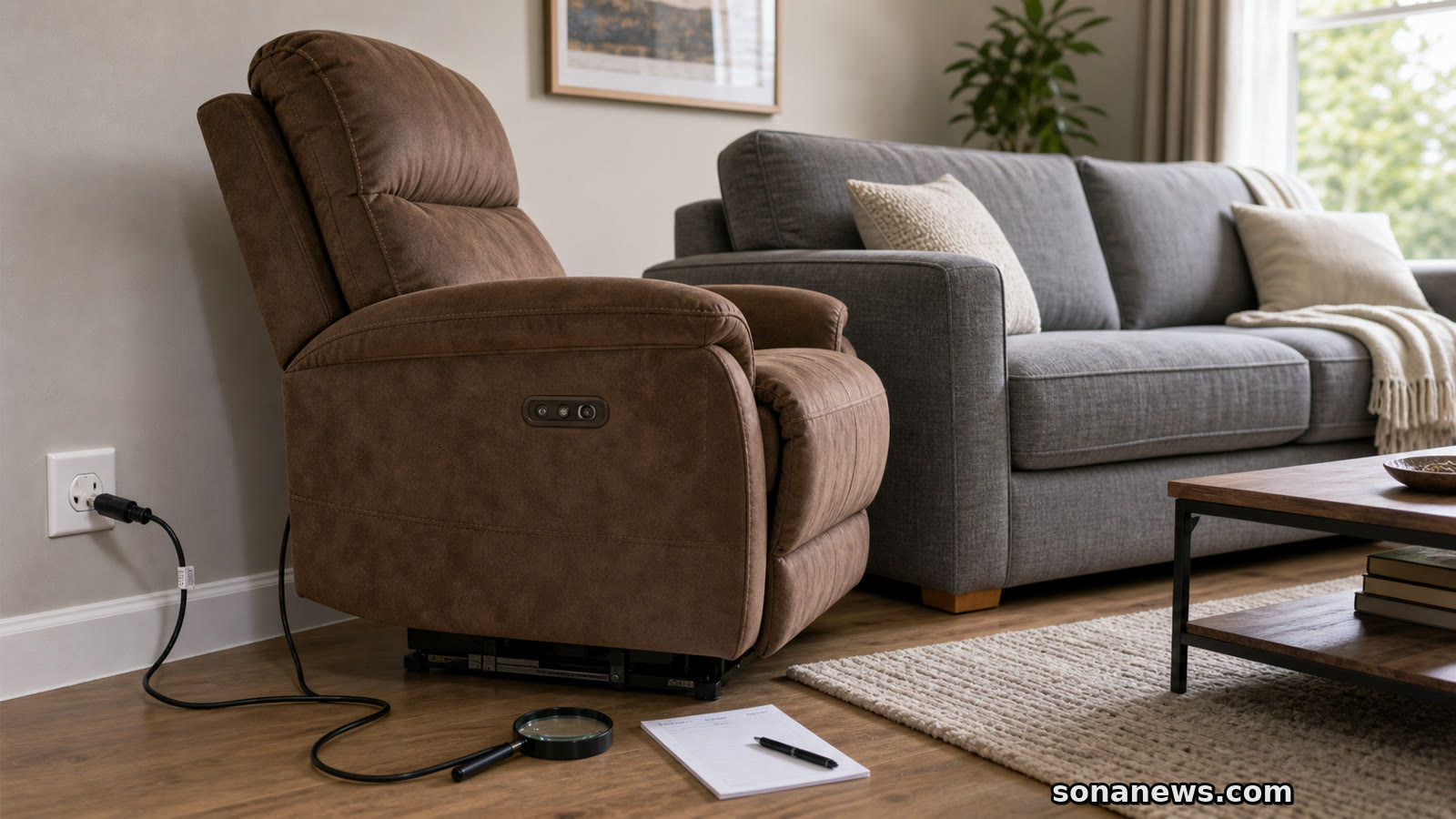

The most ordinary object in the room is often the one nobody examines. A sofa is where people drop their keys, fold laundry, watch television and fall asleep. Add a powered headrest, powered lumbar support, USB charging and wireless charging, and it is no longer only furniture. It is a plugged-in device with a switch, a cord and parts that can fail.
That is the domestic lesson inside a new U.S. Consumer Product Safety Commission recall for Joy Furniture Talan and Royce Collection living-room furniture. The agency says about 10,400 sofas, loveseats and recliners are affected because the power switch can malfunction and overheat, creating a fire hazard and a risk of serious injury. The notice lists 41 reported incidents involving smoking, burning or an electrical odour, including two fires. No injuries had been reported in the recall notice.
The useful detail is that this is not a warning about every powered recliner. It is a model check. CPSC identifies the Talan powered sofa, loveseat and recliner as JF1126-4PHL, JF1126-5PHL and JF1126-9PHL. The Royce powered sofa, loveseat and recliner are listed as JF1155-4PHL, JF1155-5PHL and JF1155-9PHL. The Talan collection is described as medium grey, the Royce collection as brown. Both were sold through Raymour & Flanigan stores, with the Talan line sold from January 2024 through March 2026 and the Royce line from May 2025 through mid-May 2026.
CPSC's remedy language is deliberately plain. People with recalled units are told to stop using the power recliner switch and unplug the furniture's power cord immediately, then use the Joy Furniture recall route to arrange a free replacement switch. The repair is described as an upgraded switch installed by an authorised technician at the consumer's residence. The company recall page asks purchasers to begin with the email or phone number linked to the furniture purchase, then says replacement parts are sent before an in-home repair is scheduled.
For a household, the first mistake would be to turn that into a do-it-yourself wiring project. The safer reading is much simpler and much duller: identify whether the product is in the recall, take the affected powered function out of use, keep the plug out of the wall, and follow the official repair channel. The point is not to diagnose the switch at home. It is to stop treating the powered sofa as an inert piece of upholstery.
The wider home lesson is also worth noticing. Electrical safety advice is usually imagined around obvious appliances: fridges, dryers, space heaters, power tools. Modern living rooms have quietly become more complicated. A charging port can sit inside an armrest. A motorised footrest can live under a cushion. A cable can run behind a heavy sofa where it is rarely seen. That does not make powered furniture unusually frightening. It means the same boring electrical habits have moved into softer parts of the house.
The U.S. Fire Administration gives the broader context without linking it to this recall specifically. In 2021, it says an estimated 24,200 residential building electrical fires were reported to U.S. fire departments, causing 295 deaths, 900 injuries and more than $1.2 billion in property loss. Its practical messages are familiar but still useful: do not overload outlets, insert plugs fully, replace damaged cords, avoid cords being pinched under rugs, and use power strips with internal overload protection.
Those habits matter precisely because a living room hides clutter well. A recliner can be pushed tight to the wall. A cord can disappear beneath a throw, a rug edge or a stack of books. A switch panel can be ignored because it is built into something that looks soft and harmless. When an official recall names a power switch, it turns the room around. The side of the chair, the underside of the seat and the plug behind the sofa become the story.
CPSC's fire-safety centre adds another layer of household admin: working smoke alarms on every level, outside sleeping areas and inside bedrooms, plus a home escape plan. That advice should not be used to minimise a product recall. A working alarm is not a reason to keep using a recalled powered function. It is the background safety net that belongs in the same mental folder as product registration, model-number checks and reading the notice when a recall lands.
The powered recliner check, then, is not dramatic. It is a small act of domestic literacy. A household that can find the model number on a device, recognise a recalled collection name, unplug an affected product and wait for the official repair is doing the least cinematic kind of safety work. It is also the kind that matters before anything smells hot.
Editorial note. This article is general household and product-safety information, not emergency, legal or product-specific repair advice. For an affected product, use the official recall notice, the manufacturer's recall process and qualified emergency services where relevant.
Sources
- Source: "Joy Furniture Recalls Talan and Royce Living Room Furniture Sets Due to Risk of Serious Injury from a Fire Hazard", U.S. Consumer Product Safety Commission, Extracted 2026-06-23. Verified: recall date and number; about 10,400 units; Talan and Royce product names, colours and model numbers; hazard description; incident count; sales periods and retailer; stop-use and unplug remedy; free replacement switch and in-home technician repair
- Source: "Joy Furniture Recall", Warranty Service recall page, Extracted 2026-06-23. Verified: recall intake route; purchase lookup by email or phone; replacement parts sent before an in-home repair is scheduled; recall status phone number
- Source: "Appliance and Electrical Fire Safety", U.S. Fire Administration / FEMA, Extracted 2026-06-23. Verified: 2021 residential electrical fire estimate and losses; do not overload outlets; insert plugs fully; replace damaged cords; avoid damaged or pinched cords; use overload-protected power strips; general electrical safety context
- Source: "Fire Safety", U.S. Consumer Product Safety Commission, Extracted 2026-06-23. Verified: working smoke alarms on every level, outside sleeping areas and inside bedrooms; home escape planning; CPSC context on home fire safety and recent fire-related recalls
Help us improve
Was this article useful?
One anonymous tap helps Sona improve future reporting, headlines and source context.
Up next
A gold-coloured lamp has been recalled because its plug can overheat. With no model or serial identifier published, the order record matters more than a visual match.
Continue readingMore in Home & Living