The group chat has become the low-cost social calendar
Messaging used to be the side channel for plans. With online life, tighter budgets and loneliness all visible in the data, it now carries much of the ordinary work of friendship.
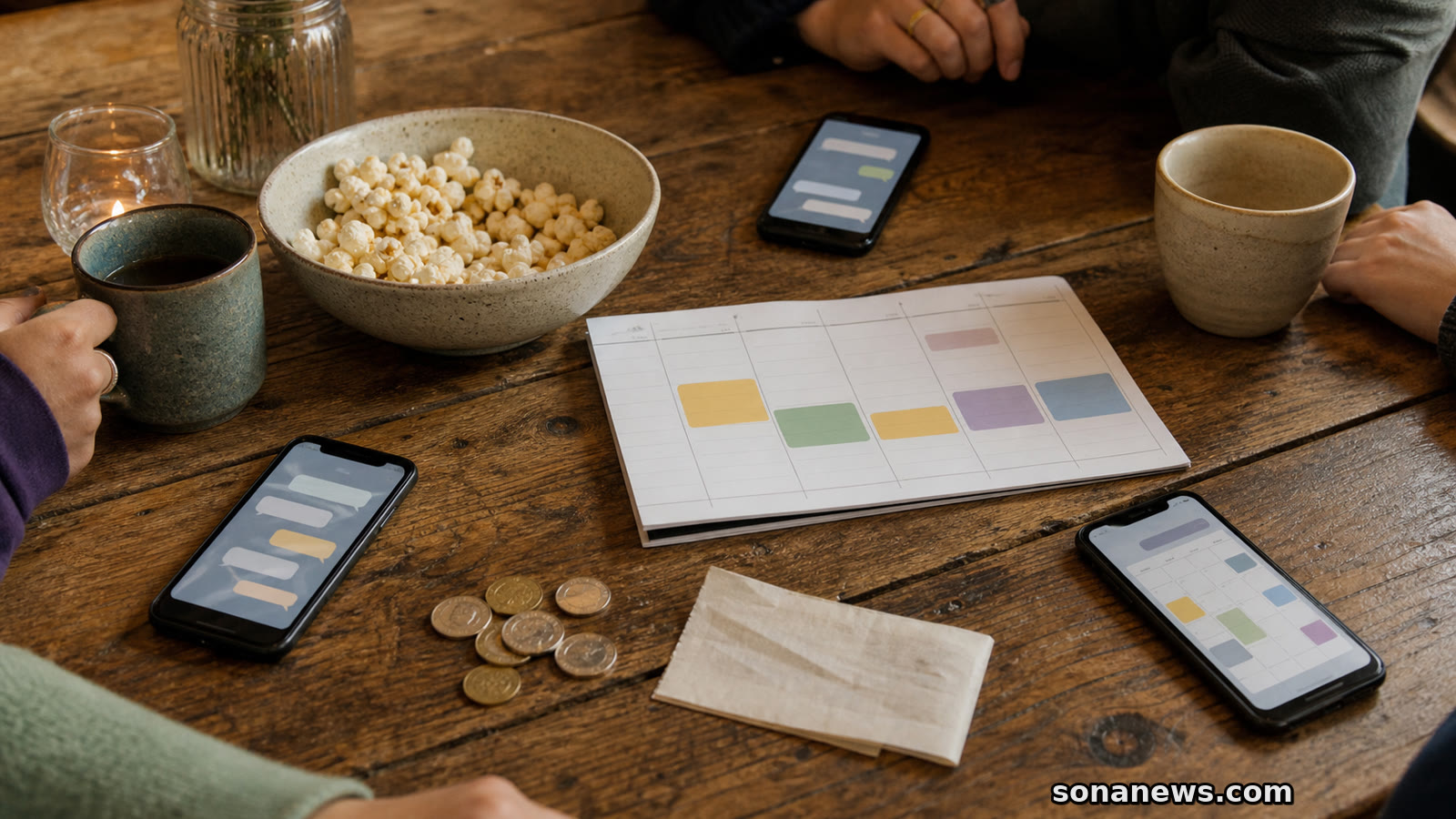

A group chat rarely looks like infrastructure. It looks like a stream of small decisions: who is free on Thursday, whether the pub is too expensive, whether someone can bring a charger, whether the plan has quietly moved from dinner to a walk and a packet of crisps. It is easy to dismiss all that as noise. In practice, it is where a great deal of modern friendship is now organised.
That does not mean the group chat is new, or that every social bond has been improved by another notification. The more interesting point is duller and more durable. As everyday life has become more online, more expensive and more tightly scheduled, the informal thread has become the place where people make social life workable.
Ofcom's Online Nation 2025 report gives the background hum. In May 2025, 49.1 million UK adults accessed the internet on personal smartphones, tablets or computers. The average adult spent 4 hours 30 minutes online each day, and smartphones accounted for 77% of adult online time. This is not a niche youth habit or a specialist tech behaviour. It is the default surface on which many ordinary plans now happen.
The global picture points the same way, even allowing for the usual caution that social media accounts are not the same as unique people. DataReportal's Digital 2026 overview counted 5.66 billion active social media user identities, equal to 68.7% of the world's population. Meltwater and We Are Social's summary of the same report says the top motivation for using social media remains keeping in touch with friends and family, with filling spare time in second place. That combination matters. The same apps that absorb idle minutes also carry the practical work of staying connected.
It is tempting to make this a simple complaint about phones replacing friendship. Sometimes they do. A chat can become a place where plans are postponed indefinitely, or where the person with the quietest week gets overlooked. But the opposite is also true. The thread can lower the cost of contact. It lets one friend suggest a ten-minute call, another share a train delay, another say that dinner is too much this month without turning it into a speech.
The cost part is not a mood. It is in the data. In the Office for National Statistics May 2026 public opinions and social trends release, 89% of adults in Great Britain named the cost of living as an important issue facing the UK. Among all adults, 61% reported spending less on non-essentials because of cost-of-living increases, and 40% said they were shopping around more. Those numbers do not tell us how many birthday drinks became a picnic, or how many catch-ups moved from restaurant to park bench. They do explain why the negotiation around a plan now matters more.
That is where the group chat has shifted from convenience to social calendar. It can hold the awkward details that old etiquette kept off stage: who can afford the ticket, who needs the earlier bus, who has childcare, who does not want alcohol, who would rather meet in daylight, who can host if everyone brings something. None of this is glamorous. It is the maintenance layer of friendship.
The loneliness evidence adds a second caution. ONS reported in January 2026 that almost a quarter of adults in Great Britain, 23%, felt lonely often, always or some of the time. The share was higher among adults aged 16 to 29 and 30 to 49 than among older age groups. A messaging thread is not a cure for loneliness, and pretending otherwise would be glib. But it is one of the small mechanisms through which connection is attempted, repaired, postponed and sometimes rescued.
The consumer world has noticed the surface of this change more quickly than the substance. There are shared calendars, payment links, event apps, booking tools, wish lists and polls, all trying to formalise what the group chat already does untidily. Some of those tools help. Some simply add another place to check. The reason the ordinary chat keeps winning is that it fits the way people actually make plans: half practical, half emotional, rarely complete.
There is a class signal here too. A social life built around spontaneous tickets, taxis and paid venues looks very different from one built around lifts, leftovers, weather forecasts and free entry. The group chat can flatten that difference by making cheaper plans normal, or it can expose it by turning every decision into a small affordability test. The technology does not settle the question. The people in the thread do.
Perhaps the most useful way to read the group chat is not as a replacement for meeting, but as the scaffolding around meeting. It is where friendship absorbs the admin that modern life keeps producing. When it works, the result is not a perfect digital community. It is more modest: the walk happens, the film night survives the budget, the friend who had gone quiet gets a low-pressure opening, and the social calendar remains just possible.
Editorial note. This article discusses social behaviour, online communication, budgets and loneliness evidence in general terms. It is not medical, mental-health, financial, relationship or safety advice. People experiencing persistent loneliness, distress, financial difficulty or safety concerns may need qualified local support.
Sources
- Source: "Online Nation Report 2025", Ofcom report accessible via Mishcon download, Extracted 2026-06-22. Verified: 49.1 million UK adults online via personal devices in May 2025, average daily online time of 4 hours 30 minutes, young adult and older adult time comparisons, smartphone share of adult online time, and the wider context that online planning is now mainstream rather than niche
- Source: "Digital 2026: Global Overview Report", DataReportal, Extracted 2026-06-22. Verified: report scope, 5.66 billion active social media user identities, 68.7% global population equivalence, caveat that user identities are not unique people, and social/media behaviour context
- Source: "Digital 2026: Insights and trends about online behavior worldwide", Meltwater and We Are Social press release, Extracted 2026-06-22. Verified: Digital 2026 headline figures, social media user growth, typical time on social and video platforms, and the finding that keeping in touch with friends and family remains the top motivation for social media use
- Source: "Public opinions and social trends, Great Britain: May 2026", Office for National Statistics, Extracted 2026-06-22. Verified: survey period, cost of living as an important issue, reported cost-of-living increases, and actions taken including spending less on non-essentials and shopping around more
- Source: "Public opinions and social trends, Great Britain: January 2026", Office for National Statistics, Extracted 2026-06-22. Verified: loneliness figures, age differences in reported loneliness, survey period and OPN source
Help us improve
Was this article useful?
One anonymous tap helps Sona improve future reporting, headlines and source context.
Up next

Across 11 experiments, people were more willing to give when invited to continue a run of donors. The effect offers a useful lesson about social signals, and a warning about how easily momentum can be staged.
Continue readingMore in Lifestyle