The library card is becoming the quiet subscription
ALA, OverDrive and Libraries Connected data point to a practical shift in everyday culture: the library card is moving into the same mental space as streaming, ebooks and paid lifestyle apps.
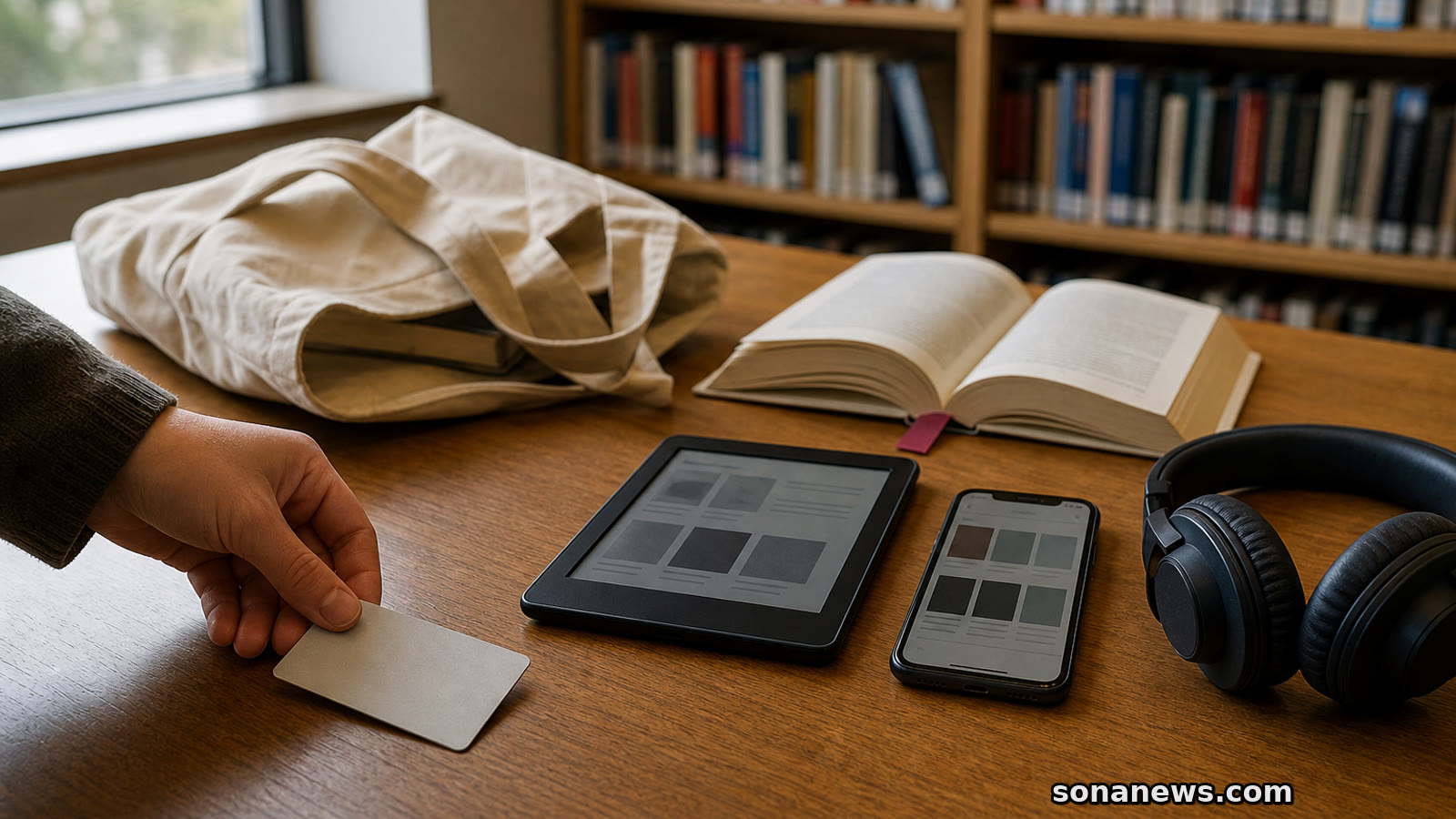

The subscription drawer is crowded now. Music, films, cloud storage, fitness classes, language apps, recipe apps, news bundles, meditation tools, children’s audio. Each one asks to be treated as a small monthly habit, which is why the old library card suddenly looks less old-fashioned than it did. It is not a shiny lifestyle product. That may be its advantage.
The clearest signal is digital borrowing. OverDrive said readers worldwide borrowed 739.5 million digital items through its library and school network in 2024, up 17% from 2023. The company counted ebooks, audiobooks, digital magazines and related formats across services such as Libby and Sora. It also said public libraries accounted for 706.3 million of those checkouts, while audiobooks rose 19% and magazines rose 70%.
Read that carefully. OverDrive is a vendor with an interest in digital lending growth, not a neutral census of all reading. Still, the numbers describe a behaviour that is visible outside its press release. The library card is no longer only a rectangle kept for borrowing hardbacks. It has become a login, a queue, a notification, a listening app, a magazine rack and sometimes a streaming-video pass.
The UK picture adds useful texture because it keeps the building in view. The Department for Culture, Media and Sport’s Annual Libraries Report for 2024 to 2025 said 25% to 26% of adults in England had visited a public library building or mobile library at least once in the previous 12 months in its first three quarterly survey waves for 2024 to 2025. Digital or online library use sat at 15% to 16% in those same waves. Among people who used library buildings, the most common activity remained browsing, borrowing or returning reading and media materials, but study space, computers, printing and taking children to borrow books were also prominent.
That mix matters. The library is not being replaced by an app. It is becoming a two-door service: one entrance through the building, another through the phone. In ordinary household terms, that makes it feel more like a subscription people already support through taxes, councils or public funding, even if the economics behind it are far more fragile.
Libraries Connected’s 2025 loans review, based on 34 library services with usable data across England, Wales and Northern Ireland, found total loans in 2024 to 2025 were 14% higher than in 2019 to 2020. But the recovery was uneven, and the report’s most telling line is more cautious: without epress loans, total loans would have been 4% lower than before the pandemic. Digital newspapers and magazines were doing a lot of the lifting.
That creates a cultural shift, but not a fantasy. Borrowing an ebook is not the same as clicking play on a paid streaming library. Libraries Connected’s separate ebook lending report, published in February 2025, explains why. UK public libraries have a statutory basis for lending physical books under the Public Libraries and Museums Act 1964, but ebook lending sits outside that framework. Availability, price and licence terms depend on publishers and aggregators. The common one-copy-one-user model means a popular ebook may have a waiting list, and licences often expire after a set period.
So the library card is a quiet subscription with public-service friction. It can save a household money, but it is not unlimited. It can widen access, especially for people who need adjustable fonts, screen readers, remote access or audiobooks, but it can also expose the weak spots in local funding and digital licensing. The promise is real. The queue is real too.
The American Library Association’s 2026 State of America’s Libraries report brings in another pressure point. Its Office for Intellectual Freedom tracked 4,235 unique titles challenged in 2025, the second-highest figure ALA has documented. That is a different story from consumer convenience, but it belongs in the same article because access is the hinge. A library card is not only a cheaper way to read a bestseller. It is also a small claim on a public collection that someone else may want narrowed.
This is where the lifestyle framing can become too cute if it is not handled carefully. Calling the library card a subscription risks making it sound like another app in the stack. It is not. A subscription company tries to keep a customer inside its own product. A library, at its best, points outward: to books, job searches, homework help, warm rooms, local history, council services, children’s story time, digital skills and a desk that does not require buying a coffee.
For readers, the practical change is modest but useful. The card deserves to be thought of before paying for another entertainment or learning habit, not after the budget is already full. Check the audiobook queue before buying the extra trial. Look at digital magazines before adding another bundle. Use the building when the house is noisy and the cafe is expensive. None of this is romantic. That is why it works.
The library card has become a strangely modern object: public, digital, local, slow and easy to overlook. In a culture that sells every habit back to people as a plan, a pass or a premium tier, there is something quietly sharp about a card that still says access can be shared.
Sources
- Google Search Central: "Get on Discover", Extracted 2026-06-10. Verified: Discover eligibility depends on indexing and policy compliance; Google recommends accurate, non-clickbait titles and large relevant images at least 1200px wide with max-image-preview:large eligibility
- American Library Association: "State of America's Libraries: A Snapshot of 2025", Extracted 2026-06-10. Verified: ALA’s 2026 report page and 4,235 unique titles challenged in 2025
- OverDrive: "Libraries Break Digital Lending Records in 2024 with Over 739 million Checkouts", Extracted 2026-06-10. Verified: 739.5 million digital checkouts in 2024, 17% year-on-year growth, 706.3 million public-library checkouts, 19% audiobook growth and 70% magazine growth
- Department for Culture, Media and Sport: "Annual Libraries Report 2024 to 2025", Extracted 2026-06-10. Verified: England public-library physical and digital use survey waves for 2024 to 2025 and common in-building activities
- Libraries Connected: "Libraries Connected publishes new report on library loan trends", Extracted 2026-06-10. Verified: 24 November 2025 report publication, 34-service sample and 2019 to 2025 borrowing trend scope
- Libraries Connected / Independent Mind: "Library Loans Review Report", Extracted 2026-06-10. Verified: total loans 14% higher in 2024 to 2025 than 2019 to 2020 in the sample, and total loans would have been 4% lower without epress
- Libraries Connected / Arts Council England: "Ebook lending in public libraries", Extracted 2026-06-10. Verified: ebook lending not covered by the 1964 Act, common one-copy-one-user licensing, 24 to 36 month licence limits, accessibility value and cost pressures
Help us improve
Was this article useful?
One anonymous tap helps Sona improve future reporting, headlines and source context.
Up next
Across 11 experiments, people were more willing to give when invited to continue a run of donors. The effect offers a useful lesson about social signals, and a warning about how easily momentum can be staged.
Continue readingMore in Lifestyle