Following the news and joining in are different American habits
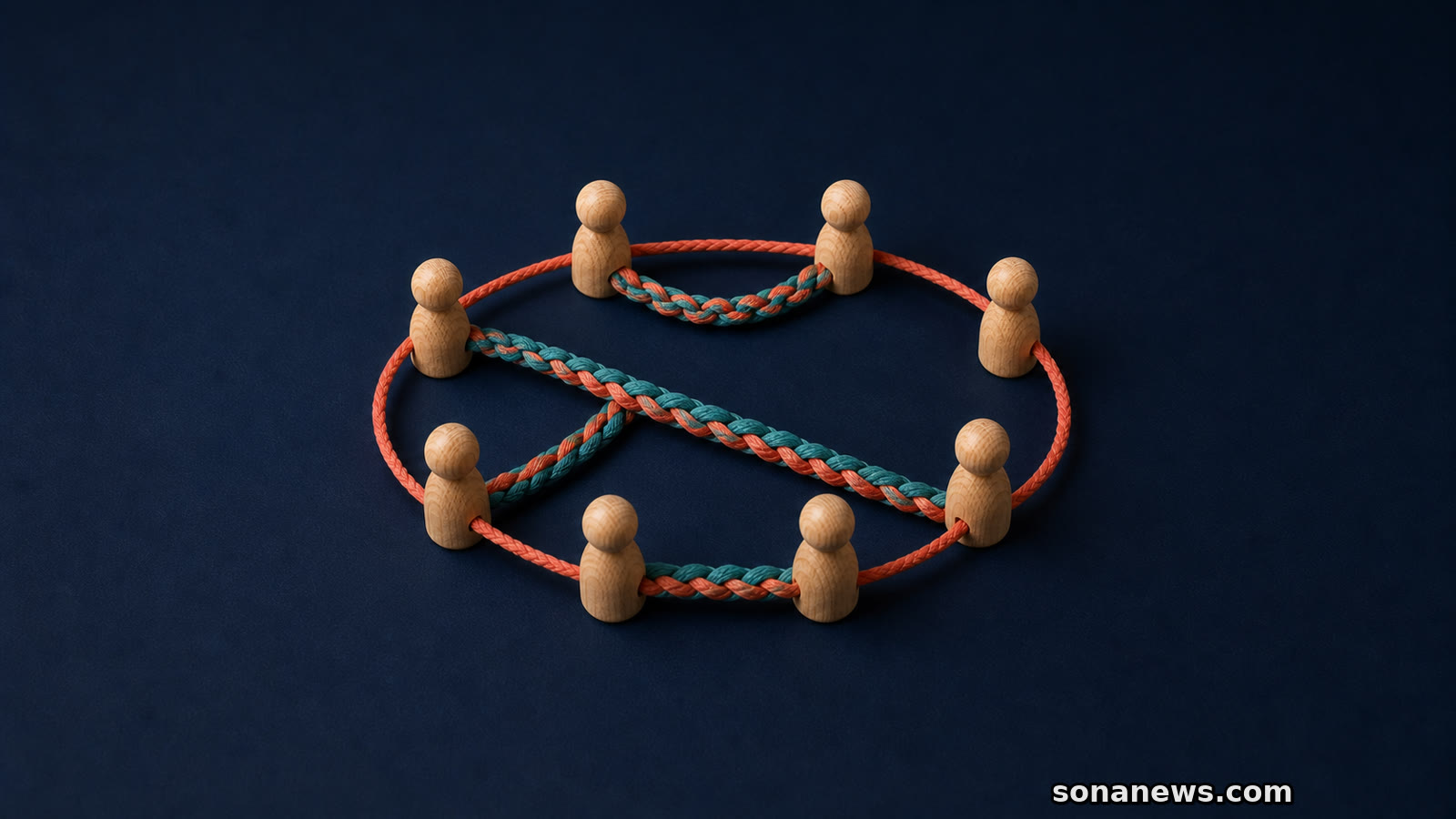
A new Pew typology separates news-following spectators from community-focused connectors. Its four clusters map one survey period, not four permanent kinds of person.
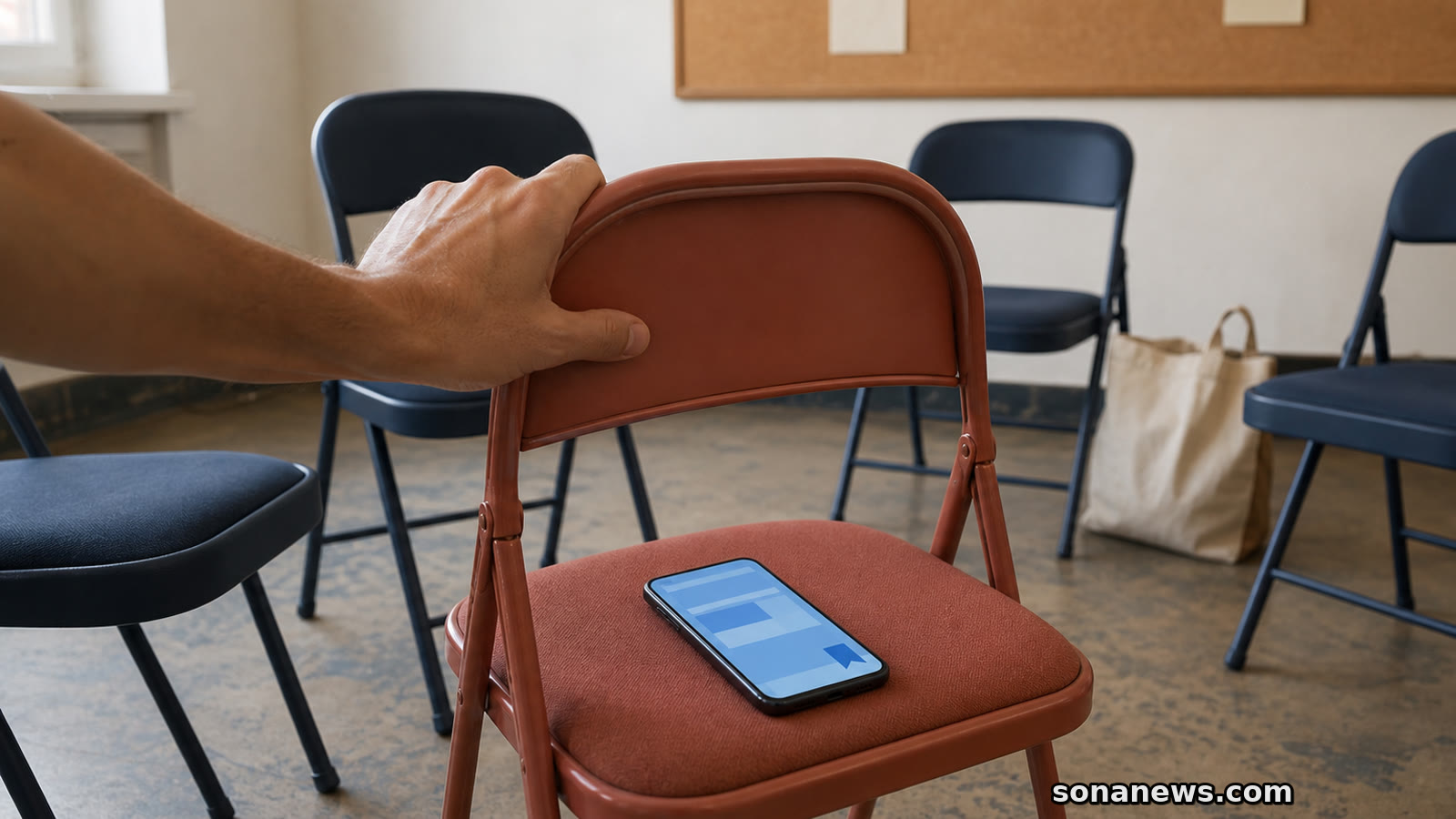

A saved news story can feel like participation. So can a long exchange in a private group chat. Neither requires the same time, confidence or institutional welcome as taking a seat at a local meeting, joining an association or returning for a volunteer shift.
That distinction sits at the centre of a new Pew Research Center study of public life in the United States. Instead of putting people on one line from disengaged to highly engaged, the researchers grouped 5,393 adults by patterns across 19 activities. The result is less a civic league table than a map of different habits.
Pew calls 9% of US adults Mobilizers. They were active across politics, community life, news and religion. Connectors, at 28%, also belonged to groups, donated and followed news at high rates, but took far less political action. Spectators made up 31%. They paid close attention to news and interacted with it online while participating much less in civic and political activities. Another 31%, labelled Outsiders, reported lower activity across most of the measures.
The rounded shares add to 99%, not 100%. More importantly, the labels are analytical shorthand, not personality types. Pew says people can move between groups, and different statistical choices could produce a different partition of the same survey answers.
The Spectators make the gap between attention and participation especially visible. Among that cluster, 84% said they followed national news at least somewhat closely. Three-quarters had liked or saved an online news post in the previous week, and 85% had privately chatted about or shared news online. Those rates resembled the most active groups far more than the Outsiders.
Yet watching, saving and discussing are comparatively low-threshold acts. They can happen on a commute, from a sofa or between other jobs. A meeting or regular group asks for a place, a time, a route in and often the feeling that one belongs there. The survey does not prove why anyone stayed with the phone rather than the chair. It does show that the two behaviours do not automatically travel together.
Connectors offer the reverse correction to the usual picture of engagement as loud political activism. Nearly two-thirds had belonged to a group, organisation or association in the previous year, and nine in ten had donated to a nonpolitical organisation. They voted, followed local and national news and attended religious services at relatively high rates. What distinguished them from Mobilizers was not indifference, but much lower participation in political actions such as campaign work or contacting elected officials.
That makes community life easier to see on its own terms. A person can be deeply involved in a congregation, school group, sports club or charity without making politics the organising centre of the week. Another can follow public affairs closely and discuss them often while remaining outside formal groups. Calling one person engaged and the other disengaged loses the shape of both lives.
Age changes that shape, but not as neatly as a generational stereotype. Pew placed 46% of adults under 30 among the Spectators, compared with 19% of people aged 65 and older. Among the oldest adults, 43% were Connectors, almost three times the 15% share among under-30s. Younger adults were more likely to like or privately share news online.
They were not uniformly absent from practical help. About 32% of adults under 30 said they had volunteered for an organisation or association in the previous year, compared with 25% of those aged 65 and older. That finding is a useful warning against treating digital observation and in-person action as opposites, or assuming every member of an age group follows the cluster average.
Political party did not divide the typology in the simple way a partisan story might suggest. Neither major party dominated any group. Mobilizers leaned modestly Democratic and Connectors modestly Republican, but both parties contained people across all four patterns. The survey period did include the 2024 presidential election for most respondents, so political behaviours could look different at a quieter point in the cycle.
The groups were also associated with how people felt about place, but association is not causation. Thirty-seven per cent of Mobilizers and 36% of Connectors said they often or extremely often felt hopeful about their local community. The comparable shares were 25% among Spectators and 22% among Outsiders. The study cannot establish whether participation produces hope, hopeful people participate more, or both are shaped by income, education, local institutions and other factors.
A separate Census Bureau and AmeriCorps survey shows why the definition and time window matter. It estimated that 28.3% of Americans aged 16 and older formally volunteered through an organisation between September 2022 and September 2023, while 54.2% helped neighbours informally. Its questions, ages and field dates differ from Pew's, so the figures are not a direct check on the four clusters. They do reveal activity that a narrow focus on organisations could miss.
That federal research also found that average annual hours per formal volunteer fell from 96.5 in 2017 to 70 in 2023. Participation can broaden while becoming more episodic. Again, showing up is not one switch. Frequency and depth sit behind the headline count.
Pew made a serious attempt to reach people who are often underrepresented in engagement surveys. Invitations went to sampled addresses, and respondents could answer online, on paper or by telephone. The final survey had a 28% response rate and a full-sample margin of error of plus or minus 1.9 percentage points. Weighting can improve population estimates, but it cannot remove every effect of question wording, memory or nonresponse.
The most honest use of the typology is therefore as a lens, not a diagnosis. American public life is not one ladder with the exemplary at the top and everyone else below. Attention, association, service, faith, voting and political action require different resources and can travel together or apart. The phone and the community chair both belong in the picture. The interesting question is what lets a person move between them.
Editorial note. This article describes survey findings about news, community, religious and political participation. It does not classify any individual, measure civic worth, establish why someone participates, or provide political, religious, legal, mental-health or personal advice.
Sources
- Pew Research Center, "How Americans Are Engaged With News, Politics, Religion and Civic Life", Extracted 2026-07-22. Verified: 16 July publication; four-cluster shares; defining behaviours of Mobilizers, Connectors, Spectators and Outsiders; group membership and donation findings; news-following and online interaction rates; party pattern; survey-period caveat; and correction note that rescaled chart axes did not change figures or findings
- Pew Research Center, "Younger and older Americans engage in public life in different ways", Extracted 2026-07-22. Verified: age distribution across Connectors and Spectators; voting, donation, news, religious participation and online news differences; and reported volunteering rates by age
- Pew Research Center, "How we measured Americans' engagement in public life", Extracted 2026-07-22. Verified: 19-measure cluster approach; address-based multimode design; final sample; reasons for not using a single count; model-choice sensitivity; transfer to the American Trends Panel; and warning that groups are not rigid categories
- Pew Research Center, "Methodology", Extracted 2026-07-22. Verified: 9 July to 5 December 2025 fieldwork; 5,393 respondents; online, paper and telephone completion counts; 28% response rate; weighting; and plus or minus 1.9 percentage-point margin of error for full-sample estimates near 50%
- U.S. Census Bureau, "U.S. Volunteerism Rebounding After COVID-19 Pandemic", Extracted 2026-07-22. Verified: 28.3% formal volunteering rate for people aged 16 and older in the 2023 supplement; 54.2% informal neighbour help; sample of approximately 47,000; and decline in average annual hours per formal volunteer from 96.5 in 2017 to 70 in 2023. Used as differently designed context, not a direct comparison with Pew's clusters
Help us improve
Was this article useful?
One anonymous tap helps Sona improve future reporting, headlines and source context.
Up next

Across 11 experiments, people were more willing to give when invited to continue a run of donors. The effect offers a useful lesson about social signals, and a warning about how easily momentum can be staged.
Continue readingMore in Lifestyle