Britain's everyday AI habit has arrived before trust
New ONS data show adults in Great Britain using AI at work, at home and for hobbies while drawing sharp boundaries around care, government decisions, personal data and fake information.
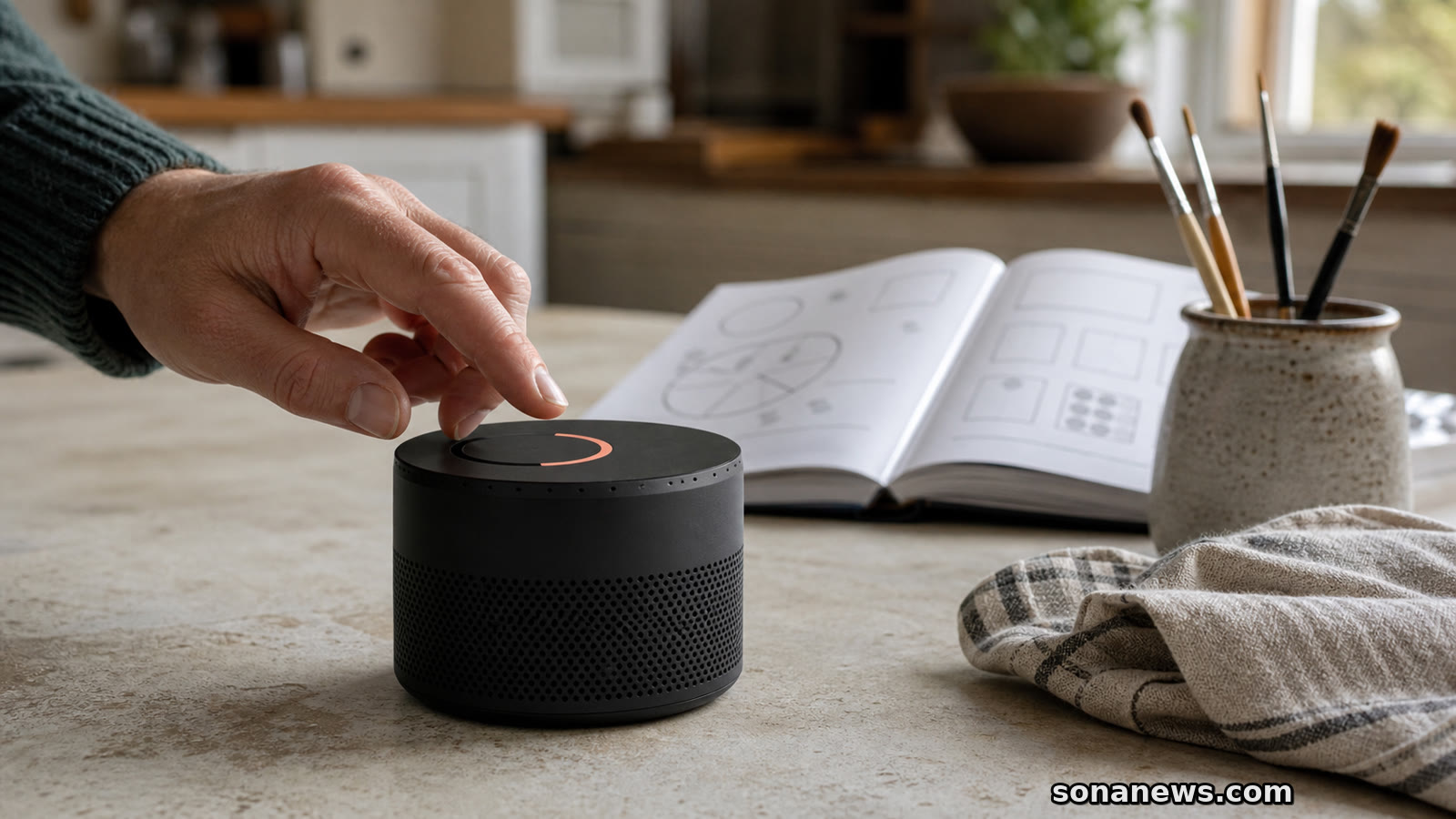

Artificial intelligence rarely enters the home looking like artificial intelligence. It recommends a programme, answers a question, sorts a photograph, unlocks a phone or suggests the next line of a message. The technology can feel ordinary long before the person using it has decided that it is trustworthy.
A new survey from the Office for National Statistics captures that split in Great Britain. In data collected from 3 to 28 June 2026, 41% of adults said they had knowingly used AI for work or education in the previous 12 months. More than a quarter, 27%, reported using it at home, while 23% had used it for hobbies or interests. One in three said they had not knowingly used AI at all.
Those figures do not describe one universal chatbot habit. The ONS gave respondents a broad definition that included virtual assistants, personalised recommendations, chatbots, facial recognition, self-driving vehicles and medical diagnostic tools. A person who thinks of AI as a writing assistant may answer differently from someone thinking about a smart speaker or a phone unlock. The useful finding is not that everyone is using the same product. It is that AI now sits across several parts of daily life while remaining difficult to hold as one idea.
Presence is not endorsement. Just 36% agreed or strongly agreed that AI would benefit them, while 37% neither agreed nor disagreed and 27% disagreed. When the question was framed as a balance, 38% thought AI brought more risks than benefits. Only 13% thought it brought more benefits than risks, with 43% judging the two sides equal.
The task-by-task answers are even more revealing. Around a third of adults, 32%, said they would not trust AI to carry out any task. Customer service and support was the most accepted option, at 27%, followed by scientific research at 25% and creative tasks at 24%. Trust dropped to 7% for decision-making in business, 5% for caregiving and 4% for decision-making in government.
This is not a public that can be filed neatly into enthusiasts and refusers. It is a public drawing boundaries. A machine can help find an answer, generate an option or handle a low-stakes exchange without being invited to make a consequential judgement. The distinction is less dramatic than the usual debate about whether AI is good or bad, and far more useful for understanding how a habit settles into ordinary life.
The hoped-for benefits also look practical rather than futuristic. The most common positive answer was better access to learning or education, selected by 29% of adults. A quarter thought AI could make their job easier and 21% thought it could make household tasks easier. At the same time, 41% did not think it could have a positive impact on their life.
The worries are equally concrete. Eighty-one per cent said AI could make it difficult to tell whether news or information is fake. Seventy-seven per cent pointed to personal data being used without consent, while 63% cited a greater chance of experiencing cybercrime. These were multiple-choice concerns, not a ranking of harms that respondents said had already happened to them. Even so, they show why a useful household tool can arrive with a hand still hovering over the privacy control.
Age changes the pattern, but not in the simple way the stereotype suggests. Adults aged 16 to 29 and 30 to 49 were much more likely than older adults to expect personal benefit and to report using AI for work or education. Yet the ONS found no age-group difference in the share saying AI had more risks than benefits. Adults aged 70 and over were also the most likely age group to trust AI for medical diagnosis and treatment decisions, at 29%, even though they were least likely to trust it for customer service.
That does not show that one generation understands AI better than another. It shows that trust attaches to context. A person may be sceptical of an automated helpline yet open to a system used by clinicians. Another may use a chatbot every week and still worry about fake information. Familiarity and permission are not the same measure.
Earlier ONS surveys help explain why recognition matters. In pooled data from spring 2024, only 17% of adults said they could often or always recognise when they were using AI. A third said they hardly ever or never recognised it. Large shares wanted to know more about how AI is regulated and how to judge the accuracy of AI-generated information. That is an awkward starting point for meaningful consent: a technology can be woven into a service before its role is legible.
The August 2025 survey showed the same preference for specific uses over blanket approval. Forty-one per cent then agreed AI would benefit them, but only 29% trusted government to use it for some tasks. In public transport, 68% were comfortable with AI updating train timetables during disruption, while only 15% were comfortable with self-driving vehicles or AI managing air traffic and flight routes. The comparison should be handled carefully because questions, samples and the definition presented to respondents have changed over time. Still, the shape is consistent: acceptance rises when the role is bounded and understandable.
The latest survey is a weighted sample, not a census or a test of technical knowledge. It had 3,510 respondents and a 40% response rate. The ONS also warns that smaller groups carry more uncertainty, and its quality report notes the usual limits of self-reported and predominantly online survey data. The findings cannot tell us whether any tool worked well, whether a fear was realised or why one person trusted a task.
What they can show is a cultural change in the question. AI is no longer only something the public is asked to imagine. It is already mixed into work, learning, hobbies and home life, often through products that do not announce every automated decision. Trust has not followed as one wave. It is being granted in smaller permissions, one task at a time. The everyday test is not whether an app can call itself intelligent. It is whether people can see what it is doing, understand what is at stake and keep a meaningful hand on the control.
Editorial note. This article discusses public attitudes, technology use and consumer culture. It is not technology, privacy, legal, medical, financial, employment or product advice. The survey does not evaluate individual AI systems or establish that any possible benefit or harm occurred.
Sources
- Office for National Statistics - "Public opinions and social trends, Great Britain: June 2026" - - extracted 2026-07-18. Verified: 17 July 2026 release; 3 to 28 June fieldwork; reported AI use by life area; perceived benefits and risks; task-specific trust; possible positive and negative impacts; age and sex breakdowns; AI definition; 3,510 responding adults; 40% response rate; weighting and uncertainty notes
- Office for National Statistics - "Public opinions and social trends, Great Britain: August 2025" - - extracted 2026-07-18. Verified: 19 September 2025 release; 41% agreeing AI would benefit them; trust in government and public services; and contrast between comfort with real-time train timetable updates and low comfort with self-driving vehicles or AI-managed air traffic
- Office for National Statistics - "Public opinions and social trends, Great Britain: August 2024" - - extracted 2026-07-18. Verified: pooled April to June 2024 AI module; ability to recognise AI use; benefits-and-risks balance; reported home, travel, finance and work or education use; learning about regulation and accuracy; sample and confidence-interval caveats
- Office for National Statistics - "Opinions and Lifestyle Survey QMI" - - extracted 2026-07-18. Verified: Great Britain coverage for adults aged 16 and over; monthly cross-sectional design; predominantly online self-completion; weighting, survey strengths, self-reporting limits, sampling uncertainty, non-response risk and subgroup limitations
Help us improve
Was this article useful?
One anonymous tap helps Sona improve future reporting, headlines and source context.
Up next
US research finds that people can underestimate how welcome their appreciation will be. The useful lesson is about sincere, specific thanks, not a guaranteed way to improve a relationship.
Continue readingMore in Lifestyle