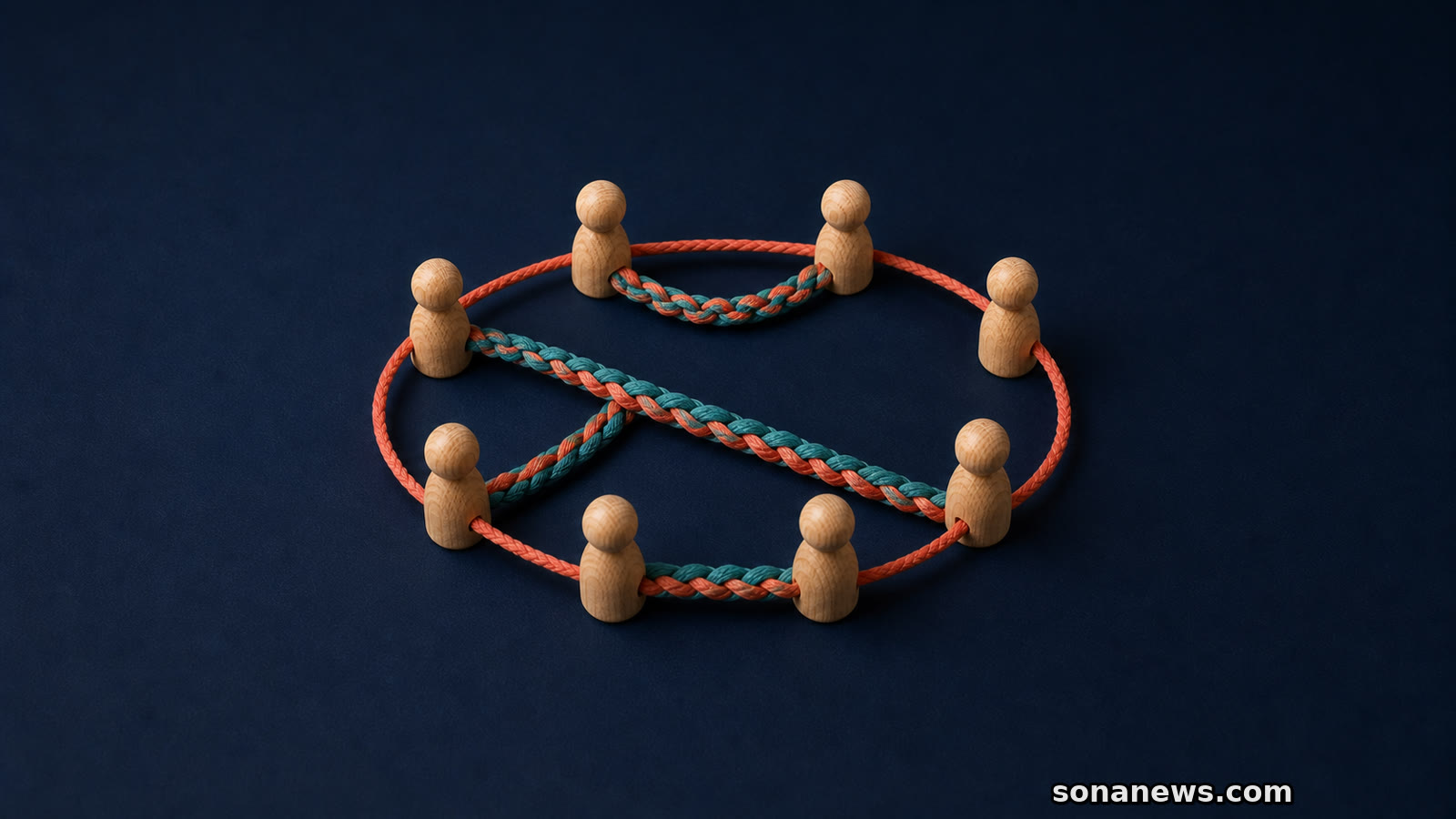
The standing catch-up is becoming friendship infrastructure
WHO, Pew and friendship researchers point to a practical shift: adults may not lack friends, but many need a repeatable way to keep ordinary contact from sliding off the week.


The modern friendship problem is often described as a crisis of feeling. Loneliness, disconnection, drifting apart. Those words are true for many people, and the evidence behind them is serious. But the everyday fix people keep reaching for is oddly plain. It is not always a grand reunion, a vulnerable speech or a weekend away. It is the standing catch-up: the same coffee, walk, lunch, call, class or pub table, held open often enough that friendship does not have to be renegotiated from scratch.
That small piece of calendar discipline can sound too neat, especially when the causes of social disconnection are not neat at all. The World Health Organization's Commission on Social Connection has made the larger case in public-health terms. Its 2025 flagship report says one in six people worldwide experience loneliness, with higher rates among adolescents and young adults and among people in lower-income countries. The Commission also stresses that social connection is shaped by communities, services, design, education, work and policy, not simply by personal cheerfulness.
A lifestyle article should be careful here. A Thursday coffee is not a treatment plan. A group chat is not a substitute for housing security, accessible transport, safe public space or professional support when someone needs it. Still, the WHO framing is useful because it pulls friendship out of the sentimental corner. Social connection is partly infrastructure. Some of that infrastructure is public. Some of it is intimate and ordinary, such as the repeated plan that makes room for people before the week fills up.
Pew Research Center's 2025 study on social connections shows why the problem is not only who has friends, but how those networks are used. Pew found that 16% of U.S. adults said they felt lonely or isolated all or most of the time in September 2024. Adults under 50 were more likely than those aged 50 and older to say this, 22% versus 9%. Pew also found a gender gap in how people reach for support: women were more likely than men to say they would turn to a friend for emotional support, 54% versus 38%.
That does not mean men have no friends, or that women have effortless ones. It suggests that the maintenance habits are uneven. Texting, calling, showing up, asking again after a cancellation, making the plan feel normal rather than needy: these are social skills, but they are also routines. When they disappear, friendship becomes dependent on an exceptional reason to meet. Birthdays and crises carry too much of the load.
The older Pew friendship survey adds another corrective to the panic. In 2023, 61% of U.S. adults said having close friends was extremely or very important for a fulfilling life. A majority said they had one to four close friends, 38% said they had five or more, and 8% said they had no close friends. Among adults with at least one close friend, 72% said they were completely or very satisfied with the quality of those friendships. This is not a story about adults forgetting that friends matter.
Nor is it quite a story about mass friendlessness. The American Friendship Project, published in PLOS One in 2024, found that American adults reported more friends and fewer friendless people than some darker accounts suggested. Its baseline data from 2022 and 2023 put the typical adult at about four or five friends, with fewer than 3% reporting no friends across the full sample. The more interesting finding was about depth: more than 40% said they were not as close to their friends as they would like.
That is where the standing catch-up earns its place. It is a humble answer to a closeness problem, not a cure for society. It lowers the activation energy. Nobody has to compose a perfect message, compare six diaries or invent a special occasion. The recurring slot does some of the awkwardness for the group. It says: this still matters, even when nothing dramatic has happened.
There is a consumer side to this, but it is not only about buying an experience. Cafes, libraries, gyms, faith groups, sports clubs, community gardens, bookshops and local venues all compete to become the place where a loose intention becomes a repeatable habit. The strongest version is not the most expensive. It is the one people can afford, reach and leave without feeling trapped. A monthly breakfast can be more durable than a heavily planned night out. A walk can work better than a reservation. A voice note can keep the door open between face-to-face meetings.
The risk is turning friendship into another productivity system. Nobody needs a colour-coded intimacy dashboard. The point is almost the opposite: to protect a little unproductive time from becoming optional every week. The standing catch-up is becoming friendship infrastructure because it admits something adults often know but rarely say. Affection is real, but logistics decide whether it gets a seat at the table.
Editorial note. This article discusses friendship, loneliness and social connection research in general cultural and consumer-behaviour terms. It is not medical, mental-health, relationship, employment or personal safety advice. People experiencing persistent loneliness, distress, unsafe relationships or mental-health concerns should seek qualified professional or local support.
Sources
- Source: "WHO Commission on Social Connection", World Health Organization, Extracted 2026-06-18. Verified: Commission remit, 2025 flagship report framing, one in six global loneliness estimate, higher prevalence among adolescents, young adults and lower-income countries, and the multi-level emphasis on social connection infrastructure
- Source: "Men, Women and Social Connections", Pew Research Center, Extracted 2026-06-18. Verified: survey of 6,204 U.S. adults conducted Sept. 3-15, 2024, 16% frequent loneliness or isolation figure, under-50 versus 50-plus split, and gender difference in likelihood of turning to a friend for emotional support
- Source: "What does friendship look like in America?", Pew Research Center, Extracted 2026-06-18. Verified: 61% importance of close friends for a fulfilling life, close-friend count distribution, and 72% friendship-quality satisfaction among adults with at least one close friend
- Source: "The American Friendship Project: A report on the status and health of friendship in America", PLOS One, Extracted 2026-06-18. Verified: 2024 publication, 2022 and 2023 adult samples, typical four to five friends finding, fewer than 3% friendlessness in the full sample, and over-40% desired closeness finding
Help us improve
Was this article useful?
One anonymous tap helps Sona improve future reporting, headlines and source context.
Up next

Across 11 experiments, people were more willing to give when invited to continue a run of donors. The effect offers a useful lesson about social signals, and a warning about how easily momentum can be staged.
Continue readingMore in Lifestyle