The volunteer shift is becoming part of the social calendar
New UK, U.S. and WHO evidence suggests community help is less about saintliness than about time, access and ordinary social infrastructure.
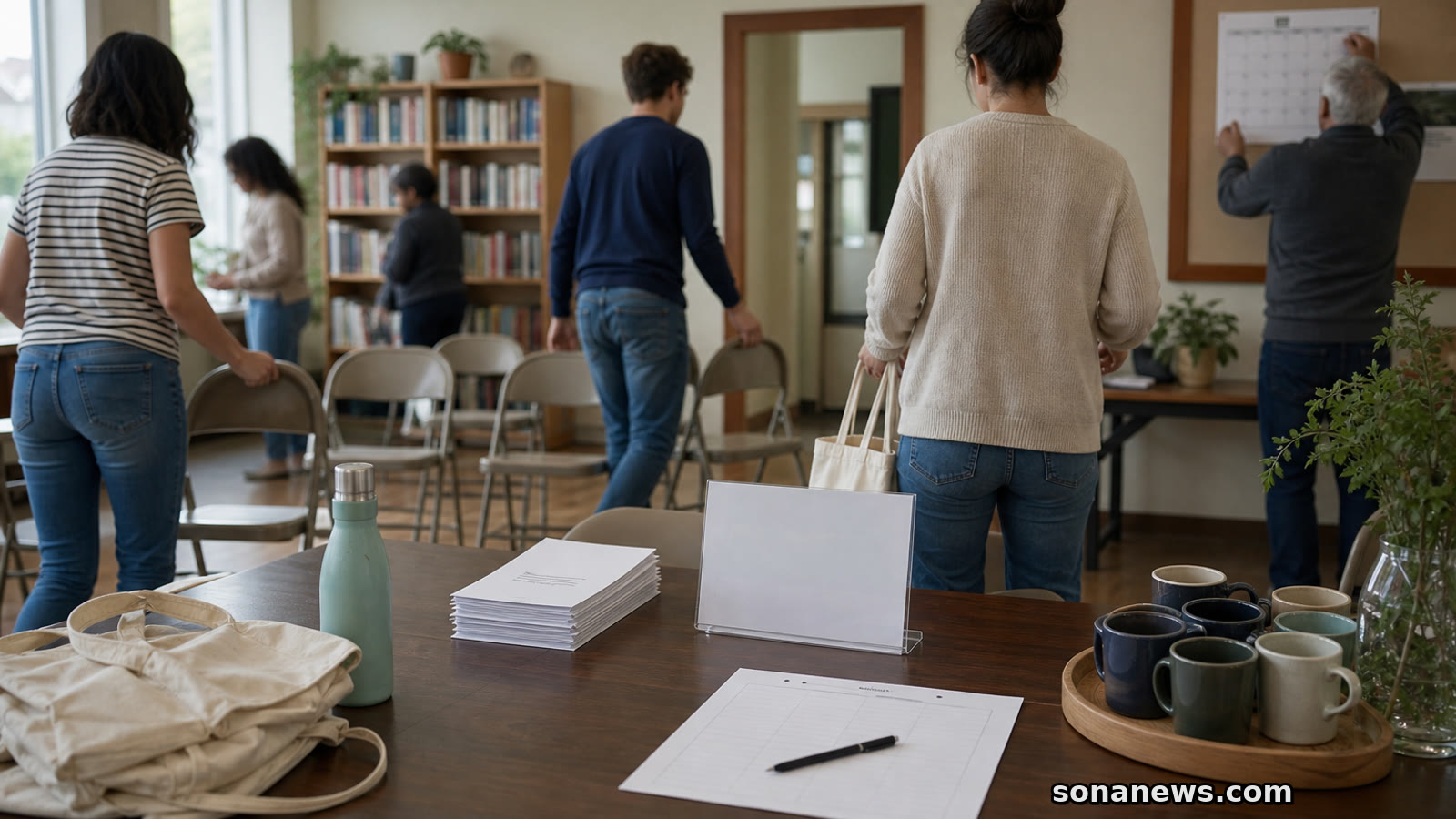

The volunteer shift has a public image problem. It is often sold as a halo moment: the soup ladle, the charity T-shirt, the smiling photo at the end. In real life, it is more likely to be a Tuesday evening in a draughty hall, an hour on a helpline, a lift to an appointment, a rota reminder, or a WhatsApp message asking who can stack the chairs.
That less glossy version matters because it makes volunteering easier to understand as a lifestyle habit. Not a grand identity. Not proof of being a better person. A social appointment with a job attached.
The latest official data from England is useful precisely because it is not romantic. In the Community Life Survey 2024/25, 17% of adults said they had taken part in formal volunteering at least once a month in the previous year, meaning unpaid help through groups, clubs or organisations. That was little changed from 16% the year before, but far below the 27% recorded in 2013/14. Annual formal volunteering rose only slightly, from 27.8% to 28.4%.
The same survey also shows how much community life happens away from formal logos. Informal volunteering, such as helping someone who is not a relative with shopping, care, keeping in touch or household tasks, was reported monthly by 24% of adults and at least once in the year by 44%. Those figures were stable on 2023/24, but lower than earlier years. The headline is not a collapse of kindness. It is the harder problem of turning willingness into repeatable time.
The U.S. picture points in a similar direction with a different shape. Census Bureau and AmeriCorps data found that 75.7 million people aged 16 and over, or 28.3% of the U.S. population in that age group, formally volunteered through an organisation between September 2022 and September 2023. That was a rebound from 23.2% in 2021, though still below the pre-pandemic rate. Informal helping was broader: 54.2% of Americans helped or exchanged favours with neighbours.
One detail in the U.S. data is especially revealing. More people volunteered, but the average number of hours per formal volunteer continued to fall. The Census Bureau article links that to evidence of more episodic volunteering. In plain English, more people may be prepared to help, but fewer are building their lives around open-ended commitments.
That is where the lifestyle story sits. The modern social calendar is crowded, fragmented and often mediated by booking links, group chats, school platforms, shift work, caring duties and travel time. A monthly food-bank slot or community garden morning now has to compete with the same scheduling pressure as exercise classes, childcare swaps, overtime, family calls and the admin that comes with ordinary life. Good intentions do not automatically survive a calendar invite.
This is not only a question of personal motivation. The England figures show gaps by age, place, deprivation and occupation. Adults in higher managerial, administrative and professional jobs were more likely to volunteer formally each month than those in routine and manual occupations. Adults in the least deprived areas were more likely to volunteer monthly than those in the most deprived areas. Rural adults were more likely than urban adults. Those differences are not a character ranking. They are a reminder that time, transport, predictable hours, confidence, health, money and local infrastructure shape who can show up.
The World Health Organization's 2025 Commission on Social Connection report gives the broader context without turning volunteering into medicine. WHO says social connection is a public health issue and that one in six people worldwide is affected by loneliness. It also distinguishes loneliness from social isolation, which is useful here. A person can be busy and still lonely. A person can be surrounded by people and still lack the kind of connection that makes life feel held together.
Volunteering is not a cure for that, and it would be careless to sell it as one. Some roles are tiring, badly organised or emotionally heavy. Some people need rest, support or safety before they need another obligation. But a well-run volunteer shift can do something consumer culture often promises and rarely delivers: it gives people a reason to be expected somewhere, with other people, for a purpose that is not only shopping or self-improvement.
The practical lesson is modest. If community help is going to fit contemporary life, it has to look less like a moral lecture and more like a usable piece of social infrastructure. Clear times. Small tasks. Proper training. No guilt for saying no. Routes in for people without spare weekdays, cars, professional confidence or a long history of committee rooms.
That may sound unheroic. Good. The unheroic version is the one that can last. A volunteer shift becomes part of the social calendar when it is ordinary enough to repeat, useful enough to respect, and humane enough not to treat every hour of help as an endless resource.
Editorial note. This article discusses volunteering, social connection and lifestyle routines in general terms. It is not medical, mental-health, legal, employment or safeguarding advice. Anyone dealing with serious loneliness, distress, unsafe volunteering conditions or care responsibilities should use appropriate local support, professional help or recognised safeguarding routes.
Sources
- Source: "Community Life Survey 2024/25: Volunteering and charitable giving", Department for Culture, Media & Sport, GOV.UK, Extracted 2026-06-13. Verified: definitions of formal and informal volunteering, 2024/25 formal monthly and annual rates, long-term decline from 2013/14, 2024/25 informal volunteering rates, and demographic context
- Source: "Community Life Survey 2024/25: Loneliness and support networks", Department for Culture, Media & Sport, GOV.UK, Extracted 2026-06-13. Verified: loneliness definitions, direct and indirect loneliness measures, support network questions and group differences used as background only
- Source: "U.S. Volunteerism Rebounding After COVID-19 Pandemic", U.S. Census Bureau, Extracted 2026-06-13. Verified: 75.7 million formal volunteers, 28.3% U.S. rate, rebound from 2021, 54.2% informal helping, falling annual hours per formal volunteer and virtual or episodic context
- Source: "Social connection linked to improved health and reduced risk of early death", World Health Organization, Extracted 2026-06-13. Verified: WHO Commission on Social Connection release, definition of social connection, loneliness and social isolation, and the global one-in-six loneliness context. Treated as background, not as individual health guidance
Help us improve
Was this article useful?
One anonymous tap helps Sona improve future reporting, headlines and source context.
Up next

Across 11 experiments, people were more willing to give when invited to continue a run of donors. The effect offers a useful lesson about social signals, and a warning about how easily momentum can be staged.
Continue readingMore in Lifestyle