US credit-card cash advances: interest usually starts before the bill
A purchase grace period generally does not cover cash advances. The transaction fee, interest rate and payment allocation are separate parts of the cost.
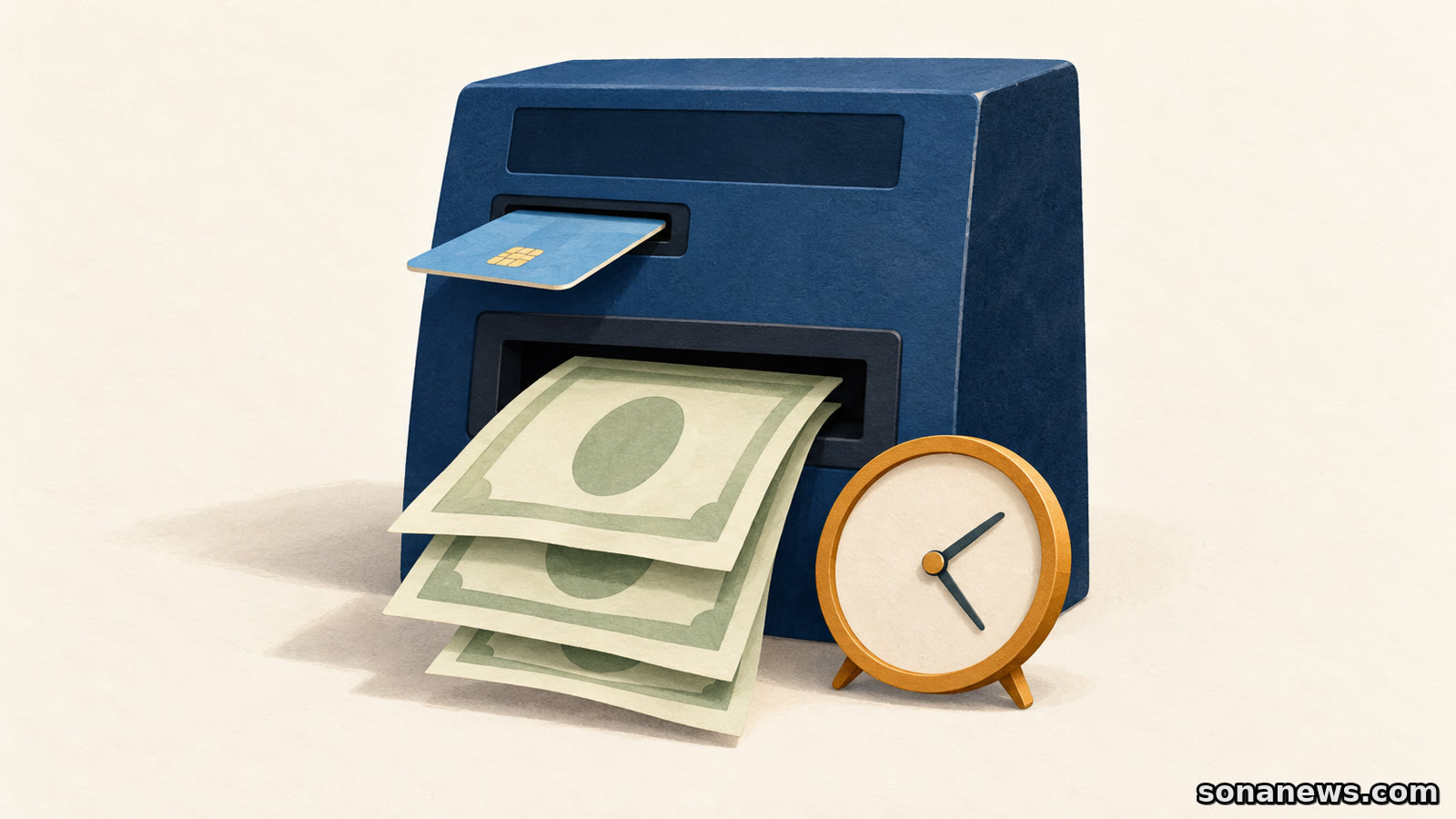

A US credit card can work at a shop and at a cash machine, but the borrowing clock need not work the same way. A purchase may qualify for an interest-free grace period. A cash advance generally starts attracting interest on the transaction date, even though the next bill has not arrived.
That distinction matters for someone accustomed to paying a card bill in full by its due date. The habit can avoid interest on qualifying purchases. It does not automatically make a cash advance interest-free. Nor does paying a cash-advance fee necessarily cover the interest: the fee and the interest are different charges.
This is an explanation of existing US consumer credit-card rules and official guidance, not a new charge announced for October. Individual agreements determine the rates, fees and treatment of transactions. The central question is not just when the bill is due, but which kind of balance the card issuer has recorded.
The Consumer Financial Protection Bureau defines a grace period as the time between the end of a billing cycle and the payment due date. Card companies are not required to offer one, although most credit cards provide a grace period on purchases.
Where a card has a grace period and the holder is not carrying a balance, paying the balance in full by the due date can avoid interest on new purchases. Those conditions are important. A grace period is not an unconditional interest holiday attached to every use of a piece of plastic.
The CFPB says grace periods typically apply only to purchase transactions. For a cash advance, or a cheque supplied by the card issuer, interest generally starts on the transaction date. A statement can therefore arrive with interest already accrued without the account holder having missed that statement's payment deadline.
There is also a difference between the time allowed to receive and pay a bill and a promise of no interest. Card companies must have procedures to ensure bills are mailed or delivered at least 21 days before payment is due. That billing requirement does not give every transaction a 21-day interest-free period.
The Office of the Comptroller of the Currency says a bank can charge a cash-advance fee if the fee was disclosed in the account agreement. Its consumer guidance directs readers to that agreement or the bank for an explanation. The guidance is about banks within the OCC's remit, not an assessment of every individual dispute.
The fee answers one question: what charge applies to taking the advance? Interest answers another: what does it cost to carry that balance over time? Treating the first as an all-in price can obscure the second.
The CFPB explains that card companies often charge different rates for purchases, cash obtained through a credit card, issuer cheques and other transactions. There is no single cash-advance rate that can safely be inferred from a card's advertised purchase rate. The relevant agreement and statement supply the account-specific information.
Many issuers calculate interest daily using an average daily balance. Consequently, the period before the next bill can matter when a balance has no grace period. Waiting for a statement does not necessarily postpone the start of the interest calculation. The exact charge depends on the rate, balance, timing and contractual calculation method, rather than on a universal example.
The CFPB says a statement must show each category with a different annual percentage rate, or APR, and the amount of balance in that category. The total at the top is therefore not the only useful figure. A purchase balance and a cash-advance balance can sit on the same account while having different rates and interest treatment.
This also explains why a payment does not always reduce every part of the account in the same way. Under Regulation Z, the general rule is that money paid above the required minimum goes first to the balance with the highest APR, with any remainder moving down through the other rates.
That rule concerns the portion above the minimum, not the entire payment. The CFPB says the issuer generally decides how to apply the minimum-payment portion. It would be misleading to say that every dollar paid necessarily goes to a cash advance first, or even that cash advances always have the highest rate on an account.
There are special rules, including for deferred-interest programmes. The regulation distinguishes those arrangements from an ordinary purchase grace period. A general explanation of payment allocation is not enough to reconstruct an individual statement containing promotional balances, disputed transactions or other complications.
For understanding a cash advance, the agreement and statement answer three distinct questions: whether a transaction fee applies, which APR applies to the resulting balance, and when interest begins. The payment-allocation rules then explain how a later payment affects balances with different rates.
A purchase grace period can itself be lost. The CFPB warns that failing to pay the balance in full by the due date can lead to interest on the unpaid balance and on purchases in the next billing cycle from their transaction dates. The treatment of purchases therefore should not be assumed from how the account worked in an earlier month.
None of this establishes that a particular cash advance is appropriate for a particular person. It explains why the familiar phrase “pay by the due date” is not a complete account of credit-card cost. For cash advances, the interest clock generally starts with the transaction, not with a late payment.
Editorial note. This article provides general information about US consumer credit-card rules, not personal financial or legal advice. Fees, interest, grace periods and payment allocation depend on the agreement, applicable law and account circumstances. It does not recommend a credit product, borrowing decision or repayment strategy.
Sources
- Consumer Financial Protection Bureau, “What is a grace period for a credit card?”, last reviewed 23 September 2024, checked 18 October 2026. Supports purchase-grace conditions, no requirement to offer a grace period, cash-advance and issuer-cheque interest generally from the transaction date, loss of grace period and the separate 21-day bill-delivery requirement
- Consumer Financial Protection Bureau, “How does my credit card company calculate the amount of interest I owe?”, last reviewed 22 January 2024, checked 18 October 2026. Supports daily/average-daily-balance calculation, different transaction APRs, statement category disclosures and distinction between minimum and excess payment allocation. Canonical wording checked against the actual page title and body, not inferred from a URL slug
- Office of the Comptroller of the Currency, “Can the bank charge a fee for a cash advance on my credit card?”, last reviewed April 2021, checked 18 October 2026. Supports a cash-advance fee when disclosed in the account agreement. The page explicitly limits its institutional scope to OCC-regulated banks and disclaims individual legal advice
- Consumer Financial Protection Bureau, Regulation Z, section 1026.53 and official interpretations, marked current regulation and checked 18 October 2026. Primary authority for excess-payment allocation, minimum-payment boundary and deferred-interest exceptions. No source example APR is represented as a current market rate
Help us improve
Was this article useful?
One anonymous tap helps Sona improve future reporting, headlines and source context.
Up next

Federal rules separate the card's expiry from the life of its funds. Inactivity fees and promotional cards need a different check.
Continue readingMore in Money