Taking something to a repair café? Plan to stay
The repair café model is built around working together, not leaving a broken object at a counter. Guidance from an English local network shows what that means for a first visit.
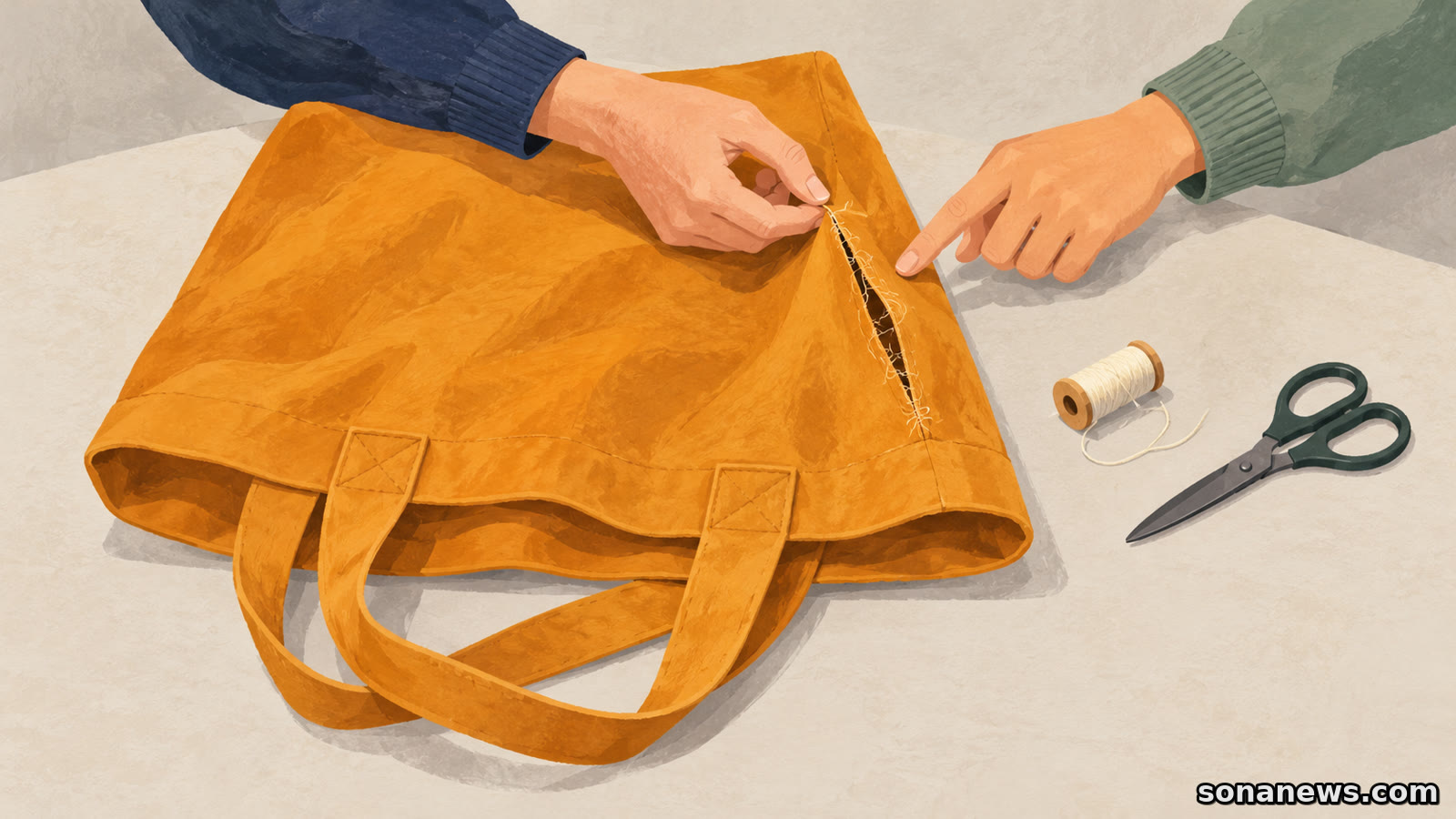

A bag with a torn seam is small enough to carry to a repair café. The less obvious thing to bring is time to stay with it. If the plan is to hand over the bag, run other errands and collect it later, it is worth checking the event's arrangements before leaving home.
Repair Café International describes its gatherings as places where visitors and volunteers repair things together. Its house rules say visitors carry out repairs themselves whenever possible, with help from the repair experts present. That is a different proposition from a commercial repair counter, even when the practical aim is the same: getting a useful possession working again.
The distinction matters for a first visit. The object gives people something specific to do together; it is not simply a ticket to a free service. Local arrangements vary, but guidance from the Cambridgeshire Repair Cafe Network in England makes the expectation unusually clear. Visitors are asked to stay with the repairer, or at least within the café, while their item is being fixed so they can see what is involved.
The international movement began with a gathering in Amsterdam on 18 October 2009, according to Repair Café International. Its description includes clothing, furniture, electrical appliances, bicycles and toys. That breadth is an invitation to enquire, not a guarantee that every local session has someone who can handle every object.
Cambridge Carbon Footprint, which administers the Cambridgeshire network, says the items accepted depend on the volunteer skills available. Its visitor guide includes bags and soft furnishings as well as appliances and other belongings. It also sets exclusions and says some items may be referred to professional repair businesses.
For someone with a damaged bag, the useful first question is whether textile repairs are offered at that particular event. For another possession, the relevant skill may be entirely different. A listing headed repair café does not settle that question by itself.
Bookings in Cambridgeshire are managed by individual community groups. Most have a booking system and nearly all reserve some walk-in capacity, the visitor guide says. Neither arrangement guarantees that an item will be seen immediately. Repairs can run over, including when a visitor has booked a slot.
The network asks people booking a repair to provide as much detail as possible about the fault and anything already tried. That is a more useful starting point than simply saying bag, lamp or bicycle. It helps the organiser understand what is being brought, without requiring the owner to make a diagnosis.
A short description of what stopped working, where damage is visible and what happened before the problem appeared can help frame the conversation. This is a planning suggestion, not an instruction to open an appliance or test a potentially unsafe item. The point is to describe what is already known and let the organiser decide whether the session is suitable.
In Cambridgeshire, slots are usually about 45 minutes, although the guide explicitly says this varies. More complex work may need another visit. A first session might identify a fault and a replacement part, with the repair completed only after the owner has obtained that part and returned.
That makes a successful visit broader than walking out with a finished repair. Learning that a part is needed, or that a professional service is the better option, can still clarify the next step. It does not mean every unsuccessful attempt has saved money or prevented waste.
Repair Café International's house rules say the work is voluntary and free of charge, with donations appreciated. They also say new materials are paid for separately. The Cambridgeshire guide adds a local distinction: volunteers have access to common low-cost items in shared toolkits, which they may provide without charge, while more substantial parts may need to be ordered by the owner.
These are different levels of guidance, not a single worldwide price list. A visitor should check the event's own arrangements rather than assume that free repair includes every component, material or repeat visit.
There are limits to what can be promised, too. The international house rules offer no repair guarantee, allow volunteers to refuse an object and require visitors to take away items that cannot be repaired. They also describe a one-item-at-a-time queue during busy periods, with visitors rejoining for a second item.
Cambridgeshire's guide warns that an item can be damaged further during an attempt and says its volunteers do best with belongings that do not carry high sentimental or financial value. A treasured heirloom therefore deserves a conversation before it goes on the table, not an assumption that a community setting removes risk.
The appeal need not be a grand resolution to become handy. A person can arrive knowing little about repair and still have a role: explain the problem, stay available, watch what is involved and help where appropriate. The international model explicitly makes room for learning alongside volunteers.
That is the cultural difference from dropping something off. Conversation has a practical focus, and knowledge does not have to remain entirely behind a service counter. It would be a step too far to claim that attendance reliably reduces loneliness, builds lasting friendships or changes buying habits. The sources describe how these events are organised, not proof of those outcomes.
Staying is also a real demand on someone's day. A session that needs a booking, a wait and perhaps a return with a spare part will not fit every work or caring schedule. Checking timing and access is part of deciding whether the arrangement is useful, not a test of commitment to repairing things.
For a first visit, the most revealing preparation is modest: confirm the item is accepted, explain the fault, check the local booking rules and leave enough time to remain there. The torn bag may or may not leave repaired. The model makes more sense when its owner expects to stay beside it.
Editorial note. This article explains event arrangements, not how to repair an item. Ask the organiser about suitability and follow the event's safety guidance. Do not dismantle or test an unsafe appliance to prepare for a visit. Read local terms before agreeing to work on a valuable or irreplaceable possession.
Sources
- Repair Café International, About Repair Café. Checked 18 October 2026. Primary description of visitors and volunteers repairing together, example item categories, learning and the first Amsterdam event on 18 October 2009. Promotional environmental claims and the page's network count are not used as measured findings
- Repair Café International, House rules. Checked 18 October 2026. Primary guidance on participation, free voluntary labour, donations, separate material costs, refusal, no repair guarantee, removal of unrepairable objects and the busy-period queue. These are the organisation's rules, not a legal interpretation or a claim that every independent event uses identical terms
- Cambridge Carbon Footprint, Visit a Repair Cafe. Checked 18 October 2026. Local primary guidance on accepted items and volunteer skills, advance fault descriptions, bookings and walk-ins, usually 45-minute slots, staying on site, spare parts, repeat visits and damage risk. Local requirements are attributed to Cambridgeshire, not generalised worldwide
- Cambridge Carbon Footprint, Cambridgeshire Repair Cafe Network. Checked 18 October 2026. Confirms the network administrator and independent local organising groups. Its 2025 repair-rate figure differs from the undated average on the visitor guide; neither percentage is used, because their time windows and denominators are not established as comparable
Help us improve
Was this article useful?
One anonymous tap helps Sona improve future reporting, headlines and source context.
Up next

US research finds that people can underestimate how welcome their appreciation will be. The useful lesson is about sincere, specific thanks, not a guaranteed way to improve a relationship.
Continue readingMore in Lifestyle