A large asteroid will pass close in 2029. Scientists are calm for a reason
Apophis will come closer than many geostationary satellites, but NASA and ESA say impact risk has been ruled out for at least a century. The flyby is now a rare science opportunity.

There is a particular kind of asteroid story that arrives already dressed for panic: a rock, a date, a distance that sounds small in space terms, and a headline that invites the reader to look up. Apophis does not need that treatment. The facts are interesting enough without borrowing the language of disaster.
On 13 April 2029, asteroid (99942) Apophis will pass very close to Earth. NASA says it will come about 20,000 miles, or 32,000 kilometres, from the planet’s surface. ESA says the flyby will be less than 32,000 kilometres from Earth’s surface. Both agencies make the same calm point: later observations have ruled out an impact for at least the next 100 years.
That combination - very close and not a threat - is why Apophis is worth attention. It will pass closer than many satellites in geostationary orbit. ESA says it is roughly 375 metres across and will be visible to the naked eye from parts of Europe, Africa and Asia for a short time. A large asteroid passing that close, with years of advance notice and no expected collision, is not a disaster plot. It is an experiment delivered by orbital mechanics.
The history explains why Apophis still has a reputation. It was discovered on 19 June 2004 by Roy Tucker, David Tholen and Fabrizio Bernardi at Kitt Peak National Observatory in Arizona, according to NASA. Early observations suggested a possible future impact in 2029, 2036 or 2068. ESA says the estimated probability of a 2029 impact rose as high as 2.7%, giving Apophis the highest ever rating on the Torino scale, which is used to communicate asteroid impact risk.
That early alarm was not evidence that scientists were reckless. It was evidence that initial orbit calculations can change as more observations arrive. A newly discovered asteroid has a short observed arc. Its future path is estimated from limited data, and the uncertainty narrows as astronomers track it longer. Apophis became frightening in part because it was noticed early enough for that uncertainty to be public.
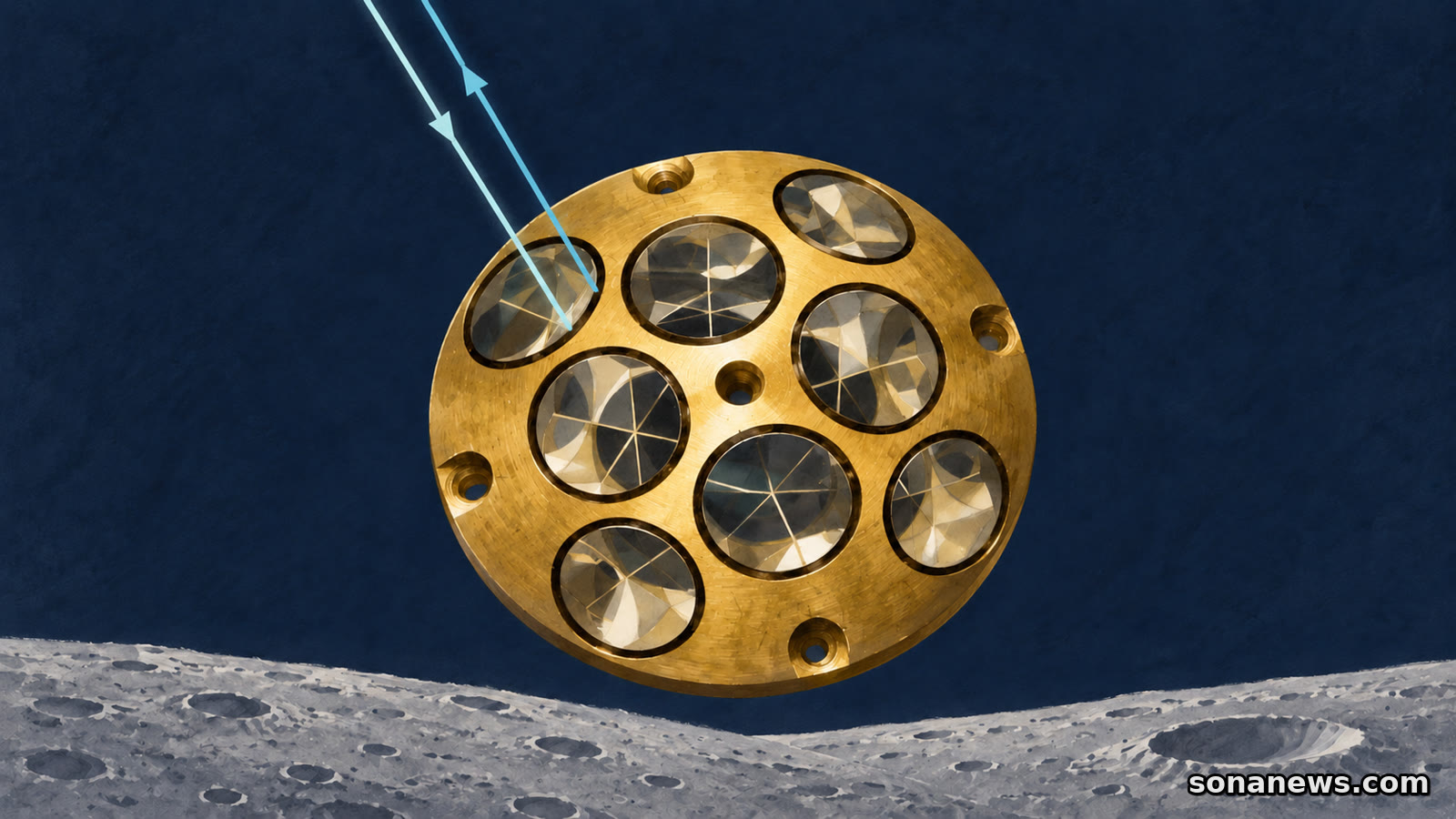
The important update came through further tracking, including radar observations in March 2021 using NASA’s Goldstone Deep Space Communications Complex in California and the Green Bank Telescope in West Virginia. NASA says those observations helped it become confident that Apophis poses no impact risk to Earth for at least 100 years. ESA says Apophis was removed from its Planetary Defence Office Risk List on 26 March 2021.
This is how planetary defence is supposed to work in public, though it rarely makes for tidy headlines. Detect, track, refine, remove from the risk list when the evidence supports it. The drama is in the patient reduction of uncertainty, not the first alarming number.
The 2029 flyby still matters scientifically. ESA describes it as the closest approach of an asteroid of this size that humans have ever been aware of in advance. Earth’s gravity will tug on Apophis as it passes. ESA says tidal forces could stretch and squeeze the asteroid, trigger quakes or landslides, change its rotation and expose material beneath the surface. That gives researchers a chance to observe how a small body responds to a strong gravitational encounter.
NASA has also redirected a spacecraft to study it. OSIRIS-APEX is the extended mission of OSIRIS-REx, the spacecraft that returned a sample from asteroid Bennu. NASA’s Apophis page says the spacecraft has been redirected to study Apophis as it makes its closest approach in April 2029, and that Earth-based telescopes will observe it closely as well. A spacecraft arriving after the flyby can look for changes the Earth encounter may have caused.
The public communication challenge is delicate. On one side, agencies need people to understand that near-Earth objects are real and worth monitoring. Planetary defence is not science fiction; it is an active field of survey telescopes, orbit calculations, radar observations, mission planning and international coordination. On the other side, exaggerating one safe flyby damages trust. If every close pass is treated as a near-miss, the public learns either to panic or to ignore the next warning.
Apophis offers a better story. It shows why early detection matters. It shows how risk estimates change. It shows that a rock once associated with impact fears can become a planned observation target. It also shows the value of plain comparison. “Closer than geostationary satellites” is arresting, but it is not the same as “on course to hit”. Distance in astronomy needs context, and risk needs probability, tracking and time horizon.
There will be spectacular images and animations as 2029 approaches. Some will be useful; some will not. The best ones will show scale honestly, distinguish orbit from impact, and explain visibility without implying danger. The worst will wrap a safe flyby in apocalypse language because fear travels quickly.
For readers, the cleanest position is curiosity without dread. Apophis is large enough to be interesting, close enough to be rare, and well enough tracked for NASA and ESA to be explicit about the absence of impact risk for at least a century. The story is not that scientists are suddenly worried. It is that scientists get to watch, from Earth and with spacecraft, as a once-feared asteroid becomes a natural laboratory.
The night sky has never needed embellishment to matter. In April 2029, if clouds and geography cooperate, some people may see a point of light moving across it and know that a rock discovered 25 years earlier is passing safely by. That is a public science moment, not a warning siren.
Sources
- NASA Science - “Apophis” - - extracted 2026-06-04. Verified: 13 April 2029 flyby; about 20,000 miles / 32,000 km; no impact risk for at least 100 years; discovery details; OSIRIS-APEX redirection
- European Space Agency - “Apophis” - - extracted 2026-06-04. Verified: less than 32,000 km pass; roughly 375 m size; visible from parts of Europe, Africa and Asia; early risk history; removal from ESA Risk List on 26 March 2021; scientific effects of flyby
Help us improve
Was this article useful?
One anonymous tap helps Sona improve future reporting, headlines and source context.
Up next
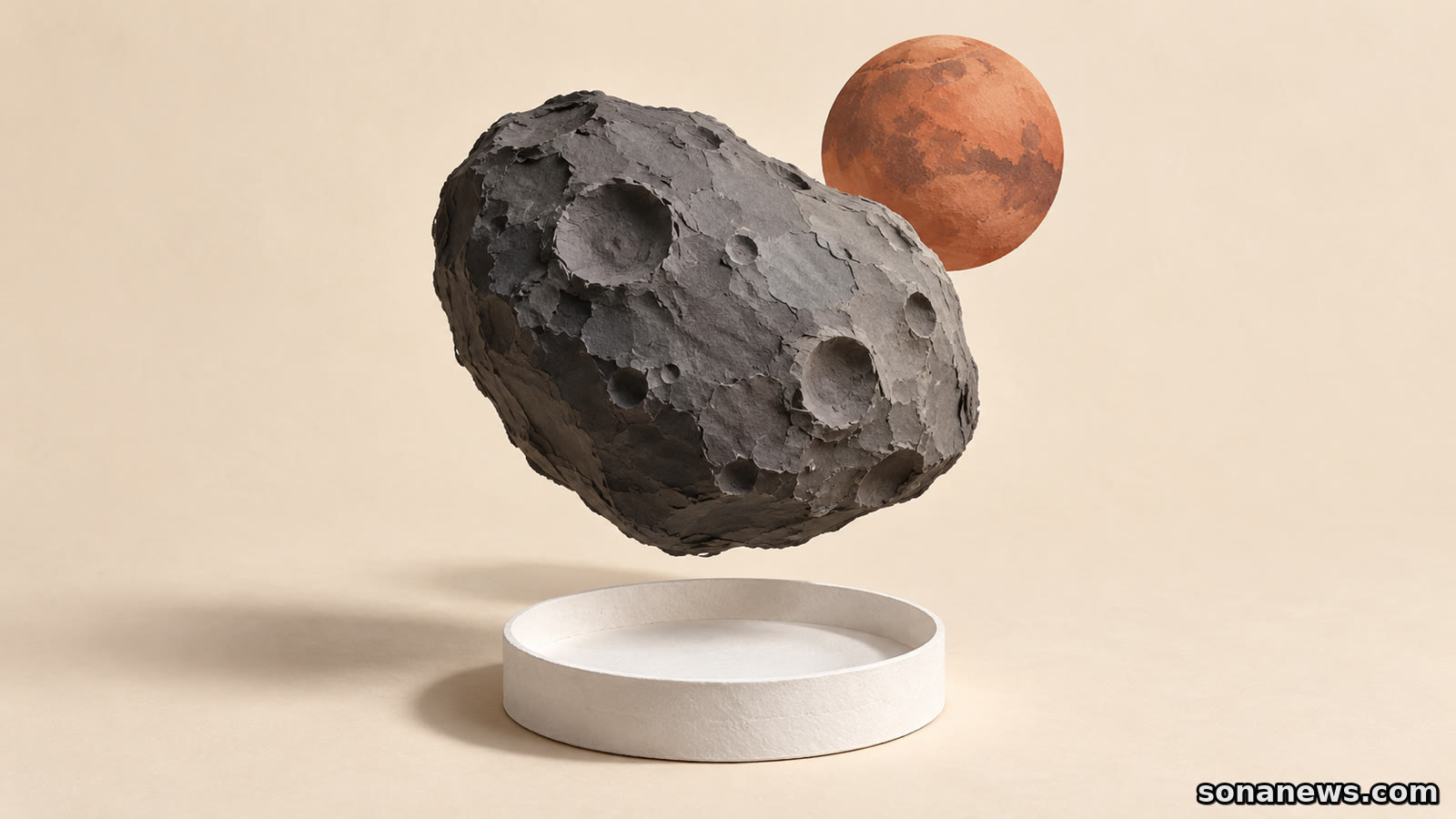
The mission plans to bring material from Phobos to Earth in 2031. Its sample, paired with measurements from space, could help explain where Mars's moons came from.
Continue readingMore in Space