NASA’s Rocket Lab launches are about the quiet data behind weather and climate
The headline is a launch award. The useful story is that TSIS-2 and PolSIR will watch two awkward parts of the Earth system: the Sun’s incoming energy and tropical ice clouds that change through the day.

Some space stories sound small because they arrive as procurement news. NASA has selected Rocket Lab to launch two Sun-Earth science missions, and at first glance that can read like a note for launch-industry followers. The more useful version is quieter: the agency is trying to keep two difficult measurements moving from plans into orbit.
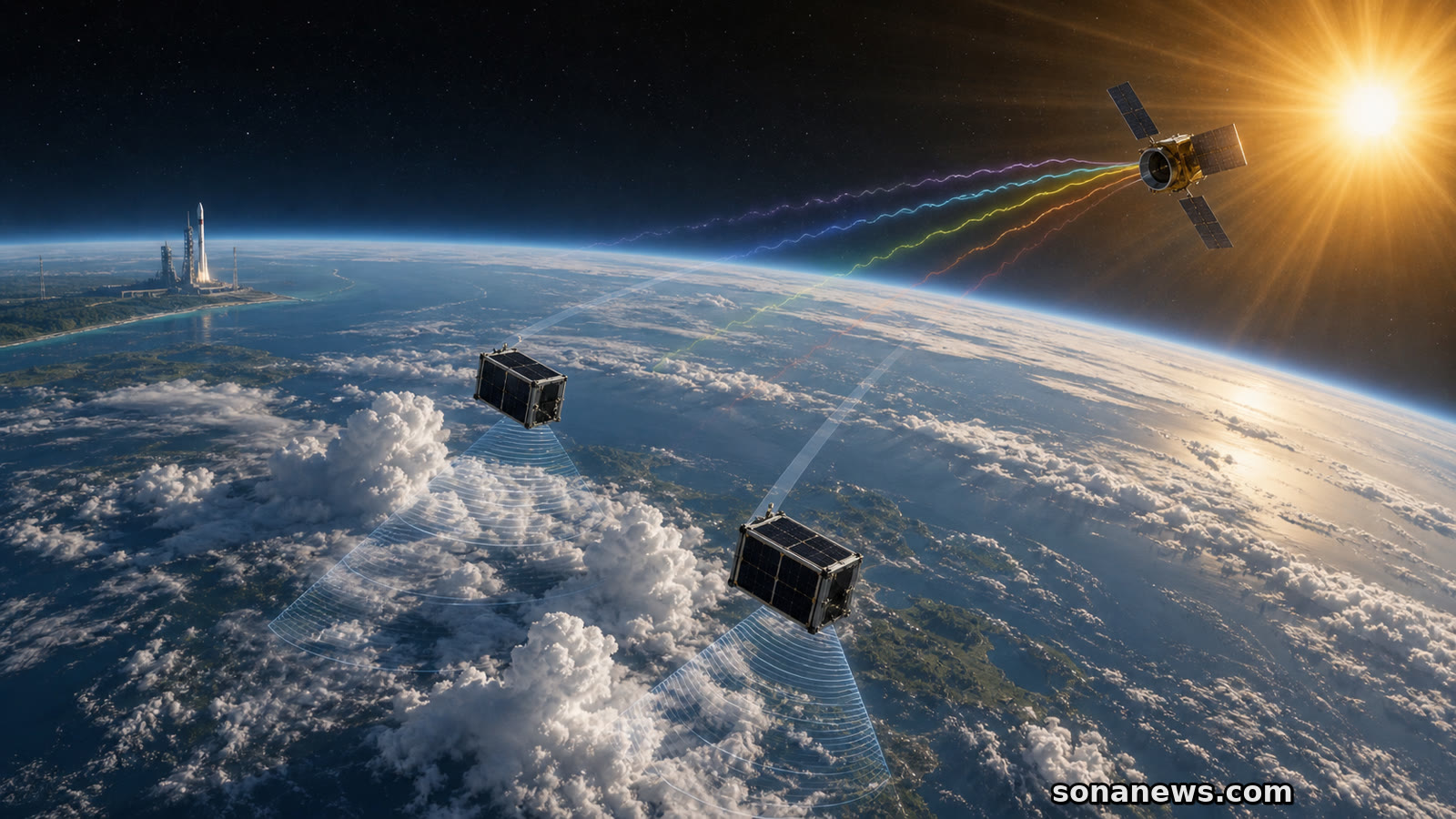
The missions are TSIS-2, short for Total and Spectral Solar Irradiance Sensor-2, and PolSIR, the Polarized Submillimeter Ice-cloud Radiometer. NASA said on 25 June that Rocket Lab will launch TSIS-2 on an Electron rocket in early 2027 from Launch Complex 1 in Mahia, New Zealand. PolSIR is due to fly on two dedicated Electron rockets no earlier than June 2027 from the same site. Both selections sit under NASA’s VADR launch services contract, a route designed for smaller, more risk-tolerant science and technology payloads.
That contract detail matters only because it hints at the kind of science involved. These are not flagship observatories with a decade of public anticipation behind them. They are compact missions built around specific records and gaps. TSIS-2 watches the Sun’s energy reaching Earth. PolSIR watches high ice clouds in the tropics and subtropics, not once at a convenient orbital time, but across the daily cycle.
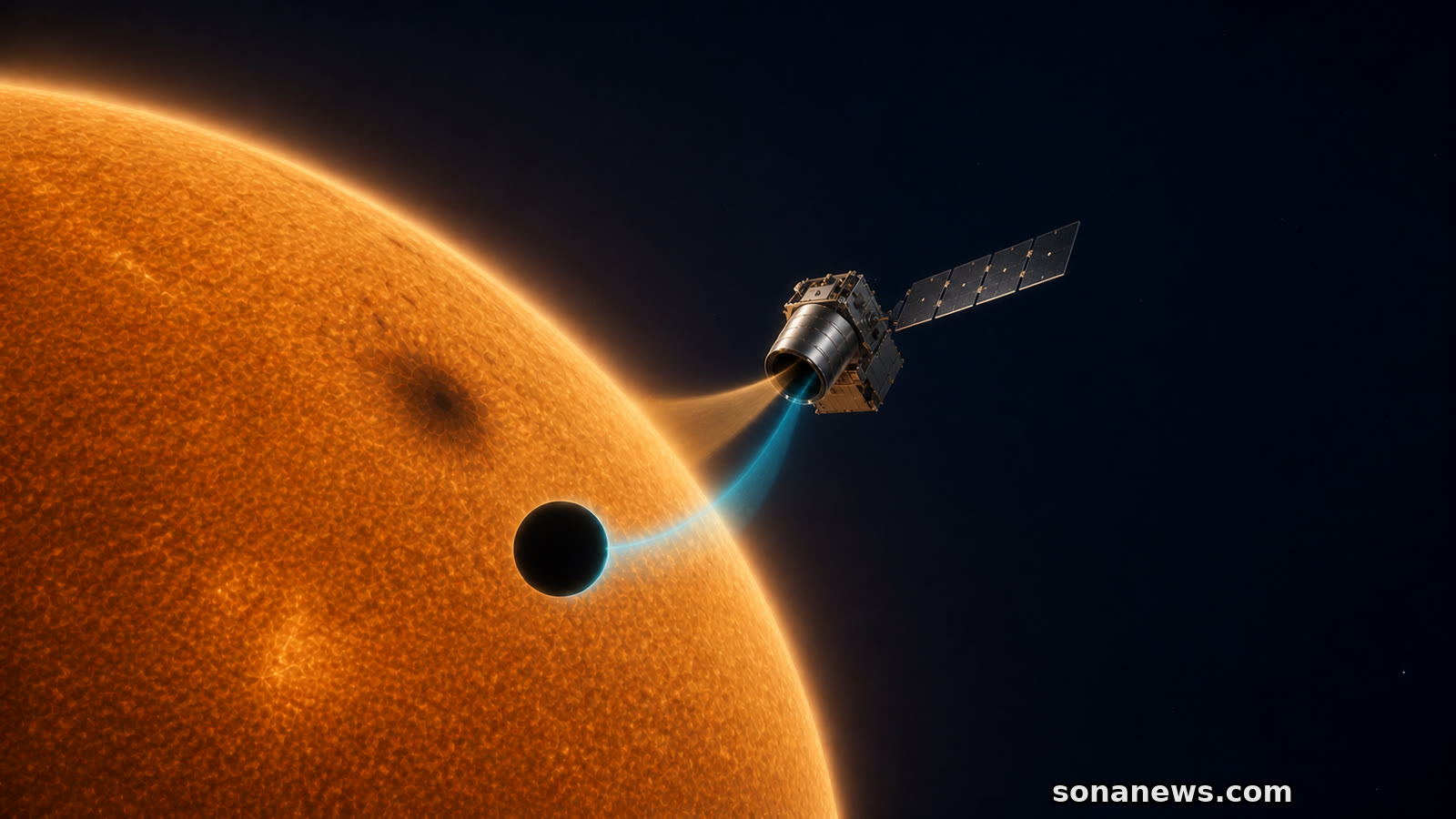
TSIS-2 is the easier one to explain and the easier one to misunderstand. NASA’s mission page says satellites have measured the Sun’s brightness above Earth’s atmosphere since 1978. TSIS-2 is meant to add to that four-decade record by measuring total solar irradiance, the Sun’s overall brightness at the top of the atmosphere, and spectral solar irradiance, the way that energy is spread across ultraviolet, visible and infrared wavelengths. Its two instruments, TIM and SIM, are similar to those on TSIS-1, but TSIS-2 will fly on a free-flying spacecraft rather than operating from the International Space Station.
This is not a claim that the Sun explains away modern climate change. NASA’s own TSIS-2 material is explicit that the roughly 0.1 percent change in the Sun’s brightness over an 11-year solar cycle is too small to explain recent global surface temperature rise. The point is more sober: if scientists want to understand Earth’s energy balance, ozone chemistry, air quality modelling and upper-atmosphere responses, they need a reliable measurement of the energy arriving from the Sun. A small percentage can still matter in the calculations, even when it is not the dominant driver of surface warming.
PolSIR is a different kind of gap-filler. It consists of two 16U CubeSats, each carrying a polarized submillimeter radiometer. NASA Goddard says the mission will study ice clouds that form high in the atmosphere across tropical and subtropical regions. The two spacecraft will fly in orbits separated by several hours, allowing researchers to observe how cloud ice content changes through the day. Vanderbilt University, which leads the mission, frames the same problem bluntly: ice clouds are one of the stubborn uncertainties in understanding how the Earth system changes.
Clouds are familiar enough to feel ordinary, but high ice clouds are not background decoration. They interact with incoming sunlight and outgoing heat radiation. They form and fade with tropical convection. They can influence weather and climate models, but many satellite observations see a place at one local time rather than following the full daily rhythm. PolSIR’s two-satellite design is meant to sample that rhythm more directly.
The cautious word here is “meant”. A launch award is not a launch, and a launch is not a completed data record. Small satellites can fail. Dates can slip. NASA’s VADR approach deliberately accepts more risk for payloads where lower cost and quicker access to orbit are part of the bargain. That is not a scandal. It is the trade-off behind many focused science missions, especially where the question is narrow enough to fit on a smaller spacecraft.
For readers, the significance is not that a small rocket from New Zealand will transform weather forecasts overnight. TSIS-2 will not tell anyone whether next weekend is sunny. PolSIR will not settle cloud feedbacks in one season. The value is cumulative: clean measurements, kept going long enough, become the unglamorous spine of later science.
That is why the launch-provider announcement deserves more than a shrug. The public space conversation often rewards the loudest hardware, crewed missions, giant telescopes and dramatic asteroid flybys. Meanwhile, some of the measurements that make Earth science less guessy depend on compact instruments doing repetitive work with very little theatre. TSIS-2 and PolSIR sit in that category. If they make it to orbit and work as planned, their success will be less a single spectacular moment than a steadier improvement in how scientists account for sunlight, clouds and the daily pulse of the atmosphere.
Sources
- Source: "NASA Selects Rocket Lab to Launch Sun, Earth Science Missions", NASA, Extracted 2026-06-27. Verified: Rocket Lab selection, PolSIR and TSIS-2 mission names, VADR contract context, Electron launch vehicle, Mahia launch site, early 2027 TSIS-2 timing, no-earlier-than June 2027 PolSIR timing, and mission partner roles
- Source: "TSIS-2", NASA Science, Extracted 2026-06-27. Verified: TSIS-2 as a future mission, free-flying spacecraft, TIM and SIM instruments, total and spectral solar irradiance measurements, four decades of records since 1978, 96 percent solar spectrum coverage, and NASA’s caveat about solar-cycle brightness not explaining recent surface warming
- Source: "PolSIR", NASA Goddard Earth Sciences, Extracted 2026-06-27. Verified: two 16U CubeSats, polarized submillimeter radiometers, tropical and subtropical high ice-cloud focus, three-to-nine-hour orbit separation, full diurnal cycle goal, Vanderbilt leadership and NASA Goddard instrument role
- Source: "PolSIR", Vanderbilt University, Extracted 2026-06-27. Verified: PolSIR science objectives, ice-cloud uncertainty framing, 2027 launch planning, expected mission duration to about 2030, two-satellite concept, non-sun-synchronous orbit rationale, and Vanderbilt’s mission leadership
- Source: "VADR (Venture-Class Acquisition of Dedicated and Rideshare) Launch Services", NASA, Extracted 2026-06-27. Verified: VADR purpose, lower-cost access to space for risk-tolerant payloads, firm-fixed-price task-order model, FAA-licensed commercial launch services, and NASA Launch Services Program management
Help us improve
Was this article useful?
One anonymous tap helps Sona improve future reporting, headlines and source context.
Up next
Hubble data trace a 10-sided atmospheric wave from faint 2023 hints to a clearer 2025 pattern. Its slow drift and 32-day wobble do not yet explain why it formed.
Continue readingMore in Space