Europe’s border checks are changing before ETIAS arrives
For visa-exempt travellers, the next trip to Europe may be shaped less by a new fee than by digital border records, biometrics and a rollout that still needs checking close to departure.
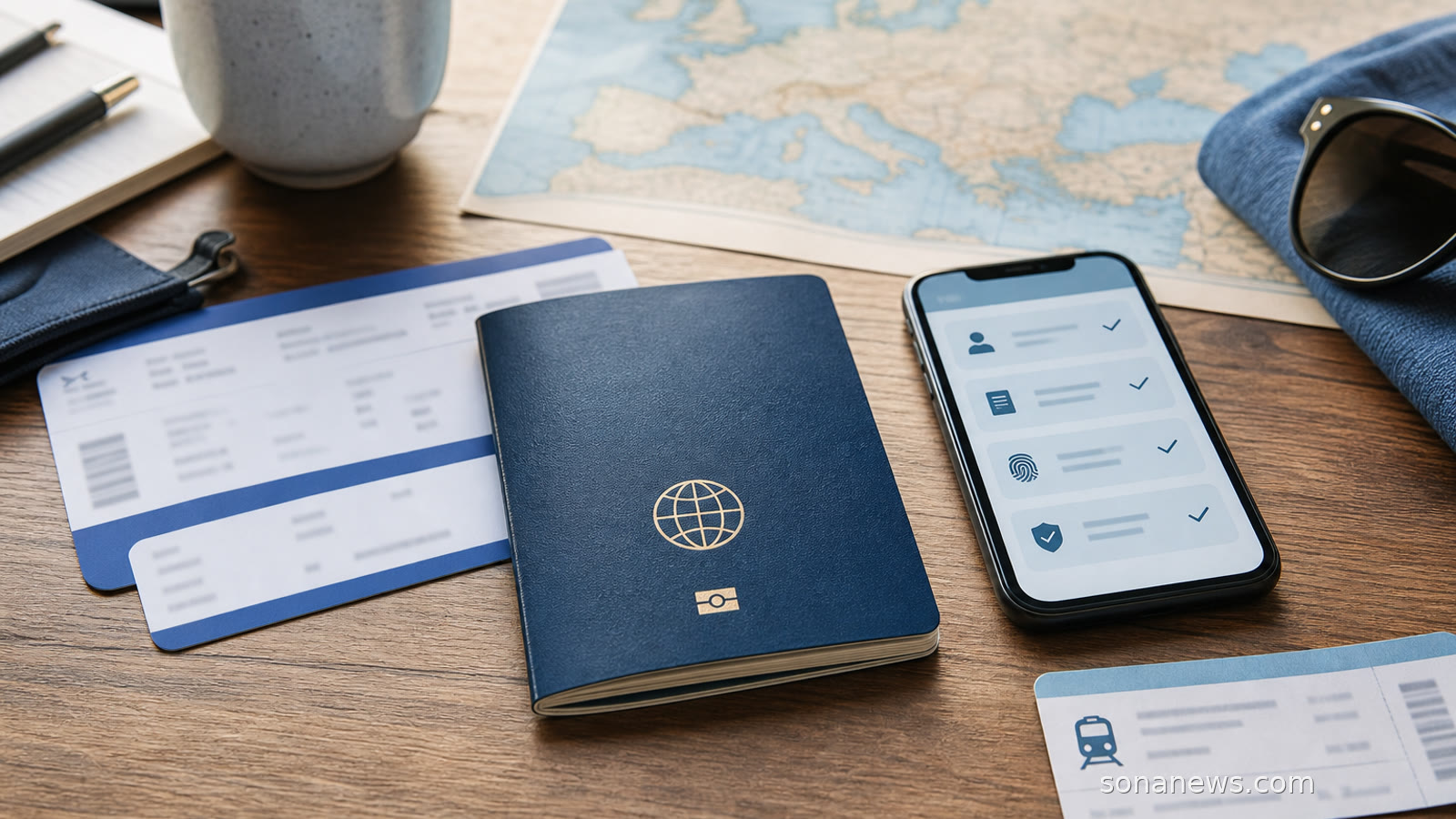

The airport queue will not announce itself as a policy change. It will look like a family comparing passports, a border officer pointing to a camera, a self-service kiosk that works faster for the second traveller than the first, or a coach operator asking for an authorisation that did not exist on your last trip. European border reform is arriving in practical fragments.
For many visitors, the better-known name is ETIAS, the European Travel Information and Authorisation System. It is the one that sounds most like a new travel document. But before treating ETIAS as the whole story, it is worth separating it from the Entry/Exit System, or EES. The two are related in the public mind because both affect short-stay travel into much of Europe. They do different jobs.
EES is the border record system. The European Commission describes it as an automated IT system for registering non-EU nationals travelling for a short stay each time they cross the external borders of participating European countries. It records the person’s name, travel document data, biometric data such as fingerprints and captured facial images, and the date and place of entry and exit. It also records refusals of entry.
That is a shift from the older ritual of passport stamps. A stamp is visual and familiar, but it is a blunt record. A digital entry and exit register is meant to help calculate how long a traveller has remained and to detect overstayers automatically. Government.nl, the Dutch government information site, explains that EES applies to non-EU nationals travelling for a short stay of a maximum 90 days within any 180-day period, regardless of whether they need a short-stay visa, unless an exemption applies.
The first point for travellers is simple: this is about borders, not only airlines. It can affect people arriving by air, sea, coach, rail or other external border crossings, depending on route and participating country. It is also not only about British or American visitors, although they are often used in examples. The relevant category is non-EU nationals travelling for short stays in countries using the system.
The second point is less tidy. The rollout has moved through stages. Government.nl says that, as of 12 October 2025, EES applies to non-EU nationals travelling to the Netherlands for a short stay and will gradually record travel document, travel date and biometric data. The European Commission migration page now says the system became fully operational on 10 April 2026 and replaces passport stamping for the countries using it. The safe editorial treatment is not to pretend the transition will feel identical at every border crossing. Travellers should check the relevant country and carrier guidance close to departure.
ETIAS is different. Government.nl says ETIAS will start operations in the last quarter of 2026 and that no action is required from travellers at this point. It is a travel authorisation for people from visa-exempt countries who want to enter 30 European countries for a short stay. The same page says the authorisation will be valid for up to three years or until the passport expires, whichever comes first. If a traveller gets a new passport, they need a new ETIAS authorisation.
The fee is also clearer than the timing. Government.nl says applying for an ETIAS travel authorisation costs €20, with some travellers exempt from paying. It also warns that the authorisation is linked to the travel document used in the application. A valid ETIAS does not guarantee entry; border guards still verify entry conditions at the border. That last sentence should be printed larger in many travel explainers. ETIAS is permission to present yourself for travel under the scheme, not a free pass through a border.
There is an operational burden behind the scenes. Once ETIAS launches, Government.nl says air and sea carriers will be required to verify, within 48 hours before departure, that visa-exempt travellers have a valid ETIAS travel authorisation. International coach operators have a longer compliance period. For passengers, that may mean another field in an airline app or check-in flow. For carriers, it means turning a border requirement into a boarding decision.
The most obvious risk is not that everyone will be refused. It is that travellers will confuse the systems, buy from the wrong website, or discover too late that a passport mismatch matters. Government.nl explicitly warns about possible abusive and fraudulent practices by commercial intermediaries. That warning deserves attention. Whenever a new travel authorisation arrives, unofficial websites tend to appear with official-looking language and higher charges. The safest place to start is the official EU travel site or a national government page that links to it.
There is also a human rhythm to new border systems. First-time registration of biometric data can take longer than repeat checks. Some airports and ports will manage the transition smoothly; others may have crowded moments. Families, travellers with children, people with older passports, and those crossing at smaller ports should avoid assuming the process will behave exactly like their last trip. That does not mean cancelling plans. It means building in time and reading the latest guidance rather than last year’s blog post.
For Sona, the responsible travel angle is not “Europe is closing”. That would be wrong. The systems are designed to modernise border management for short-stay travellers, improve records and support security. Nor is the angle “nothing changes”. That would be unhelpful. Something does change when stamps give way to a central digital record, and when a new authorisation becomes part of boarding checks.
The best travel habit here is unfashionable: check the basics early, then check them again nearer departure. Which passport are you using? Does the route cross an external border? Are you travelling for a short stay under the 90-in-180-days rule? Has ETIAS actually started, and if so, are you using the official application route? Does your carrier have additional check-in instructions?
Travel advice is often written as if certainty is the whole product. Border systems rarely reward that confidence during a rollout. The more honest answer is that Europe’s short-stay travel rules are becoming more digital, more document-linked and more dependent on pre-travel checks. The queue may still look ordinary. The records behind it will not be.
Sources
- European Commission, Migration and Home Affairs - “Entry/Exit System” - - extracted 2026-06-04. Verified: EES purpose, data recorded, participating-country framing, passport-stamp replacement language
- Government.nl - “New requirements to pass the external borders of Europe: EES” - - extracted 2026-06-04. Verified: EES applies to non-EU nationals for short stays; 90 days in 180; data recorded; exemptions; country list
- Government.nl - “European Travel Information and Authorisation System (ETIAS)” - - extracted 2026-06-04. Verified: ETIAS last-quarter 2026 wording; €20 fee; validity up to three years or passport expiry; no automatic right of entry; carrier obligations
- Official EU ETIAS site - - `web_search` verified title/description; direct extraction failed during this run. Used as a destination readers should check, not as a source for hard claims beyond the search-result description
Help us improve
Was this article useful?
One anonymous tap helps Sona improve future reporting, headlines and source context.
Up next
On the A13-A14 Paris-Normandy route, drivers without automatic payment have 72 hours to settle the toll. Rental cars need a separate check.
Continue readingMore in Travel