Switzerland’s motorway vignette has two homes: the windscreen and the number plate
Both 2026 versions cost CHF 40 and cover the same roads, but the choice changes what follows the car, the plate and a replaced windscreen.
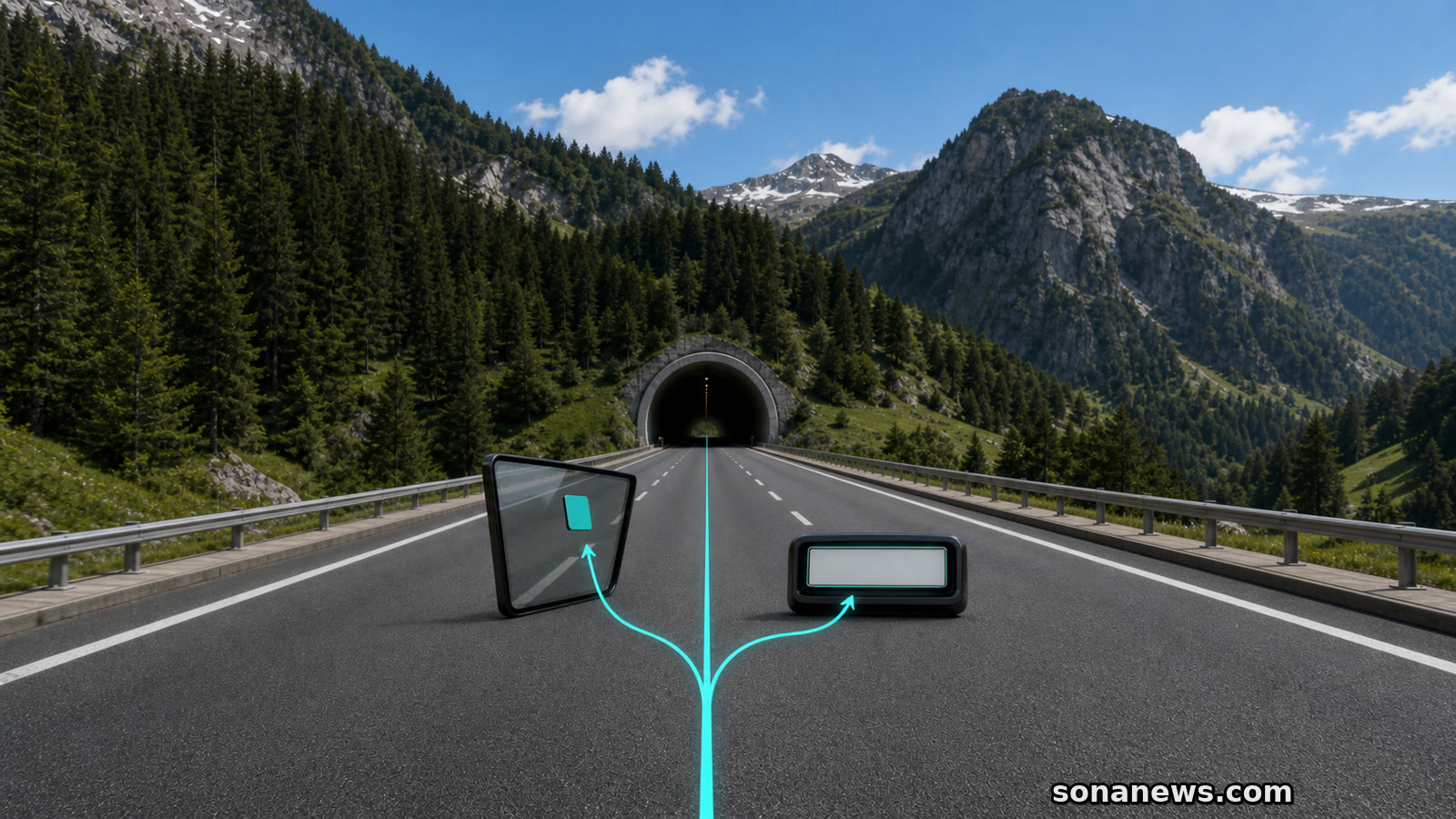

Switzerland’s motorway charge does not begin at a barrier. For most visiting drivers, it begins with a quieter choice between a sticker on the windscreen and an electronic record attached to the number plate. Both open the same road network for the same official price, but they do not follow the same part of the car.
That distinction is more useful than treating the e-vignette as simply a digital copy of a sticker. The Federal Office for Customs and Border Security, or FOCBS, calls the arrangement a dual system. Its guidance says both versions cost CHF 40, cover the national roads subject to the charge and share the same annual validity period. The physical sticker is linked to the vehicle. The e-vignette is linked to the number plate.
For the 2026 product, the Swiss government portal ch.ch gives the validity period as 1 December 2025 to 31 January 2027. That unusually broad window does not mean the purchase runs for 14 months from whatever day a traveller buys it. It is the fixed validity period for the year shown. Switzerland does not offer a daily, weekly or monthly motorway vignette.
A short visit therefore does not create a short-stay product. A driver who needs a chargeable motorway for one journey is still looking at the annual vignette. The rule is about the road used, not how many nights the visitor spends in Switzerland. FOCBS provides a map of the national roads covered, which matters because the vignette is not a general fee for every road in the country.
The charge generally applies to motor vehicles and trailers weighing up to 3.5 tonnes. That includes familiar holiday combinations such as a car towing a caravan. The FOCBS FAQ says a trailer needs its own vignette unless a specific exception applies, including the listed exception for trailers attached to motorbikes. A motorhome up to 3.5 tonnes also needs a vignette. Heavier vehicles move into a different charging system.
The sticker is the visible version. It must be correctly affixed to the inside of a windscreen where it can be seen from outside. It cannot be peeled off and transferred to another vehicle. For people using interchangeable number plates across two vehicles, the FAQ says each vehicle needs its own sticker.
A broken windscreen reveals the logic of that link. The FOCBS says a sticker can be replaced free of charge after windscreen replacement. For a foreign vehicle, customs offices require the old sticker, even if torn, and the invoice for the replacement windscreen. The details are procedural, but the principle is simple: the sticker belongs to the vehicle surface on which it was valid.
The e-vignette moves the attachment point. The official Via shop asks for the vehicle category, country of registration and number plate. Once successfully purchased, it is valid immediately, and the FAQ says a receipt does not need to be carried in the vehicle. The authority also says the purchase does not create GPS tracking.
That plate link can be useful when the vehicle changes but the number plate does not. FOCBS says the e-vignette remains valid for the new or other vehicle when the same plate is kept. It also means a replaced windscreen does not require a new e-vignette. The flexibility stops when both the vehicle and number plate change. Plate transfers and corrections have official conditions rather than an open edit button.
Typing deserves attention because the electronic record depends on the plate. The current FOCBS guidance says a foreign number plate entered incorrectly can be corrected once in the shop ticket within 24 hours of purchase. Hyphens and spaces are treated differently and do not require correction. That is a narrow correction route, not permission to move the charge freely between unrelated vehicles.
Rental cars create another practical question: has the vehicle already been covered? The Via portal can check whether an e-vignette exists for a number plate only when the purchaser made that record publicly viewable. A blank result is therefore not conclusive. For a hired car, the rental provider and the actual windscreen remain part of the check. The point is to avoid assuming either that every Swiss hire car is uncovered or that every foreign hire car is covered.
The official purchase route matters too. FOCBS says the e-vignette costs exactly CHF 40 in its Via shop and warns about fake websites and emails requesting payment details. Third-party sellers can add service charges. The authority says it will not ask buyers by email to confirm payment information. A road fee is ordinary enough to attract convincing imitation sites, especially when a driver searches from a phone near the border.
The sticker and e-vignette are equal products, not stages in the same transaction. Most travellers need one form for the relevant vehicle or plate, not both. The useful choice follows the object most likely to change: the car and its windscreen, or the registration plate. Switzerland’s motorway charge is annual and simple at first glance. Its real logic sits in where the entitlement lives.
Editorial note. This article is general travel and road-charge information based on official Swiss sources available at publication time. It is not personalised legal, tax, driving, rental, insurance, route or border advice. Vignette requirements can depend on the road, vehicle, trailer, weight, registration and journey, and official procedures can change. Travellers should verify their own vehicle and route through current Swiss government guidance, the official road map, their rental provider where relevant and the FOCBS Via shop.
Sources
- Source: "Vignette 2026 - Switzerland: Costs, validity, points of purchase", ch.ch, Extracted 2026-07-16. Verified: CHF 40 price, 2026 validity from 1 December 2025 to 31 January 2027, covered vehicle types, no short-period products, sticker placement and official e-vignette purchase route
- Source: "Swiss motorway vignette", Federal Office for Customs and Border Security, Extracted 2026-07-16. Verified: dual-system status, equal price and road access, sticker linked to the vehicle, e-vignette linked to the number plate, immediate e-vignette validity and same-plate vehicle-change treatment
- Source: "Motorway charge FAQ", Federal Office for Customs and Border Security, Extracted 2026-07-16. Verified: application to vehicles and trailers up to 3.5 tonnes, no short-stay vignette, trailer and motorhome treatment, receipt and tracking statements, plate correction rules, sticker transfer ban and windscreen-replacement process
- Source: "E-vignette", Federal Office for Customs and Border Security, Extracted 2026-07-16. Verified: official Via shop, exact CHF 40 charge without deposit, fraud warning, purchase fields, public-visibility check limitation, ticket recovery and foreign-plate correction window
- Source: "Road taxes upon entering Switzerland", Federal Office for Customs and Border Security, Extracted 2026-07-16. Verified: motorway charge for motor vehicles and trailers up to 3.5 tonnes and separation from heavy-vehicle charging systems
Help us improve
Was this article useful?
One anonymous tap helps Sona improve future reporting, headlines and source context.
Up next
London-Paris requires a packed bike, London-Amsterdam accepts assembled road bikes, and continental services have a different wheels-off rule.
Continue readingMore in Travel