New Zealand’s trip paperwork now has three clocks
The NZeTA, the visitor levy and the arrival declaration sit on different timelines, which makes the calendar part of the travel plan.
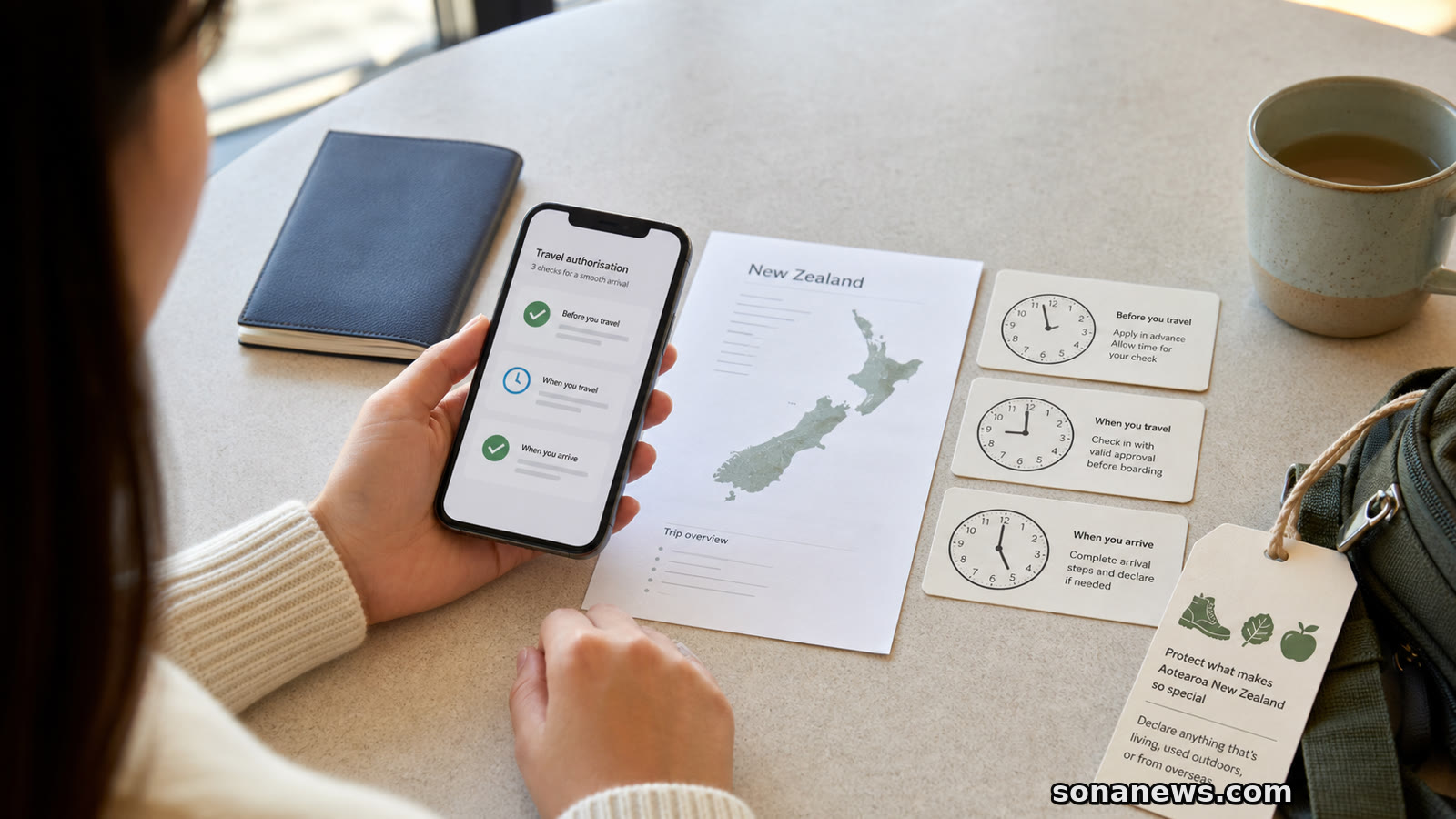

New Zealand has a way of turning travel planning into a calendar exercise. The country is not unusual in asking visitors to check passports, visas and arrival declarations. What is easy to miss is that its main pieces of pre-arrival paperwork do not run on the same clock.
There is the travel authority or visa question, which belongs early. There is the visitor levy, which may sit inside the same application but changes the real cost of the trip. Then there is the New Zealand Traveller Declaration, a separate arrival form that opens close to departure and reaches into customs and biosecurity, not just immigration.
The first fork is the document check. New Zealand’s government guidance says holiday visitors may need either a visitor visa or a New Zealand Electronic Travel Authority, known as an NZeTA. Australian citizens travelling on an Australian passport do not need an NZeTA, while travellers from visa-waiver countries may still need one. The official advice is to use Immigration New Zealand’s checker because the answer depends on citizenship and situation.
The NZeTA is not a universal shortcut. Immigration New Zealand describes it as a way for eligible travellers to travel to New Zealand without applying for a visa before departure, depending on passport, travel method and whether the person is visiting or transiting. The page says most travellers either need an NZeTA or a visa. It also says eligibility can vary for air passengers, cruise passengers, cargo-ship passengers, Australian permanent residents and transit passengers through Auckland.
Timing matters. Immigration New Zealand tells travellers to allow up to 72 hours for NZeTA processing. The NZeTA page lists a cost from NZD $17 and says it is valid for two years for most travellers, or five years for airline and cruise crew members. It can allow multiple visits while valid, but the visit length and conditions depend on the official category. That makes the NZeTA a pre-booking check for some people and a pre-departure check for others, but it is not the sort of form to discover at an airport desk.
The second clock is the International Visitor Conservation and Tourism Levy, or IVL. Immigration New Zealand says many tourists, working holidaymakers and some students and workers must pay an IVL of NZD $100. It is paid when requesting an NZeTA or applying for a visa that includes the levy, and Immigration New Zealand says it is not refunded even if an application is declined.
This is where the budget line can surprise people. The levy is not simply an airport tax collected at a gate. MBIE, New Zealand’s Ministry of Business, Innovation and Employment, describes the IVL as a NZD $100 charge for most eligible international visitors, used to support tourism and conservation systems. Its reporting is tied to annual performance periods from 1 July to 30 June, which is a reminder that the levy is part of the country’s visitor-management model, not a temporary nuisance fee.
There are exemptions, and they are not best guessed. Immigration New Zealand says people travelling on New Zealand or Australian passports do not pay the IVL, and nor do some other groups, including many Pacific Island passport holders, Auckland transit passengers, New Zealand resident visa holders, Australian Resident Visa holders, Business Visitor Visa holders and APEC business travel card holders. The safer reading is that the fee follows the traveller’s document and purpose, not the mood of the booking page.
The third clock opens late. The New Zealand Traveller Declaration, or NZTD, is free and separate from the NZeTA or visa process. The official NZTD site says everyone travelling into New Zealand completes a declaration, including New Zealand passport holders, visa holders, NZeTA holders, babies and children. A separate declaration is needed for each traveller.
For air arrivals, the declaration can be submitted no earlier than 24 hours before the start of the trip to New Zealand, and it needs to be submitted by the time the traveller reaches passport control. For sea arrivals, the earliest point is 24 hours before the vessel leaves its last foreign port before New Zealand, with a deadline by the time the vessel has berthed at its first New Zealand port.
The form is not just a digital landing card. The NZTD guidance says it asks for passport details, contact details in New Zealand, travel details, travel history from the last 30 days, visa or NZeTA status if needed, and information about what is being brought into the country. The declaration is linked to the passport and checked at an eGate or by a border officer.
That last part is practical because New Zealand’s border rules are also biosecurity rules. The NZTD site says some items cannot be brought in, and if in doubt, declare the item for inspection. Its completing-your-declaration page describes the declaration as a legal document and lists examples such as some foods, used outdoor equipment, animal products, plant products, medicines, tobacco, alcohol and cash of NZD $10,000 or more.
Put together, the service point is simple: New Zealand’s paperwork is a sequence, not a single task. The NZeTA or visa question belongs early enough to absorb processing time. The IVL belongs in the trip cost before the fare comparison looks finished. The NZTD belongs close to departure, when flight details, first address and baggage contents are no longer abstract.
That is not glamorous travel advice, but it is the kind that prevents avoidable friction. For New Zealand, the calendar now matters almost as much as the checklist.
Editorial note. This article is general travel information based on official New Zealand sources available at publication time. It is not personalised legal, immigration or safety advice. Entry requirements, fees and declaration rules can change and can depend on passport, route, purpose of travel and personal circumstances, so travellers should verify their own position through official New Zealand government tools and guidance before booking or travelling.
Sources
- Source: "New Zealand Electronic Travel Authority (NZeTA)", Immigration New Zealand, Extracted 2026-06-22. Verified: NZeTA purpose, eligibility depends on passport and travel method, validity, visit length, transit through Auckland, cost from NZD $17 and advice to allow up to 72 hours
- Source: "Paying the International Visitor Levy", Immigration New Zealand, Extracted 2026-06-22. Verified: IVL amount of NZD $100, who commonly pays, exemptions, payment timing with a visa or NZeTA request, and non-refundability
- Source: "International Visitor Conservation and Tourism Levy", Ministry of Business, Innovation and Employment, Extracted 2026-06-22. Verified: IVL applies to most eligible international visitors, supports tourism and conservation systems, and performance reporting runs annually from 1 July to 30 June
- Source: "New Zealand Traveller Declaration", New Zealand Traveller Declaration, Extracted 2026-06-22. Verified: NZTD is free, separate from visa or NZeTA status, required for everyone entering New Zealand, linked to passport, and checked at an eGate or by a border officer
- Source: "Completing your declaration", New Zealand Traveller Declaration, Extracted 2026-06-22. Verified: information required for the NZTD, 24-hour submission windows for air and sea arrivals, each traveller needs a declaration, and declaration/biosecurity penalty context
- Source: "Check if you need an NZeTA or a visitor visa", New Zealand Government, Extracted 2026-06-22. Verified: holiday visitors may need an NZeTA or visitor visa, Australian citizens travelling on Australian passports do not need an NZeTA, visa-waiver travellers may still need one, and the official checker is the right source for individual situations
Help us improve
Was this article useful?
One anonymous tap helps Sona improve future reporting, headlines and source context.
Up next
A new official warning says ham sandwiches, pork dumplings and inflight leftovers should be discarded or declared before customs.
Continue readingMore in Travel