The Philippines eTravel QR code starts before boarding
The official system is free, time-limited and built around a 72-hour registration window that belongs in the flight checklist, not the arrival queue.

A travel form can sound like the least interesting part of a Philippines trip. It is also the sort of small border task that becomes irritating when it is discovered too late, especially at an airport desk with a queue behind the traveller. The Philippines eTravel system is a reminder that some of the trip now happens before the boarding gate.
The official eTravel FAQ describes the system as a digital single data collection platform for passengers arriving in and departing from the Philippines, used for border control, health surveillance and economic data analysis. That is a broader role than a simple landing card. It also explains why the timing is not left until the last minute after touchdown.
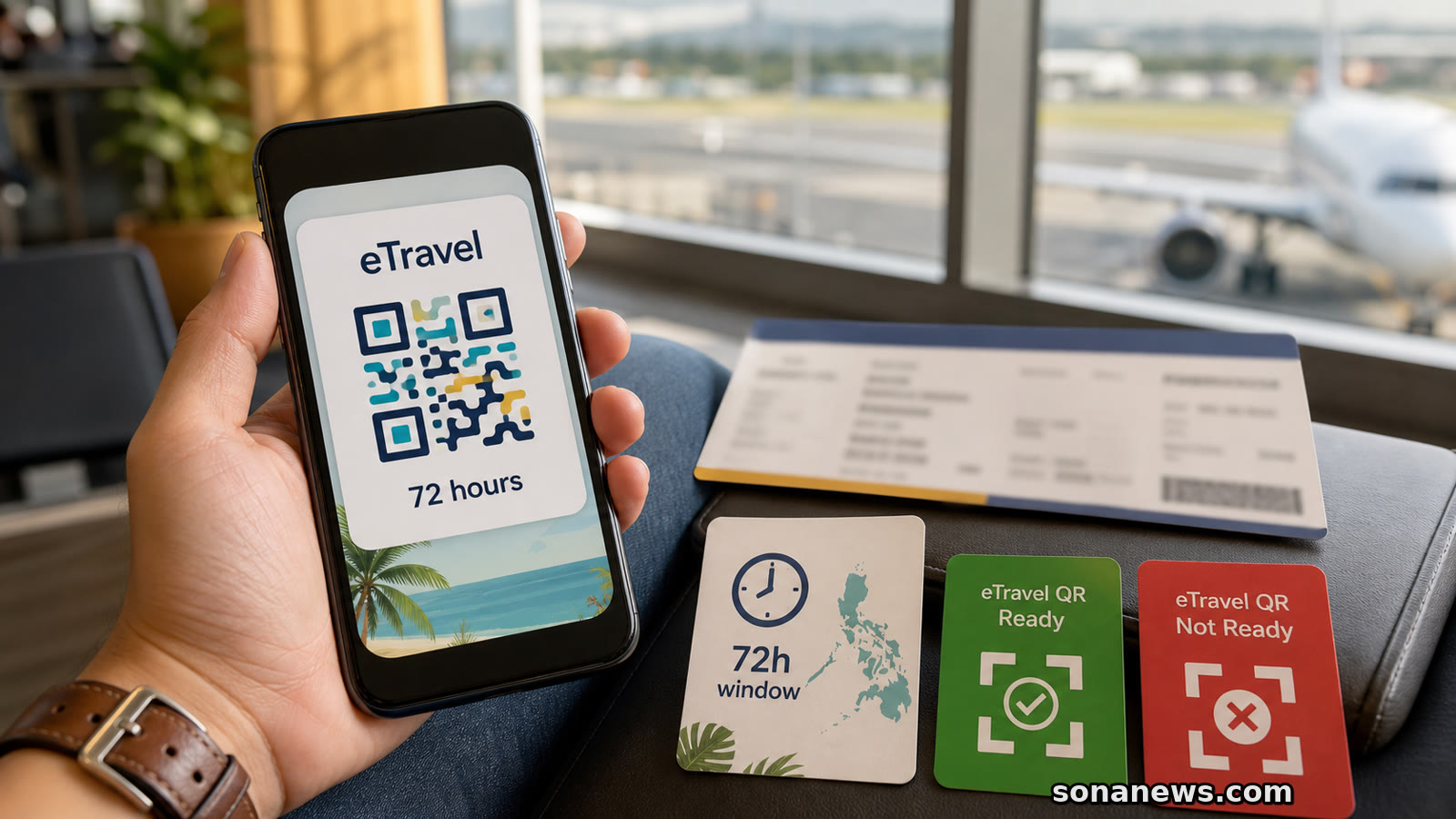
The key window is narrow. The official FAQ says registration is available within 72 hours, or three days, before arrival into or departure from the Philippines. It also says travellers are encouraged to present proof of eTravel registration before boarding. The customs eTravel portal gives the same practical warning in plainer airport language: registration is limited to 72 hours before arrival or departure, and travellers are enjoined to present the eTravel QR code to flight boarding.
That phrasing changes the useful checklist. Passport, ticket and hotel details are still the obvious pieces of travel admin, but the QR code now belongs with them. If the form is free, web-based and time-limited, the awkward failure point is not a price. It is remembering that the official window has opened and saving the QR code before the airport becomes busy.
The official site is blunt on scams. Its FAQ says https://etravel.gov.ph is the only official website of eTravel. It says eTravel is free and that registration or updates do not collect or require any online payment. It also warns travellers to beware of fake or fraudulent websites and entities that ask for payment. For a traveller searching in a hurry, that may be the most useful fact on the page.
The required groups are not hidden in vague marketing copy. The FAQ lists arriving Filipino and foreign crewmembers, arriving Filipino and foreign passengers, and departing Filipino passengers as required to register or update eTravel, with exemptions listed for foreign diplomats and dependants, foreign dignitaries and delegations, 9(e) visa holders, and holders of diplomatic and official or service passports. That is not a basis for personalised eligibility advice, but it does show why a casual assumption that the form is only for one nationality can be wrong.
The QR code is also not merely a souvenir from a completed web form. The FAQ tells users to screenshot, download or print the QR code before closing the site or app, and says it will be shown to an airline representative before boarding. It also explains the green and red QR code split. A green QR code means the submission is proper and complete, allowing the traveller to proceed directly to immigration inspection on arrival. A red QR code means further Bureau of Quarantine inspection before immigration formalities.
That health-surveillance language can make the system sound more dramatic than the ordinary travel reality. The better reading is more prosaic: eTravel combines border and health declaration data in one official flow. The article is not medical guidance, and a QR colour is not a personal health assessment from a news site. It is a signal inside the Philippine authorities' travel process, based on data submitted to the official system.
For airlines, the boarding-stage emphasis is the point. If proof can be checked before departure, the traveller's risk is discovering the missing registration before the flight rather than at immigration. For families or groups, the same logic applies with more friction. A single adult may recover quickly from a forgotten form. Several passengers, different passports and a short connection can make the 72-hour window feel much smaller than it looks on a website.
The official pages also make a quiet app point. The FAQ says eTravel is web-based and mobile-responsive, with access through an internet browser on a phone, tablet, laptop or desktop, and that an app download is not required. The home page also promotes the eGovPH app, but the central travel lesson remains that the official web route exists and is free.
None of this makes the Philippines unusually difficult to enter. It makes the admin more front-loaded. The eTravel QR code is now part of the same pre-flight rhythm as checking the passport, confirming the flight and knowing where the first night is. The trip may begin with beaches, family visits or work. The paperwork begins inside the 72-hour clock.
Editorial note. This article is general travel-planning information based on official Philippine eTravel sources available at publication time. It is not personalised legal, immigration, visa, airline, health, quarantine or safety advice. Entry rules, exemptions, platform wording, boarding checks and health-declaration processes can change, so travellers need to verify their own journey through official Philippine government and airline sources before relying on a form submission.
Sources
- Source: "Philippine Travel Information System", eTravel official home page, Extracted 2026-07-02. Verified: the public eTravel home page brands the service as the Philippine Travel Information System, says eTravel is free, links to its FAQ and presents the service as a government travel flow
- Source: "Frequently Asked Questions", Philippine Travel Information System, Extracted 2026-07-02. Verified: eTravel is described as a digital single data collection platform for arriving and departing passengers, used for border control, health surveillance and economic data analysis; the page states that https://etravel.gov.ph is the only official website, registration or updates are free, the registration window is 72 hours or three days before arrival or departure, and QR proof is shown before boarding
- Source: "eTravel - Philippine One-Stop Electronic Travel Declaration System", customs eTravel home page, Extracted 2026-07-02. Verified: the official customs portal announcement says travellers may only register within 72 hours before arrival or departure in the Philippines and are enjoined to present the eTravel QR code to flight boarding
- Source: "Frequently Asked Questions", customs eTravel, Extracted 2026-07-02. Verified: the customs FAQ repeats the 72-hour window, says eTravel registration is free of charge, identifies https://etravel.gov.ph as the official registration website for inbound international travellers, and explains QR code presentation and green or red QR code processing
Help us improve
Was this article useful?
One anonymous tap helps Sona improve future reporting, headlines and source context.
Up next
A new official warning says ham sandwiches, pork dumplings and inflight leftovers should be discarded or declared before customs.
Continue readingMore in Travel