Thailand's arrival card now starts before landing
The TDAC is not a visa, but for non-Thai travellers it has become a three-day arrival document check that can trip up families, transit passengers and last-minute bookers.
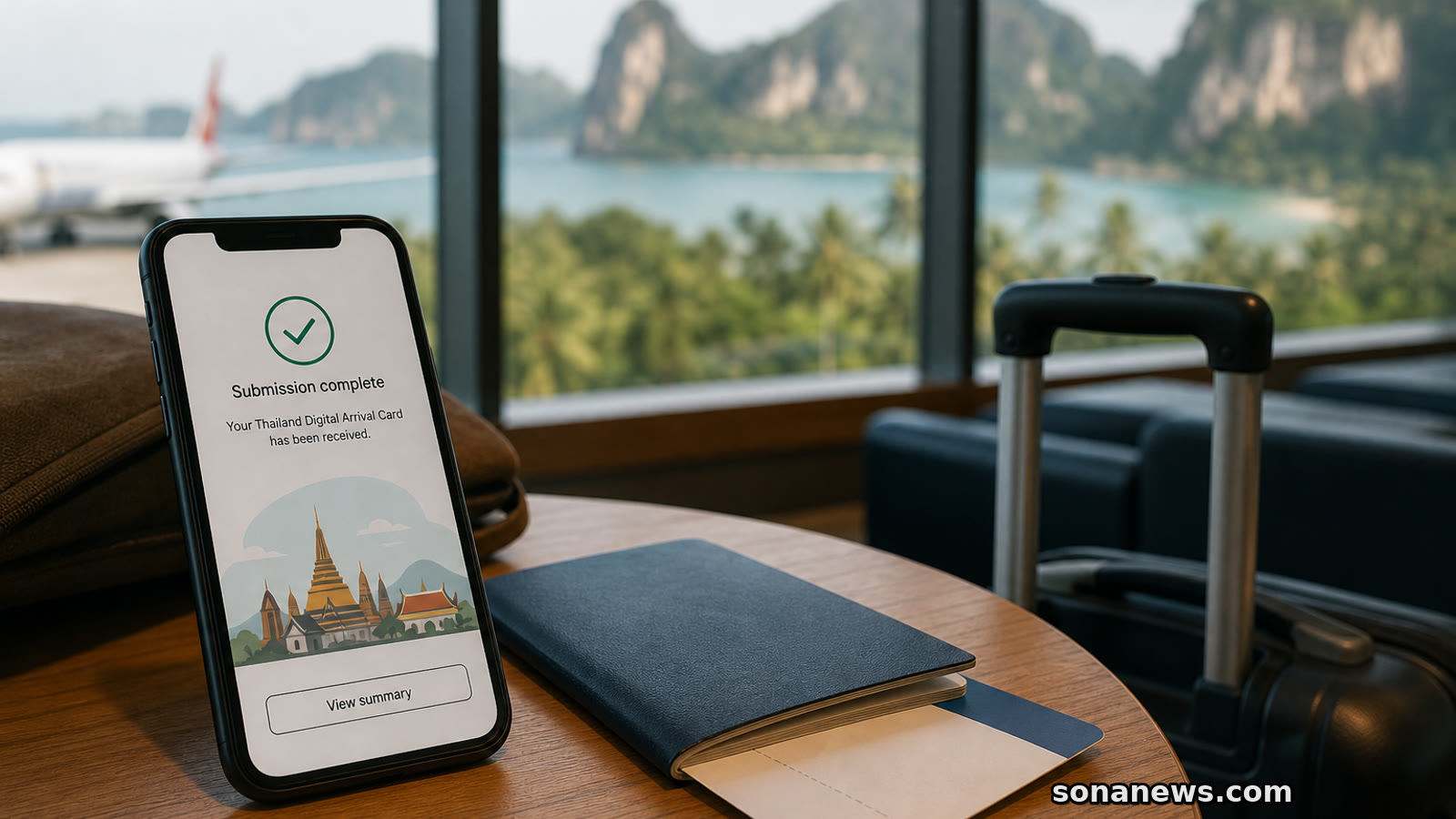

For a long time, the arrival card was the small paper chore at the end of a flight. You borrowed a pen, copied the hotel address from a booking email, and hoped the cabin light was good enough. Thailand has moved that chore upstream.
The Thailand Digital Arrival Card, or TDAC, is now the online form for non-Thai nationals entering the country. The Immigration Bureau's own guide describes it as a replacement for the paper arrival card, covering entry by air, land or sea. The form is not a visa. It is the administrative layer before the immigration desk, and that distinction matters because it can sit beside visa-free travel, visa on arrival or a longer permission route without replacing any of them.
The timing is the first practical catch. Official guidance says foreign travellers submit TDAC information within the three days before arrival in Thailand, including the arrival date. That makes it a poor fit for the old habit of treating the arrival card as something to handle after the seat-belt sign goes off. Submit too early and the window may not be open. Leave it until a queue forms at arrivals and the form has become everyone else's delay too.
The form asks for the sort of details people often scatter across three apps: passport information, personal details, travel information, accommodation in Thailand, a health declaration and an email address. The email matters because the confirmation and QR code are sent there. The FAQ says printing is not required, but the traveller may show the downloaded document or email QR code on a phone or other device. That is a small mercy, not a reason to gamble on a flat battery.
Families and groups need to treat it as individual paperwork. The official FAQ says TDAC applies to infants and children as well as adult foreign passport holders. It also says group submissions can include up to 10 entries, which helps with a household or small tour party, but does not turn the form into one shared permission. Each traveller's passport and arrival details still need to make sense.
The edge cases are where mistakes are most likely. The U.S. Embassy notice and Thai consular guidance both point to exemptions for travellers transiting or transferring through Thailand without passing through immigration control. The Hong Kong consulate page also lists Border Pass users as outside the normal TDAC requirement. That means a Thailand connection is not one simple category. A passenger who stays airside is in a different position from someone who collects bags, changes airport, exits for a night in Bangkok or enters over a land border.
There is also the question of corrections. The Immigration Bureau guide says information can be updated before travel, but some core identity fields cannot simply be edited after submission. The FAQ says the latest valid submission is what the system uses if more than one exists. In ordinary language: a typo in a hotel address is not the same problem as a wrong passport identity field. This is exactly the kind of admin that feels small until it is sitting between a traveller and the immigration desk.
Thailand has added some arrival-side support, but the official tone is not to rely on it as the default plan. The consulate guidance says travellers who cannot complete TDAC before arrival and have no internet at the point of entry may receive help at designated immigration help points, while describing that as an exceptional route. The FAQ says kiosks and Wi-Fi will be provided at Suvarnabhumi, Don Mueang, Phuket, Chiang Mai and Hat Yai airports. That is useful for genuine problems. It is not the same as saying the landing hall is the best place to start.
The official portal's title also carries a blunt warning: no fees required. That matters because digital border forms tend to attract paid middlemen and lookalike services. Some travellers may still choose help from an agent, especially in a group or assisted-travel context, but the official submission route is the Immigration Bureau site. For ordinary travellers, the first check is whether the page being used is actually the government TDAC portal.
None of this makes Thailand unusual. It puts Thailand in the same direction as many destinations: more border administration happens before departure, on a phone or laptop, and the airport becomes the place where earlier admin is checked rather than first discovered. The old arrival card was easy to forget because it lived in the seat pocket. The digital version belongs closer to the booking reference, the passport expiry date and the first-night address.
The sensible mental model is boring but useful. TDAC is not the whole Thailand entry question. It is one pre-arrival form, tied to the facts of one trip, with timing rules and exceptions that can change. Travellers still need to read the official pages for their route, passport and purpose of travel. The difference now is that the question starts before landing.
Editorial note. This article is general travel-planning information based on official pages available at publication time. It is not immigration or legal advice. Requirements can change by nationality, passport, route, transit status and purpose of travel, so travellers should use the current Thai Immigration Bureau TDAC portal or qualified advice for their own situation.
Sources
- Source: "Thailand Digital Arrival Card manual", Extracted 2026-06-11. Verified: TDAC replaces the paper arrival card, applies to non-Thai nationals entering by land, air or sea, is submitted before entry, requires passport, travel, accommodation and health declaration information, allows group submissions up to 10 entries, and is not a visa
- Source: "TDAC FAQ", Extracted 2026-06-11. Verified: TDAC timing within three days before arrival including arrival date, one-time trip use, inclusion of infants and children, transit and technical-flight exceptions, email and QR proof, phone display option, update rules and airport kiosk support
- Source: "Thailand Digital Arrival Card (TDAC)", Extracted 2026-06-11. Verified: 1 May 2025 launch, all non-Thai nationals entering by air, land or sea, up to three-day submission window, official Immigration Bureau portal, required information categories, Border Pass and airside-transit exceptions, and exceptional help-point language
- Source: "Notice: Thailand Digital Arrival Card System Launching 1 May 2025", Extracted 2026-06-11. Verified: foreign nationals entering Thailand by air, land or sea must complete TDAC electronically before arrival, with exceptions for transit without immigration control and Border Pass entry
- Source: "Official Thailand Digital Arrival Card (TDAC) - No Fees Required", Extracted 2026-06-11 through search result and attempted page extraction. Verified: official portal URL and public no-fee wording in the page title; page body was not extractable by the scraper during this run
Help us improve
Was this article useful?
One anonymous tap helps Sona improve future reporting, headlines and source context.
Up next

A new official warning says ham sandwiches, pork dumplings and inflight leftovers should be discarded or declared before customs.
Continue readingMore in Travel