The U.S. Mobile Passport app has reached the land border, but only on foot
Mobile Passport Control now covers eligible pedestrians at four Washington crossings. Its eight-hour submission window does not replace a passport, ESTA, I-94 or officer inspection.
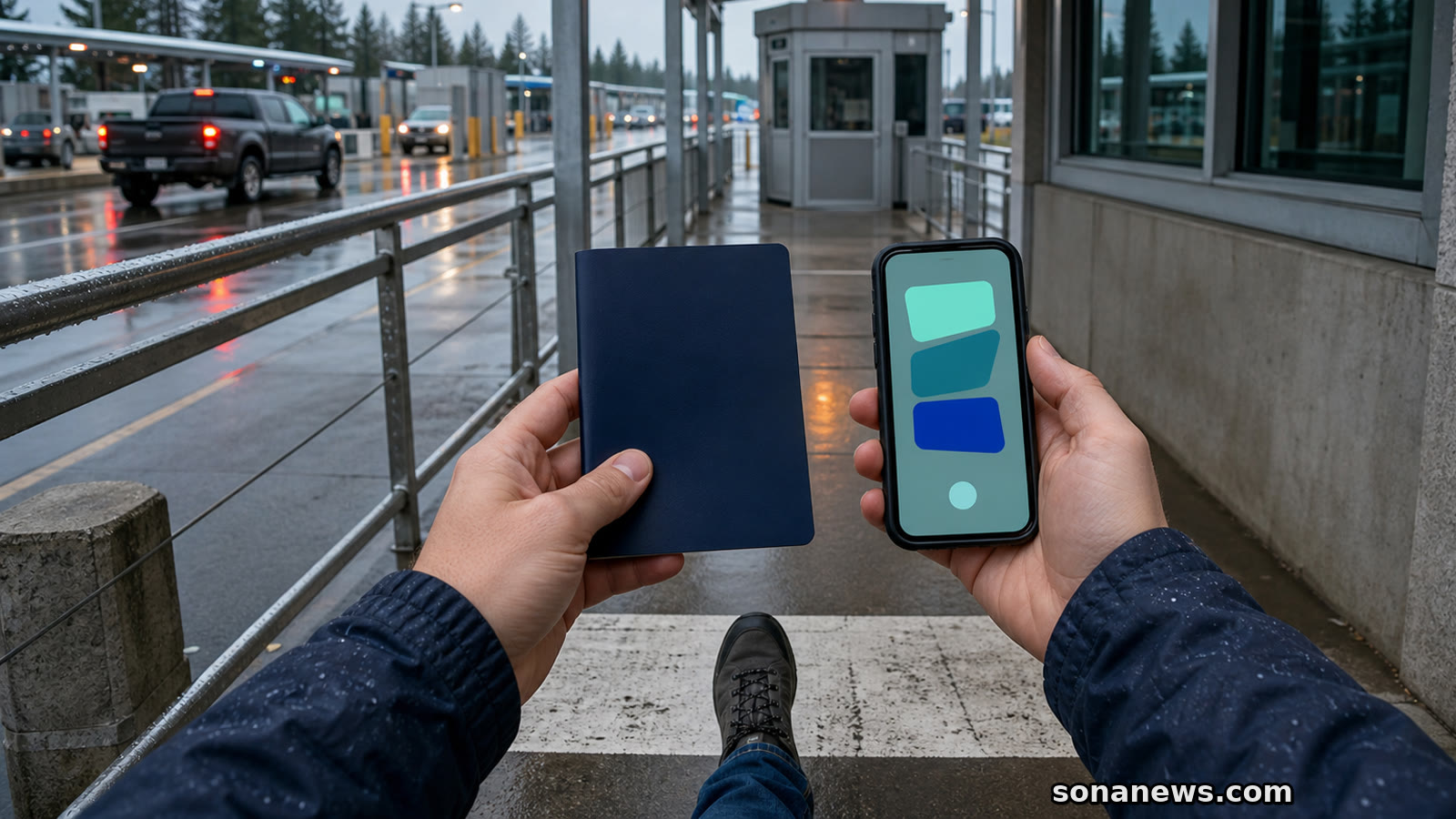

Mobile Passport Control has moved beyond airport arrivals. Since 20 April 2026, eligible pedestrians have been able to use the free U.S. Customs and Border Protection app at a small group of land-border crossings in Washington State.
The important words are “pedestrians” and “small group”. CBP's current list contains four U.S. ports on the Canadian border: Blaine Peace Arch, Blaine Pacific Highway, Lynden Kenneth G Ward and Sumas. It does not describe a nationwide land-border service, and it does not extend the option to people arriving through the vehicle lanes beside those walkways.
CBP says more land ports are due to join during 2026. Until they appear on the agency's live location list, however, the rollout is a route check rather than a general promise. A familiar app icon is of little use at a crossing that has not enabled the process.
The land version also runs on a different clock from the airport version. Before the pedestrian crossing, a traveller checks that the port supports MPC, downloads the app and scans a passport to create a profile. Up to eight hours before arriving at the land port, the user takes a self-photo and answers the arrival and customs declaration questions. Air submissions are active for four hours. Land submissions are active for eight.
That submission is preparation, not entry. At the U.S. inspection area, CBP tells MPC users to take out the physical passport, look for the designated line and complete the inspection with an officer. The app does not replace required travel documents, and it does not make the decision on admission.
The eligibility list is specific. CBP currently names U.S. citizens, U.S. lawful permanent residents, Canadian citizen visitors travelling in B1/B2 classification, and returning Visa Waiver Program travellers with an approved ESTA. That is a description of the agency's published categories, not a way to decide an individual's status or admissibility. Nationality, route, purpose and immigration history can make the wider document question more complicated than app access.
The group feature is practical but bounded. One device can hold a submission for up to 12 people, allowing a family or group to speak to the officer together. Each person still needs the documents that apply to them, and everyone remains part of the inspection. A group submission is not one group permission.
MPC is also different from Global Entry. It requires no enrolment application, background check or fingerprint collection for enrolment. Global Entry is a vetted Trusted Traveller Program. MPC is a free way to send passport details, a self-photo and declaration answers before reaching an officer. CBP's own comparison still says an MPC user must speak to an officer.
The distinction from ESTA matters just as much. An approved ESTA is the travel authorisation required for an eligible Visa Waiver Program journey, while MPC is an optional processing tool at selected ports. CBP explicitly says MPC does not replace ESTA or another required document. Nor does an ESTA decide admissibility by itself. The officer makes that decision at arrival.
Form I-94 adds another layer at the land border. The MPC page lists an ability to apply and pay for a provisional I-94 at participating land crossings. CBP's dedicated I-94 guidance, updated on 22 July, directs travellers who require the record to the CBP Link app or the official I-94 website before arrival. The safest editorial conclusion is not to merge the two processes. A completed MPC submission should not be treated as proof that every separate arrival record or authorisation is complete.
There is a modest convenience claim behind the rollout. MPC moves repeated data entry and declaration answers away from the officer's desk, and CBP lists shorter customs waits as a benefit. It does not publish a guaranteed time saving for these four land ports. Traffic, the number of open booths, further questions and the need for additional processing can still determine the total crossing time.
The app also collects meaningful information. The user scans a passport, takes a self-photo and answers declaration questions. CBP says those details are submitted directly to the agency through encrypted protocols. That statement explains the transmission method, not every privacy or retention question a traveller may have. It is another reason to use the official CBP app and current government pages rather than a lookalike travel service.
The locations themselves deserve one final check. CBP's Blaine port page groups Peace Arch and Pacific Highway under the same area port, while its Sumas page also lists Lynden. Those administrative groupings can make a search result look broader than the MPC rollout. The controlling list for this feature is the MPC page, which names the four enabled pedestrian crossings individually.
Mobile Passport Control has crossed the airport boundary, but it has not turned the land border into a phone tap. For now, it is an eight-hour digital head start on four Washington foot routes. The physical passport, the correct authorisation and record, the enabled walkway and the conversation with a CBP officer still carry the journey across.
Editorial note. This article is general travel, customs and immigration-process information based on U.S. government pages available at publication time. It is not personalised legal, customs, immigration, privacy or travel advice. Eligibility, required documents, declarations, arrival records and admission can depend on nationality, status, route, purpose and individual circumstances. Travellers should verify current requirements and enabled crossings through official U.S. Customs and Border Protection pages before travel.
Sources
- U.S. Customs and Border Protection, "Mobile Passport Control (MPC)", Extracted 2026-07-23. Verified: 20 April land deployment; pedestrian limitation; four current Washington crossings; 2026 expansion language; eight-hour land and four-hour air submission windows; passport scan, self-photo, declaration, group-of-12 and officer sequence; eligibility categories; MPC versus Global Entry; encryption statement; and the warning that MPC does not replace required documents
- U.S. Customs and Border Protection, "Arrival/Departure Forms: I-94", Extracted 2026-07-23. Verified: electronic I-94 process at land borders; current direction to the CBP Link app or official I-94 website; advance I-94 language for Visa Waiver Program travellers; and 22 July 2026 page update
- U.S. Customs and Border Protection, "Visa Waiver Program", Extracted 2026-07-23. Verified: ESTA's role as a travel-authorisation eligibility system, the distinction between authorisation and admissibility, officer decision at arrival, and advice to apply during travel planning
- U.S. Customs and Border Protection, "Blaine, Washington - 3004", Extracted 2026-07-23. Verified: Peace Arch and Pacific Highway as distinct facilities under the Blaine area port; current facility names and CBP contact context
- U.S. Customs and Border Protection, "Sumas, Washington - 3009", Extracted 2026-07-23. Verified: Sumas and Lynden as distinct facilities on the CBP port page; current facility names and contact context
Help us improve
Was this article useful?
One anonymous tap helps Sona improve future reporting, headlines and source context.
Up next

A new official warning says ham sandwiches, pork dumplings and inflight leftovers should be discarded or declared before customs.
Continue readingMore in Travel