Venice’s access fee turns the day trip into a calendar check
For 2026, Venice has named 60 dates when day visitors to the historic centre face a €5 or €10 access fee, making timing and the official portal part of trip planning.
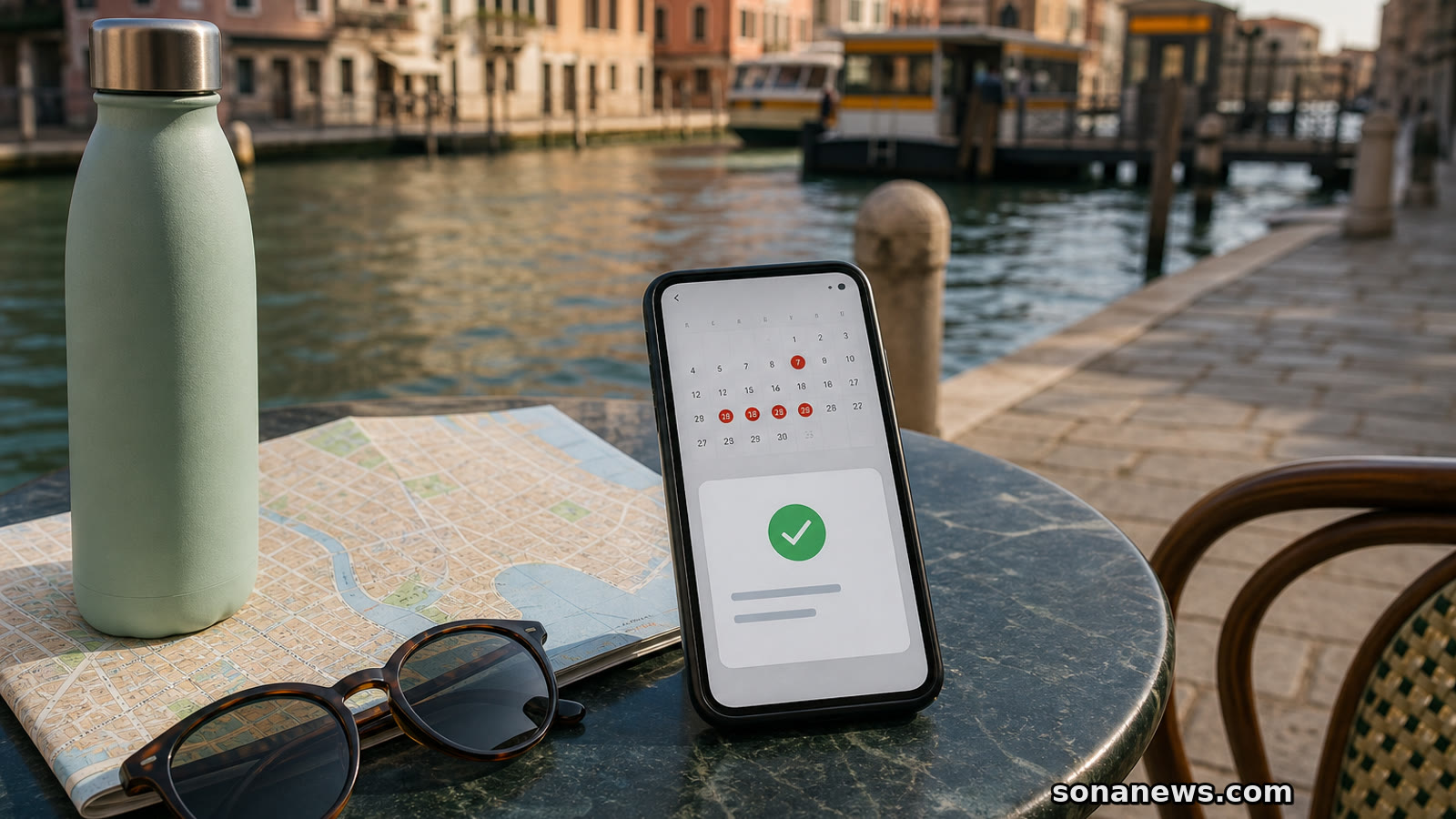

Venice has made the day trip a little less spontaneous. Not impossible, not forbidden, and not quite the blunt tourist tax that headlines often suggest. But for 2026, a visitor who treats a quick turn around the historic centre as a last-minute add-on may find that the first stop is no longer the vaporetto platform. It is the calendar.
The official Venice Access Fee portal says the 2026 fee starts on 3 April and applies only on the dates marked in red on the city’s calendar. The window is also limited: 08:30 to 16:00. On white days, the portal says the access contribution does not apply and no payment or exemption action is required. That distinction matters because the rule is not a daily wall around Venice. It is a congestion-pricing experiment aimed at particular high-pressure days.
The city’s Italian information page gives the full shape of the experiment: 60 non-consecutive days between 3 April and 26 July 2026. April includes the Easter weekend and later long stretches around the spring holiday period. May is built around weekends. June begins with a seven-day run and then returns to Friday-to-Sunday clusters. July is all weekends, running through 26 July. In plain travel terms, the fee is concentrated where a casual day trip is most likely to collide with everyone else’s.
The cost is deliberately two-tiered. Venezia Unica, the official access-fee purchasing site, says the daily amount is €5 for those who pay by the fourth-last day before access, and €10 for those who pay after that. Its example is simple: for a Sunday visit, payment by the previous Wednesday is €5; payment from Thursday onwards is €10. There are no reductions on the amount itself.
This is why the fee changes the small decisions around a Venice break. A traveller staying in the city for several nights is not in the same administrative position as someone arriving for the day. A family based on the mainland, a cruise passenger with a few hours ashore, and someone passing through the station area may each have a different route through the rules. The official pages repeatedly push people back to the portal for payment, exclusions and exemptions, rather than asking them to guess from memory.
The scope is narrower than many readers will assume. Venezia Unica says the fee applies to the Ancient City on scheduled dates and times, without prejudice to the exclusions or exemptions provided. It also says the fee is not due for people who only enter certain transport-connected areas, such as Ponte della Libertà, Piazzale Roma, Santa Lucia Station and directly connected areas, without entering the Ancient City. For 2026, the same page says the access fee will not be applied to the minor islands of the Venice lagoon, listing places including Lido di Venezia, Murano, Burano and Torcello.
The city’s own information page sets the rule in more formal language. The access contribution is due from each person over 14 who enters the Ancient City of the Municipality of Venice, unless that person falls into an exclusion or exemption category. It says the contribution is generally required from day visitors. It also says some exempt categories still need to register through the portal, including overnight guests staying in accommodation within the municipal territory, while other categories are excluded under law.
That makes this a poor rule to handle by hearsay. The question is not simply “Is Venice charging entry?” It is: Which date? Which time? Which part of the city? Day trip or overnight stay? Excluded, exempt with registration, or paying visitor? Those are administrative questions, not a moral judgement on the trip.
There is a consumer-protection point as well. The official entry point is the Venice Access Fee portal at cda.ve.it, with purchasing routed through Venezia Unica. Whenever a city rule becomes a travel chore, lookalike pages and unnecessary service layers tend to appear. The official pages are the safest baseline for the current calendar, the payment document and exemption procedure.
For Venice, the fee is also a signal. The municipality’s 2026 portal announcement describes the measure as experimental and says it is intended to encourage advance booking and improve the management of tourist flows, while allowing further evaluation before any permanent regime. In other words, the €5 or €10 is not just a charge. It is a nudge toward spreading demand, or at least making demand more visible before it lands in the same narrow streets.
The practical lesson is modest. Venice in 2026 is still a city to visit, not a puzzle to fear. But the casual day trip now has a small piece of official admin attached on selected dates. The people least likely to be surprised will be the ones who check the red days before they book the train.
Sources
- Source: "Pay the Venice Access Fee", official Comune di Venezia portal, Extracted 2026-06-13. Verified: 2026 start date of 3 April, application hours of 08:30 to 16:00, red-day calendar framing, white-day no-action language, payment and exemption portal links
- Source: "What is the Venice Access Fee", Venezia Unica official purchasing site, Extracted 2026-06-13. Verified: Ancient City scope, transport-area exclusions, minor-island exclusion for 2026, €5 and €10 payment tiers, fourth-last-day example, and the need to carry the access code
- Source: "Contributo di Accesso", Comune di Venezia, Extracted 2026-06-13. Verified: Council regulation update, 60 non-consecutive 2026 days from 3 April to 26 July, who generally pays, over-14 language, excluded and exempt categories, and portal-based registration for some exemptions
- Source: "Venezia: aperto il portale per il Contributo di accesso 2026", Live Comune di Venezia, Extracted 2026-06-13. Verified: portal opening date, experimental framing, 60-day programme, 08:30 to 16:00 window, non-application to minor islands, and stated aim of encouraging advance booking and managing tourist flows
- Source: "Contributo di accesso 2026: gli importi e le date", Live Comune di Venezia, Extracted 2026-06-13. Verified: two-tier fee approval, €5 and €10 amounts, dates by month, incentive for advance booking, and continued exclusion of minor islands
Help us improve
Was this article useful?
One anonymous tap helps Sona improve future reporting, headlines and source context.
Up next

A new official warning says ham sandwiches, pork dumplings and inflight leftovers should be discarded or declared before customs.
Continue readingMore in Travel