Why a dishwasher's eco cycle can take longer but use less energy
The countdown is not an energy meter. Eco programmes trade time for different washing conditions, and EU and UK labels describe that cycle, not every button on the machine.
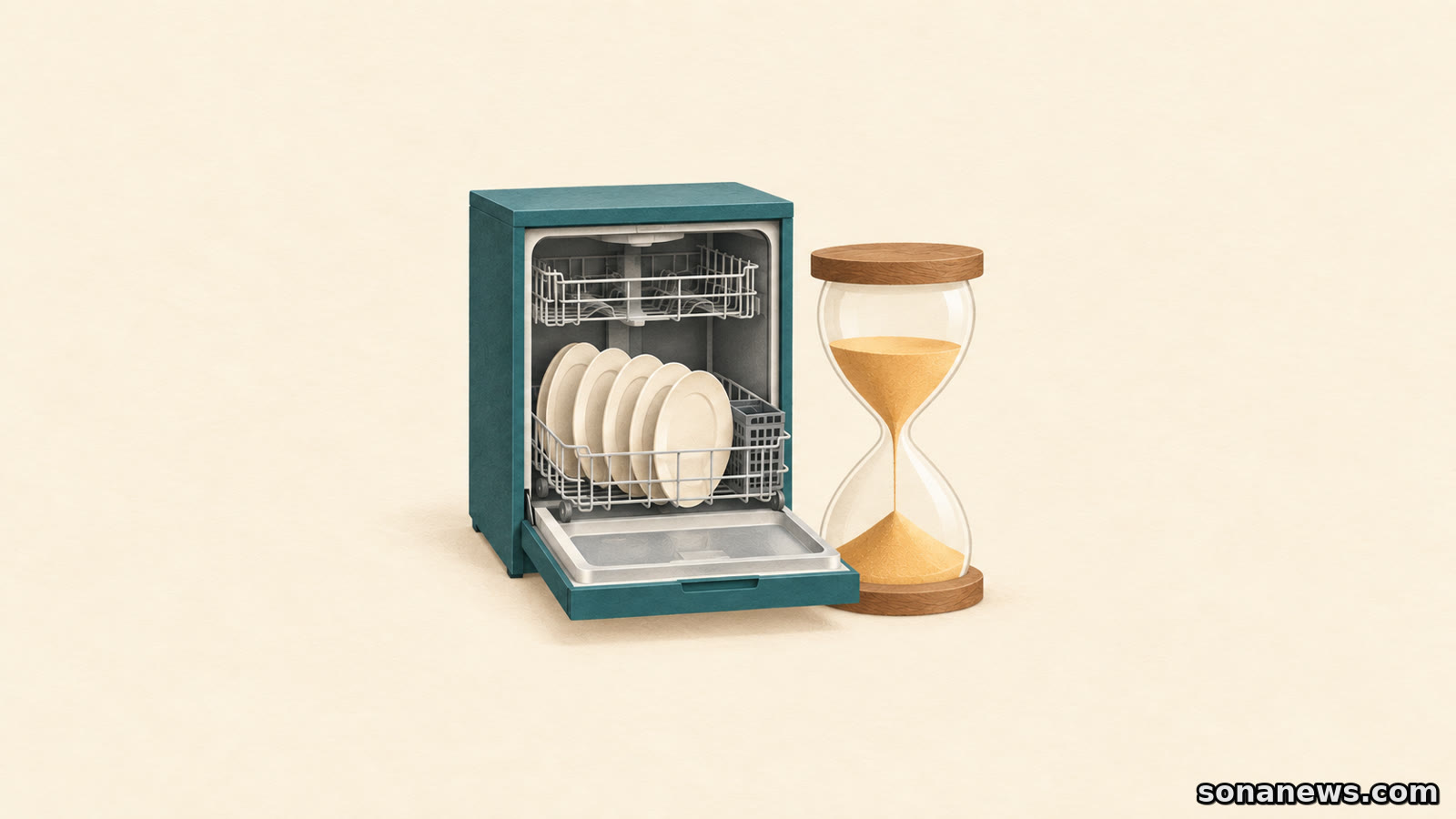

Choose the eco programme on a dishwasher and the estimated finishing time can move further away. It is an odd first impression for a setting intended to save resources: the machine appears to be asking for more of something, not less.
The distinction is between elapsed time and energy consumed. A longer programme does not necessarily use more electricity. Eco programmes can wash at lower temperatures and take longer, rather than doing the same wash for extra hours. The label on the appliance offers a useful check, provided it is read as information about a particular programme, not a promise covering every wash.
This is established appliance guidance, not a new rule or a recently discovered shortcut. The practical question is whether the longer cycle suits the load and when the dishes are needed. A short countdown alone cannot answer how much energy that wash will use.
The UK consumer organisation Which? explains that an eco programme uses less water and washes at lower temperatures, but takes longer than the main programme. Bosch's UK support guidance makes a more qualified comparison: its eco mode is designed to use less energy and water than certain other programmes, with a longer duration and adjusted washing conditions.
Those qualifications matter. There is no single eco temperature, duration or saving that can be assigned to every dishwasher from those descriptions. Nor do they establish that eco beats every possible sensor-controlled or special cycle for every load. The manual's programme table is the relevant comparison for a particular machine.
Heating water is part of the energy demand. By changing the washing conditions, an eco programme can take longer without using the electricity that would be needed for a hotter wash. The relevant figure is the energy used across the whole cycle, not simply how long the machine is on.
On the EU dishwasher label, the familiar A-to-G rating sits alongside several different measurements. The European Commission lists energy consumption per 100 cycles, water consumption per cycle, eco-programme duration, capacity and noise. It explicitly says that the label's details are based on the eco programme.
The UK's Energy Saving Trust describes the same essential distinction in its dishwasher-label guidance: the electricity figure is for 100 eco cycles, with the eco setting's water consumption and duration also shown. Readers elsewhere need the label and product information used in their own market, rather than assuming every country presents the figures this way.
There are two easy comparisons to get wrong. The energy and water figures do not use the same denominator: one covers 100 cycles, the other one cycle. And the time printed on that label does not describe every programme on the control panel.
For someone comparing appliances, the useful question is therefore not just which letter looks better. It is how much electricity and water comparable machines use on the stated programme, what load they hold and how long that programme takes. In the EU, the label's QR code leads to model information in EPREL, the European Product Registry for Energy Labelling. That is a route to the actual product record, rather than an estimate borrowed from a different dishwasher.
Speed can be a legitimate priority. Which? describes fast programmes as intended for lightly soiled dishes when time is short. It describes intensive programmes separately, for heavily soiled items, with higher resource use. These are different tasks, not simply faster and slower versions of an identical result.
Bosch likewise tells owners to choose according to load size and how dirty the dishes are. It notes that, depending on the model, automatic and special programmes can adjust their settings to the load. That is a reason to read the programme descriptions, not to turn the eco button into a universal instruction.
A useful household comparison begins with the same job: a similar load, a programme suitable for those items and an acceptable cleaning result. A brief cycle that is unsuitable for the dishes is not an equivalent alternative just because it ends sooner. Equally, the eco setting is not evidence that every item can go into the dishwasher or that every hygiene requirement has been met.
The European Commission's consumer guidance pairs the eco programme with a full, but not overloaded, dishwasher. It also advises against pre-rinsing, and points to the correct detergent quantity and adequate maintenance. Which? distinguishes scraping off large pieces of food from rinsing plates before a wash. Neither amounts to packing food debris into the machine.
Capacity is useful only when items are loaded according to the supplier's instructions. The Commission defines rated capacity in terms of place settings and serving pieces that can be cleaned, rinsed and dried when loaded that way. It is not permission to fit in as much crockery as physically possible.
Maintenance is a separate task from choosing an economical everyday wash. Bosch recommends a hot or Machine Care programme regularly for its appliances to help prevent residue build-up. Which? says maintenance cycles and the use of cleaner depend on the model. The appropriate schedule and products belong in the appliance instructions, not in a one-size-fits-all cleaning recipe.
For a dishwasher already in the kitchen, the most useful information may therefore be in the programme table rather than a replacement-appliance advert. Compare the stated consumption, check which load the cycle is designed for, and treat duration as a scheduling question. A long countdown can be inconvenient. On its own, it is not evidence of wasted energy.
Editorial note. This article provides general household-appliance information, not personal electrical, repair, hygiene or medical advice. Follow the manufacturer's loading, programme, detergent and maintenance instructions and the care instructions for individual items. An eco setting is not a claim of sterilisation. The illustration is conceptual and does not depict a particular model or measured cycle time.
Sources
- Source: European Commission, "Dishwashers", Accessed and extracted 16 September 2026. Verifies the EU A-to-G label; eco basis of label measurements; electricity per 100 cycles; water per cycle; duration, capacity and noise; EPREL access; rated-capacity definition; and full-not-overloaded, no-pre-rinse, detergent and maintenance guidance
- Source: Energy Saving Trust, "Home appliances and energy efficiency ratings", Updated 20 May 2026, accessed and extracted 16 September 2026. Verifies UK dishwasher-label fields and the distinction between eco-cycle consumption, capacity and duration. Other appliance categories and example cash savings are not used
- Source: Bosch UK, "Understanding the Eco mode on your dishwasher", Accessed and extracted 16 September 2026. Verifies the qualified comparison with certain other programmes, longer duration, adjusted washing parameters, load-based programme choice and model-specific maintenance guidance. Manufacturer guidance is attributed, not treated as independent comparative testing
- Source: Which?, "Dishwasher programs explained", Dated 3 November 2025, accessed and extracted 16 September 2026. Verifies lower-temperature, longer eco programmes; distinct quick/intensive/automatic uses; scraping large food pieces; and model-dependent maintenance instructions. Percentage and lifetime-saving examples are not generalised
Help us improve
Was this article useful?
One anonymous tap helps Sona improve future reporting, headlines and source context.
Up next
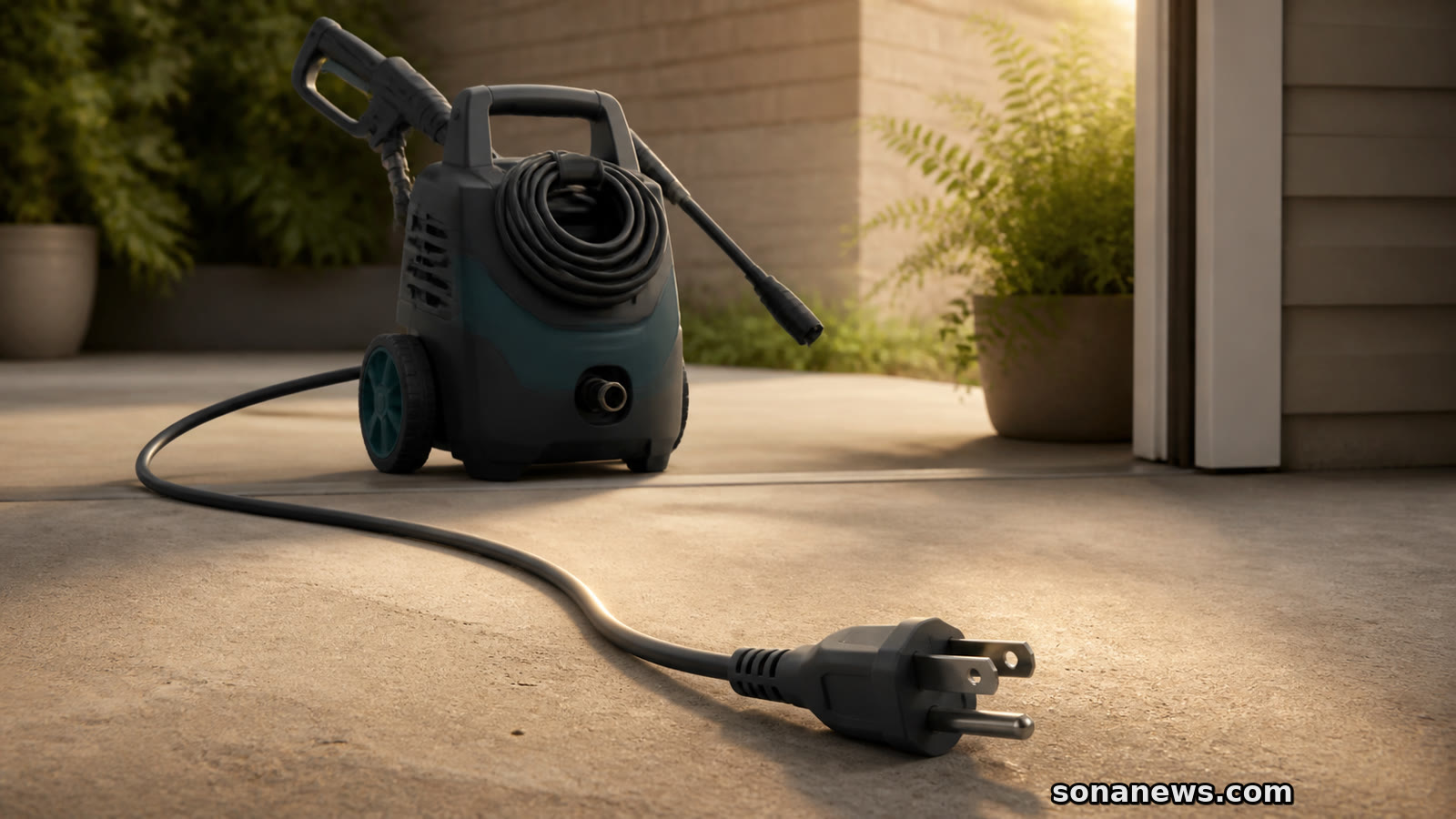
The CPSC recalled 4,335 YERYORK, Steelite, Workbless, SUGIFT and COMMOWNER electric machines in August. The affected washers lack integral GFCI protection and have inadequate-length cords.
Continue readingMore in Home & Living