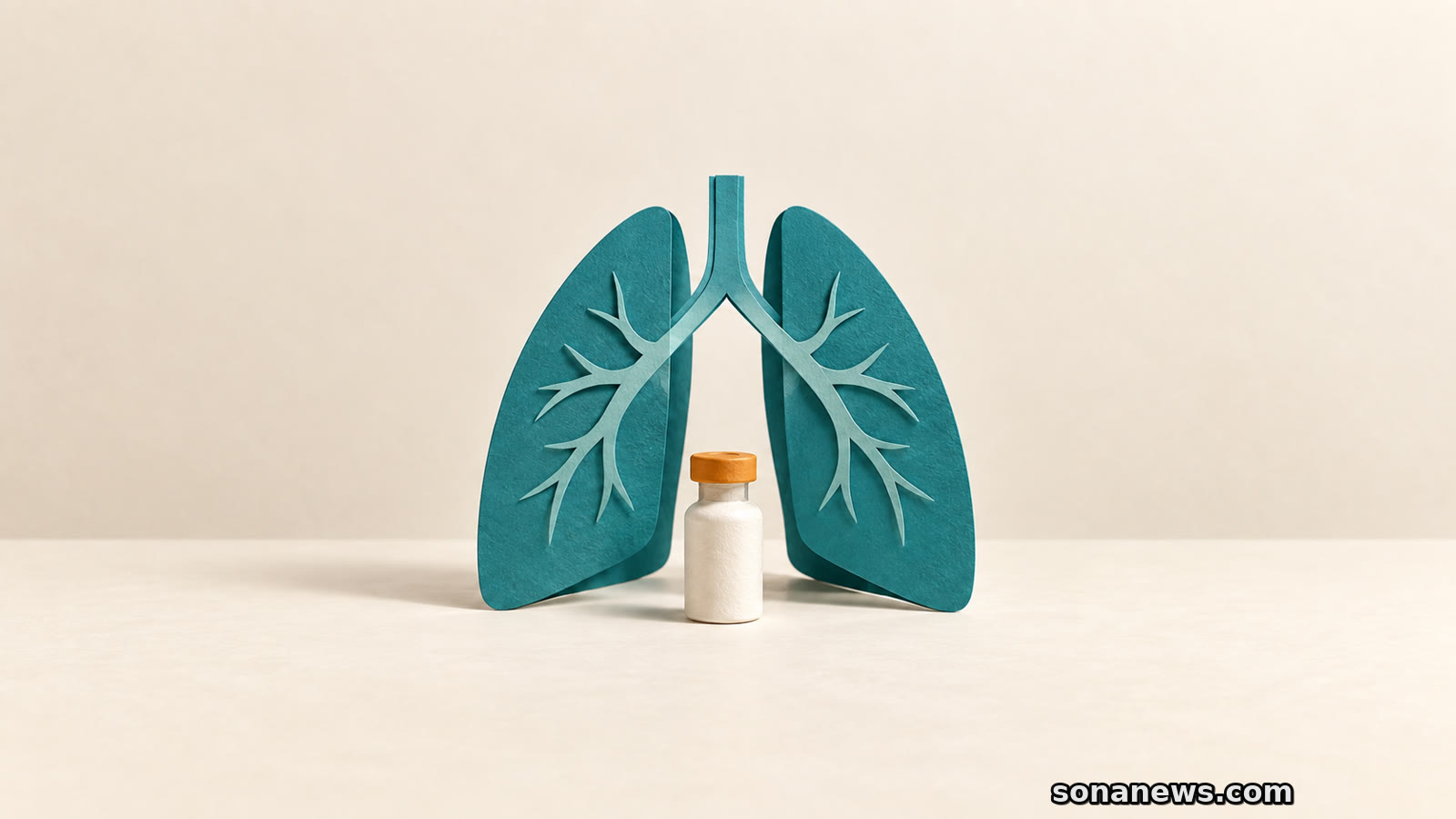
WHO's sickle cell push starts with the shape of a tablet
New guidance says hydroxyurea should reach far more children, but the next gap is practical: dose-flexible medicine that manufacturers can supply and health systems can support.


A medicine can be effective and still be the wrong shape for the child who needs it. That practical gap sits at the centre of a new World Health Organization effort on sickle cell disease.
On 1 September, WHO brought together several pieces of work that had previously looked separate: its first clinical guideline for sickle cell disease in children and adolescents, a specification for more usable paediatric hydroxyurea, and its first invitation for manufacturers to submit sickle cell medicines for WHO prequalification evaluation. The sequence moves from what care should include to what an appropriate product should look like, then towards a route for assessing products that manufacturers put forward.
It is an access plan, not a product launch. WHO has not announced a newly prequalified tablet, nor said that child-friendly hydroxyurea will now appear in every clinic. The distinction matters because the final mile involves manufacturers, regulators, procurement agencies, health services and reliable follow-up, not only a well-written recommendation.
Sickle cell disease is an inherited blood disorder in which abnormal haemoglobin can make red blood cells rigid and sickle-shaped. Those cells can block blood flow and contribute to pain, anaemia, stroke, infection and organ damage. Sickle cell anaemia is one form within the broader disease group.
WHO estimates that 7.74 million people were living with sickle cell disease in 2021 and that 515,000 babies were born with it that year. Nearly 80% of cases occur in sub-Saharan Africa, while the disease also affects people in the Eastern Mediterranean, the Caribbean, South Asia, Latin America and diaspora communities worldwide. WHO's September update says sickle cell disease contributed to an estimated 81,100 deaths among children under five in 2021.
Those figures help explain why a familiar medicine has become a product-design issue. Hydroxyurea is the main disease-modifying treatment in WHO's current package. The organisation says it can reduce serious complications, yet existing formulations can be difficult to dose accurately and administer to younger children. A large capsule that works in one setting is not automatically a practical paediatric product in another.
WHO's May guideline covers diagnosis, prevention and clinical management from birth to age 19. Its 15 recommendations span early identification, infection prevention, hydroxyurea, pain care, acute chest syndrome, stroke prevention and screening for complications. It is aimed at health systems and professionals, not at families choosing a dose themselves.
For children and adolescents with sickle cell anaemia aged from 9 months to 19 years, WHO made a strong recommendation for hydroxyurea regardless of clinical severity. The prequalification notice describes the supporting evidence as low certainty. That pairing should not be flattened into either “the medicine is unproven” or “every treatment decision is automatic”. A strong public-health recommendation can weigh expected benefits, harms, feasibility and equity while the certainty rating describes the underlying evidence. Prescribing and monitoring remain clinical work.
The next document asks a more physical question: what characteristics would make hydroxyurea easier to use across childhood? WHO's July target product profile favours functionally scored soluble or dispersible tablets. The aim is flexible, weight-based dosing and easier administration, with attention to stability, packaging, affordability and use in resource-limited settings.
That is why the score line is not a cosmetic detail. A formulation has to support the intended dose range consistently. It also has to survive storage and distribution, be understandable to health workers and families, and fit the supply systems expected to carry it. A child-friendly product is not simply an adult medicine placed in a smaller box.
WHO's first expression of interest for sickle cell therapeutics, issued on 24 July, makes the target more concrete. It invites 500 mg hydroxyurea capsules, and prefers 100 mg and 500 mg single-scored soluble or dispersible tablets. A 500 mg single-scored soluble or dispersible tablet is listed as the minimum tablet requirement.
Those strengths belong in procurement and product-evaluation documents. They are not dosing instructions for an individual child. Hydroxyurea is a prescription medicine whose suitability, dose and monitoring need to be determined within qualified care.
The expression of interest is also only the first step in WHO's prequalification process. It makes specified product types eligible for manufacturers to submit for evaluation. A submission would still need assessment. Even a successfully evaluated product would then need affordable production, national authorization where required, purchasing, distribution and integration into services before access changed on the ground.
This status check is easy to lose in a hopeful announcement. “WHO wants manufacturers to submit these formulations” is accurate. “WHO has delivered a new tablet to children” is not.
The guideline itself prevents the formulation story from becoming a pill-only story. Early diagnosis, prevention of infection, vaccination links, stroke screening, management of acute complications and continuing care all sit around disease-modifying treatment. A usable tablet cannot compensate for a diagnosis that never happens, a stock that runs out or a clinic without the capacity to monitor care.
WHO says implementation will require collaboration among governments, manufacturers, regulators, researchers, funders, procurement agencies, health-care providers and affected communities. Its Global Accelerator for Paediatric Formulations is designed around that wider paediatric treatment gap. The organisation is also watching emerging medicines and gene therapies, but these are future-facing research and access questions, not substitutes for expanding access to established care now.
The September announcement is therefore modest in one sense and ambitious in another. It does not create an instant treatment breakthrough. It tries to connect evidence, product design, quality evaluation and delivery so that an existing treatment can work in the places with the greatest burden.
The shape of a tablet sounds like a small detail. For access, it can be where the health-system promise becomes usable, or where it stops.
Editorial note. This article provides general information about public-health guidance, medicine development and access. It is not medical advice and does not determine whether hydroxyurea is appropriate for any person. Treatment decisions, dosing and monitoring should be handled by qualified health professionals using current local guidance.
Sources
- Source: World Health Organization, “WHO moves to expand access to lifesaving sickle cell treatment and care for children”, Published and extracted 1 September 2026. Verified: new package and status; 2021 under-five mortality estimate; geographic burden; sequence from guidance to target profile and prequalification invitation; implementation actors and future therapy watch list
- Source: World Health Organization, “WHO consolidated guidelines for the management of common childhood illness: management of sickle-cell disease in children and adolescents”, Extracted 1 September 2026. Verified: first WHO normative guideline for ages 0-19; 15 recommendations across seven clinical areas; intended health-system audiences; feasibility and equity scope
- Source: World Health Organization, “Target product profile for formulations of hydroxyurea for the management of sickle cell disease in children”, Published 6 July and extracted 1 September 2026. Verified: formulation problem; preference for functionally scored soluble or dispersible tablets; weight-based dosing, administration, stability, packaging, cost and resource-limited-setting criteria
- Source: WHO Prequalification of Medical Products, “1st Invitation to Manufacturers of Therapeutics for Sickle Cell Disease to Submit an Expression of Interest”, Published 24 July and extracted 1 September 2026. Verified: invited formulations and strengths; age range; strong recommendation and low-certainty evidence wording; expression-of-interest status
- Source: World Health Organization, “Sickle-cell disease”, Published 6 August 2025 and extracted 1 September 2026. Verified: inherited blood-disorder mechanism; global prevalence, births and geographic distribution; complications; role of early diagnosis and comprehensive care
- Source: WHO Prequalification of Medical Products, “FPPs & APIs Eligible for Prequalification (EOIs)”, Extracted 1 September 2026. Verified: inclusion in an expression of interest is the first step in the prequalification process, not completed evaluation
Help us improve
Was this article useful?
One anonymous tap helps Sona improve future reporting, headlines and source context.
Up next
The fingertip clip uses light, not a blood sample. US health guidance explains its accuracy limits and why a wellness device is not the same as a medically reviewed one.
Continue readingMore in Health